– Govinda
AI is scary. No, I don’t think Arnold Schwarzenegger is coming with a shotgun to Terminate me. AI scares me in a more fundamental and uncanny way. When, in 1997, Deep Blue, an IBM computer, beat the world chess champion Garry Kasparov for the first, he was shocked and speechless, and so were many others. Maybe once we thought chess was a uniquely human, creative, and intelligent game and no machine could beat us. Not anymore. Bits of 1s and 0s can be pretty smart, at least for a single task for which they have been painstakingly trained on gargantuan amounts of data by tech nerds.
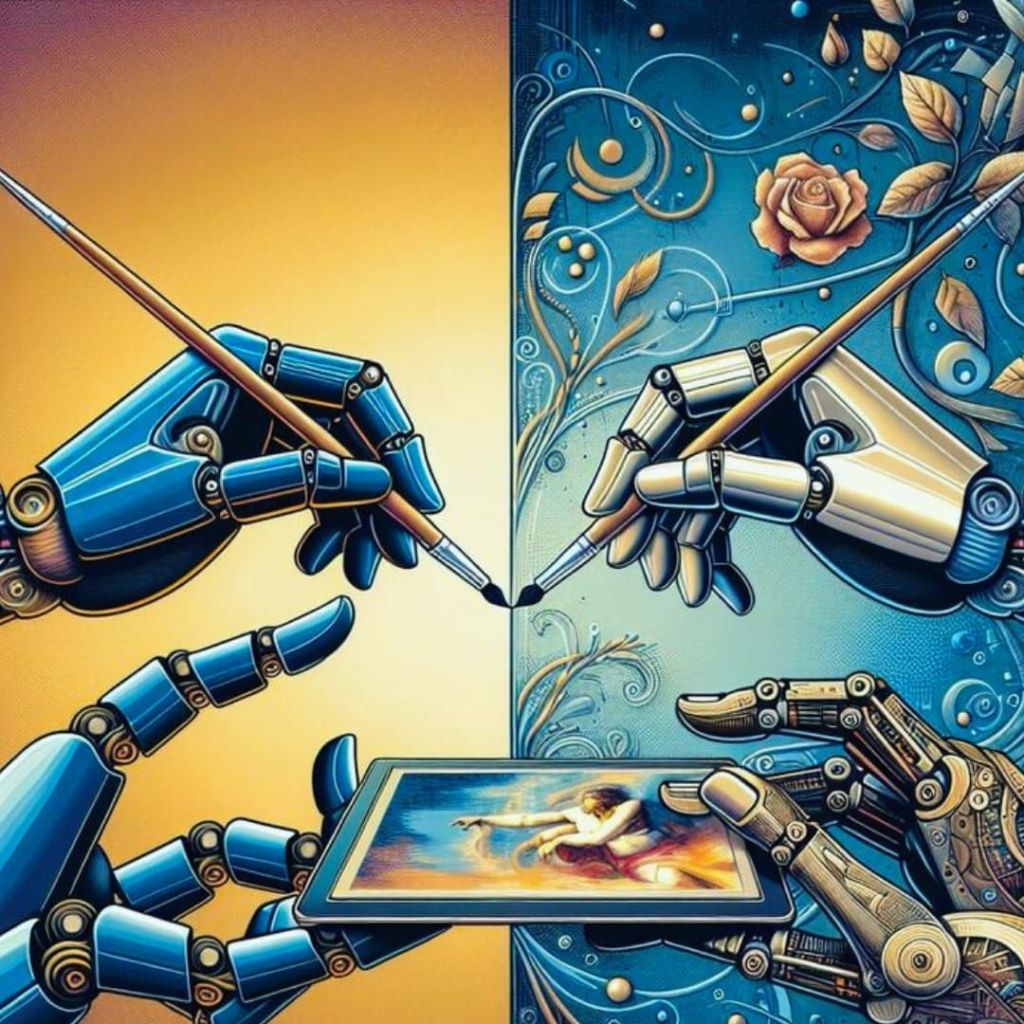
But still, we must have comfortingly thought, Deep Blue can’t be truly creative, can it? It can’t compose music, make paintings, or write poems. Fast forward to 2022 and Jason Allen of Colorado won the annual state fair competition; however, he didn’t make his entry with a brush or a lump of clay. He created it with Midjourney, an artificial intelligence program that turns lines of text into hyper-realistic graphics. Huh. And did you all know that The Beatles completed a new song after 45 years, with help from AI, using an old demo tape by John Lennon, kudos to AI tools that isolated Lennon’s voice.
The rapid growth of Machine Learning and Data Science is propelling us into a new age where technology and AI will pervade and permeate all over our lives. Besides making our lives easier and easier, it is forcing us to confront some fundamental existential questions about what makes us Human. Darwin pulled us down from being made in God’s image to just another species on Earth. Are we being pulled down further?
Maybe not, at least for now. In both the cases I mentioned, the AI only acted as an aid to the artists behind the creative process. AI is still rather dumb and rudimentary. Besides, creativity is not just in the final product; it is in the very human impulse to create. Humans are the only known beings who desire to express themselves by writing, painting, or composing; silly things that have no survival value as such. AI has no will or desire to create; it only imitates the work of other artists. An artist is surely inspired by others, but he draws the materials of his work from his own life’s experiences. For an AI to be truly creative, it must have the desire to create, and for that, it must have awareness, emotions, and passions. This forces us to question the very notion of Consciousness. To me, it seems that AI can never have true creativity unless they have consciousness. If biological machines made of a bunch of atoms can come to acquire consciousness and self-awareness at some stage of their evolution, then maybe one day, electronic machines made of 1s and 0s will too. Maybe one day Androids will dream of Electric Sheep?
Edited by Eva Maria Johnson

