Ranjani Srinivasan and Venkataraman Ganesh in conversation with Ardra Manasi (Batch of 2012, Development Studies), who is currently working with an international advocacy body to the United Nations, New York.
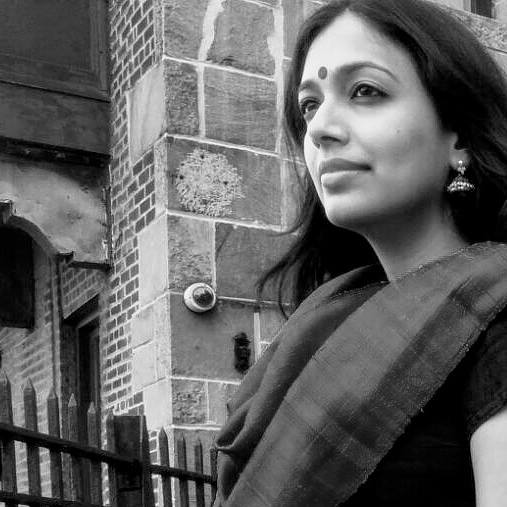
Could you tell us about your experience working at the United Nations as a scholar, intern and researcher?
My earliest introduction to the UN system was in 2015 during my graduate degree in International Affairs from The New School, New York City, where the UN Headquarters is also located. Since the UN is an institution filled with history, political and diplomatic efforts, and socially transformative commitments — I was naturally drawn to it. During one of my semesters, I was selected as one of the 3 students to work on a project for UN Women, as part of the UN Summer Study program. Our team was entrusted with developing a social media marketing strategy for UN Women’s ‘Empower Women’ platform. This was my first interaction wherein a policy goal, the tools to implement that policy, and the challenges posed by the real world converged. At the end of the project, I had the chance to present the recommendations to the UN Women team, which was quite exciting.
Another interesting research assignment that I took part was with the Office of Information and Communications Technology (OICT), which is housed at the UN Secretariat. Here, I was a researcher whose goal was to study how the UN culture impacts its practice of innovation. This allowed me to conduct in-depth interviews with staff from 8 UN entities — from UN offices as far flung as Jakarta in Indonesia. I ended up writing a 100+ page report on this relatively under-investigated issue of innovation inside a 71-year-old international institution.
My internship with the UN Agency International Fund for Agricultural Development (IFAD) was one of the most fulfilling roles I have had. At IFAD (New York office), I worked on an interesting research project to create a digital database of multi-stakeholder partnerships that benefit small-scale farmers. During my time there, I was also entrusted with the responsibility to coordinate an event at the UN Headquarters on rural women’s empowerment which was held in March 2017. It was a huge learning experience for me as I got a chance to closely work with different actors from different time and geographic zones. I could also meet many grassroots women leaders who have faced great struggles in life and yet built something larger than themselves out of it.
Currently, I work as a Policy Research Fellow at the NGO Working Group on Women, Peace and Security, a civil society coalition and advocacy body to the UN Security Council. My work involves analyzing UN Security Council resolutions to understand and recommend how women’s needs can be prioritized during UN Peacekeeping operations. I feel greatly fortunate to be able to be surrounded by this institution that tries to better human lives.
Having developed a strategy for a gender-based platform and having made recommendations to the UN Security Council to incorporate women’s needs into their operations, how important a role do you feel gender plays in shaping today’s policies? Is gender given the attention it deserves?
That is a great question. In terms of gender developments at the UN Security Council, the year 2000 was a watershed period with the birth of a new UN Security Council resolution 1325 (2000) on women, peace and security, which reaffirmed women’s role in peacekeeping and peacebuilding processes. Coming back to your question, it was the gender understanding of armed conflicts that informed this crucial policy decision. There was a greater recognition among international community for the need to talk about conflict-related sexual violence and women’s protection needs in such contexts. At the same time, the spotlight was also on women’s participation needs as decision-makers – in peacebuilding, post-conflict reconstruction and other political processes.
More generically, I feel that there is a greater recognition today at the international community level that we cannot ignore gender anymore. The Sustainable Development Goals (SDGs) unanimously adopted by the 193 UN Member States in September, 2015 has a standalone goal – Goal 5 on gender equality which presents a comprehensive view of gender issues and specific targets to be achieved by the year 2030. The real challenge would be to see how these commitments get translated into real policies on the ground – both at the national and local levels. The SDG targets provide a good framework to hold national governments more accountable. I feel we really need to invest more on collecting data. It is very important to have sex-and age-disaggregated data to make any meaningful policy decisions aimed at women’s well-being.
What do you feel about the attitude towards feminism today? Is it being villified?
Perhaps yes, as I see a tendency among many to equate feminism with hatred towards men, which is totally not the case. I like to focus on the word ‘gender’ here. I think any understanding of gender – a social construct which dictates how men and women should behave, necessarily involves an understanding of power in a given relationship or context. As long as women are discriminated against and not safe inside their houses, streets, work places and the cyber space, we need feminism. And it is here that we need to talk about power. Who controls what? Do women have a say in decisions affecting them? I have been lately reading Cynthia Enloe, a great scholar and thinker who has immensely contributed to the feminist school of international affairs. She writes, “The personal is international; the international is personal.” I think that beautifully sums up and unites the feminist struggles all over the world.
On a personal note, I call myself a feminist, more staunchly now than ever before. And it has been a process of ‘unlearning’ for me – gradually getting rid of some of those mental constructs – certain patriarchal norms, language, values and practices which I might have internalized, often unconsciously. This might be a slow process but I think I will slowly reach there.
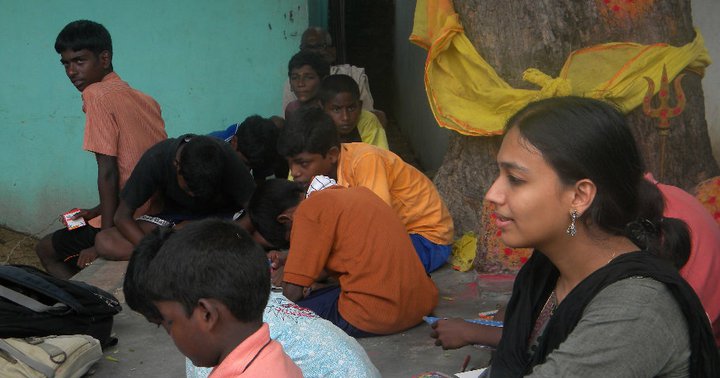
Coming to your 5 years at DoHSS, IIT Madras, what do you think is your biggest takeaway from the course?
I felt that my Development Studies coursework gave me a good foundation on the different theoretical schools and models within development thought. It was like a feast of ideas about development. And I feel it is always important to get the basics right. More generically, I think the thesis writing process in my final year was a great learning experience, especially the process of ‘doing’ serious research – the various challenges and discoveries that followed. My study was focused on female autonomy and work status among women tea plantation workers in Munnar, Kerala. Prof. Binitha Thampi was my thesis guide and she is quite a rigorous researcher. I learnt a lot from her about research techniques.
But I must confess most of the important takeaways for me at IITM happened outside the classrooms. I was quite actively involved with National Service Scheme (NSS) and IViL (IIT for Villages). It was Prof. John Bosco Lourdusamy from DoHSS who introduced me to IViL and I owe a lot to him.
What would be your advice to students who have currently enrolled for the programme? How can one make the most of their 5 years here?
I am not sure I have any particular “advice”. My sense is you guys are already doing great work in terms of organizing department conferences and also finding your own voice through publications like Article 19, which shows and takes high levels of commitment. So, my “advice” is largely a set of things that I still keep reminding myself to do.
Attend as many events, conferences, book readings or other similar activities, within the fields that interest you. These can be both inside and outside IIT-M. Meet and connect with new people. Be engaged with some of the current debates in that field. Listen to their perspectives, though you don’t always have to hold the same view.
Also, it is always good to have true mentors during this academic journey and even afterwards. These are people who will essentially say, “I have your back”. They can be anyone – be it your seniors, professors, employers or any others with whom you share a special bond and trust.
Do you think the Indian education system can prepare students to achieve the kind of exposure and experience that qualifies one to work at a prestigious organization such as the United Nations?
Definitely yes. I think our educational systems (both schools and universities) should encourage students to think and engage with new issues and areas beyond what they learn in their classrooms. Our students should learn to develop informed opinions about any issue that confronts them. The obsession with immediate exams and grades might not be too helpful in the long run.
In terms of gaining exposure and knowledge about various issues that the UN is engaged in – human rights, security, development and environment being some of the broad pillars –
E-learning is a great possibility. For instance, you can sign up for a free online course on ‘Human Rights’ sitting at home.
In terms of the work profile, professionalism, the ability to work in a diverse and multicultural environment, problem-solving skills, team work, integrity et cetera are some of the core UN values and principles tested during different stages of the selection process, if you are particularly looking at UN jobs. As you can see, these are skills that one will eventually pick up while working with any organization – be it department forums/ clubs at your schools/universities or while working with non-profits, government or the private sector.
Did you find it difficult to balance your time between academics, classical dance and writing while in college?
It felt like I needed all of these to survive then. I didn’t give much thought at that point on how one will affect the other. I used to take things up as they came my way. Although I had been formally trained for 6-7 years in Bharatanatyam and Mohiniattam, it was only after coming to IITM that I started experimenting, working on short choreographies and performing at insti events, based on whatever little I learnt. Talking about the “balancing act”, there were, of course, few days I struggled – like performing during the end semester exam time. I had to somehow make sure that I spent my entire day reading at the library while I used to dance through the night.
Also, I had the right support structure – friends (from both MA and engineering departments), professors, my parents and brother. Prof. V R Muraleedharan who was the HoD at that time needs special mention here. He had a strong passion and understanding of the Indian arts and it feels great when you get that sort of encouragement from your HoD.
As for writing, my first poetry book was published in Malayalam when I was 16 and while in school. It was only in my final year at IITM that I got back to writing poetry again but this time, in English. Strangely, that was the time I was working on my final year Master’s thesis too. Perhaps I needed that balance during those stressful times and poetry was where I went to be ‘myself’.
Finally, having published two non-academic works, which author(s) do you turn to for inspiration? Do you have any favourite quotes that you can share?
The Nobel winning Polish poet Wislawa Szymborska is one of my favourite poets. Her poem “Vietnam” is one of my favourites. A short but powerful verse which talks about the horrors of the Vietnam war through a mother’s perspective. I am also a great fan of the Turkish novelist Orhan Pamuk. I am often hooked to the melancholy that lingers in his writings. Having grown up in Kerala, I also look up to few Malayalam writers like Kamala Das whose writings were bilingual. Then there is V.K.N (V.K. Narayanankutty Nair) whose writings I admire for the sharp wit and political satire.
As for my favourite quote, it is hard to say because the world is full of extraordinary lines. But I like these lines from this English poem “An Introduction” by Kamala Das (Madhavikutty as she was once fondly called in Kerala). I often go back and re-read these lines, in parts because they remind me of how beneath all the layers of identities and markers that others impose, one’s real self is hidden, invisible, and easy to lose. She writes in that poem:
..I am Indian, very brown, born in
Malabar, I speak three languages, write in
two, dream in one…
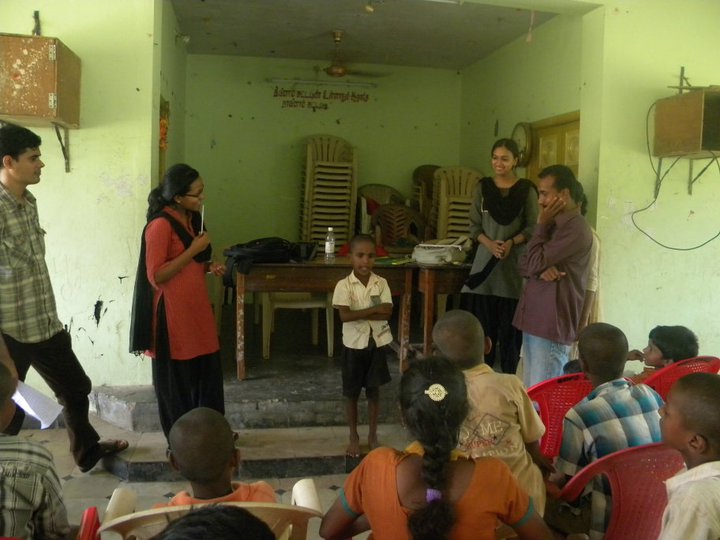
Snippets from an informal interview
Ardra on:
Sharav
My room used to be on the ground floor while in Sharav. There was a time when I used to hear knocks on my door in the early hours of the morning. I initially passed it off as some of my friends pulling my leg and used to go ask them why they had knocked on my door, but they always denied pranking me. One morning, the moment I heard a knock, I jumped out of my bed and opened the door immediately – only to see a monkey. That’s my recollection of insti monkeys who never fail to amaze me!
I still remember one of my dance performances for the Sharav Hostel Night at OAT. The theme revolved around love and longing of Radha for Krishna. What I remember more fondly now is how some of my friends pulled all- nighters, to help me with sound editing, stage properties and so on for this performance.
IViL (IIT for Villages)
IViL has played a huge role in shaping the person I am today. I remember the first time I went on a field trip to Natham – John Sir (JBL) had asked me to join him and others on a class trip to the village. I was in the middle of a paddy field, talking with the farmers, when it suddenly rained. At that moment, in the middle of a rain drenched paddy field, I thought I had an ‘Aha’ moment! No textbook would have taught me as much about rural India as IViL did.
Tryst with Alumni Affairs
When I was the Institute Alumni Affairs In-Charge, there was no election for the post as you have now. It involved an application process back then. Two of us were chosen to lead the team and we worked closely with the IIT Madras Alumni Association (IITMAA) office . It was fun acting as the interface between students and often senior and veteran alumni. This was a challenging, yet great leadership experience for me, especially since I was the only girl in the team.
And, of (the) course:
I think we need more writing exercises embedded into the ‘Research Methodology’ courses, to prepare ourselves for the thesis writing in the final year. Also, it would be nice if our department can have more institutionalized partnerships with research/development institutions or media houses, where students can work on long-term projects during the course of their study, which can even turn into their thesis topics later, if need be.
Our curriculum also needs to have a good balance between quantitative and qualitative courses. For instance, for a course which focuses on Urban Studies, it would be nice to include training on a mapping software like GIS, in addition to discussing other theoretical aspects. These analytical skills add to our capacity to become good researchers.
Homecoming!
I definitely hope to move back to India at some point. I want to stay in Chennai – especially, Mylapore, let’s say post-retirement. Chennai is an art-house, and I think I want to experience that completely. One of my regrets is that I did not get to explore much outside insti while I was there.

