
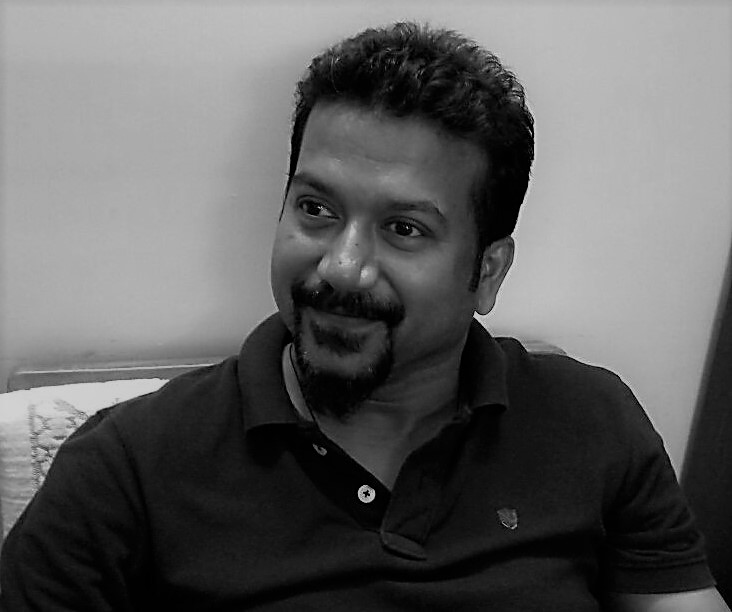
Avinaash R in conversation with Dr. Avilash Roul, who is currently the Principal Research Scientist at the Indo-German Centre for Sustainability (IGCS), IIT Madras and Guest Professor at the Department of Humanities and Social Sciences.
Dr. Roul has been involved in development and environmental discourse in Asia for years now. He is an activist as much as he is an academic, having had a wealth of experience in working with communities and grassroots organisations across the nation.
Tell us about your experience working with the Indo-German Centre for Sustainability (IGCS) for over two years.
It is a very interesting initiative. For long, research about sustainability has focussed only on the environmental aspects. What makes IGCS unique is its emphasis on the economic and social aspects as well. Personally, the best part over the past two-and-a-half years has been working with Masters students as interns, especially those from the Humanities department. Not only do they gain valuable experience and knowledge about the problems associated with peri-urban areas, they also make a fantastic contribution to the work here. So, it has been great both ways.
Given your work with tribals and indigenous peoples in Naxal-affected areas, where do you think the roots of the conflict lie?
This was during the years 2004 and 2005, when I worked with the magazine Down to Earth. My research was on poverty and its environmental linkages. During that time, I had the opportunity to meet a lot of people in conflict-ridden areas. I believe that the major problem is with governance. Even after 70 years of independence, most people in tribal districts do not even know what country or Constitution is. They lack the knowledge to deal with governmental agencies. And the non-tribals have not been too concerned about this. They have focused a lot on getting access to the fruits of development for themselves, but not so much about the tribals. Even the Tribal Act, which was historic, has turned out to be an exercise in mere tokenism. So, as researchers or policymakers, we must first try to talk to the indigenous people and understand their problems.
How important is a vibrant civil society to a democracy like ours?
Very often, discussions on civil society go into technicalities such as questions over what constitutes it, whether NGOs are part of civil society or not and so on. I would consider any organisation representing a cause, especially those of the poor and downtrodden, as part of civil society.
In the Western conception, civil society groups are those which work in tandem with the government regarding various issues. Since lobbying is legal there, we can see groups lobbying for certain interests, usually those of a section of people or of the environment. We should not bring in such an understanding into the Indian context. Here, in India, civil society groups are those who critically question various government initiatives and act as watchdogs. And groups here have been doing a fabulous job, in spite of a lot of pressure from successive governments. Allegations of obstructionism have always been there, but they are wrong on multiple counts, mainly because it is the function of the government to assuage fears and concerns about the impacts of its initiatives. You can say that by forcing governments to mend their ways, civil society groups are indirectly helping them.
Twelve years down the line, do you think the Right to Information Act has achieved its objectives?
Unfortunately, the answer is in the negative. The motive behind the Right to Information Act was noble. It wanted to democratise information, which earlier belonged only to a select few with proper connections. I was involved at some level with the drafting process. After that, I left India. When I came back, the situation was not that rosy. The Act has ended up making access to information more difficult. Earlier, government organisations used to suo motu disclose information. But after the Act, officials wait for applications in order to share information. Instances of voluntary disclosure of information have come down. Also, the process of application is very complex, and hence it makes it tough for a large section of citizens to properly understand it. Governments have also denied access to information regarding contested projects, citing reasons of national interest. They have the upper hand in this case and they can control information.
The way forward is to make sure that all information is out in the open. Institutions like the World Bank and IMF are already doing that, under the name of presumed public disclosure. India must adopt such practices.
How would you compare the student culture of JNU with that of IIT Madras, particularly the Humanities department?
You can’t really compare the two because they are different types of institutions, but I think that there is a difference. The culture at JNU was very conducive to debate. People used to have discussions and debates over lots of issues everywhere. It was a vibrant atmosphere. The best part was that even opposing viewpoints were accorded their due respect.
I may be wrong, but I haven’t seen a debating culture to that extent here. Discussions, I think, are confined to lectures, seminars and conferences. Students here must get together by themselves to ponder over issues of contemporary relevance.
Is there a need for rediscovering traditional knowledge systems to address challenges related to issues of environment and sustainability?
Certainly. The issue of sustainability is not something new in the Indian context. Even before the discourse started happening formally in academia around the world, there was an understanding of the concerns surrounding sustainability here. So, looking at traditional knowledge systems will be extremely helpful. They are goldmines. We need not adopt the same methods as conditions are different now, but we can at least learn good practices.
We must document and preserve these systems, not only in the form of books, journals etc., but also through visual and other media, so that this knowledge reaches a large section of society. The government can encourage this, and educational institutions across the country can certainly play a huge role.

