
Several of the department congregated at HSB 356 on the 17th of September for a special occasion, the combined launches of Professors Swarnalatha and Avishek’s books: Ecocriticism: Big Ideas and Practical Strategies and Post Modern Literatures. As special attendees were present: Prof. Bhaskar Ramamurthi, the Director, Prof. Umakant Dash, the HOD, Ms. Padmaja Anant, Vice President, Publishing (Humanities), Orient Blackswan, and Dr Michael Yates, Associate Professor, Rikkyo University. Also present to deliver a special lecture on Genetic Prosopography was Professor Pramod Nayar, Head, Department of English, the University of Hyderabad.
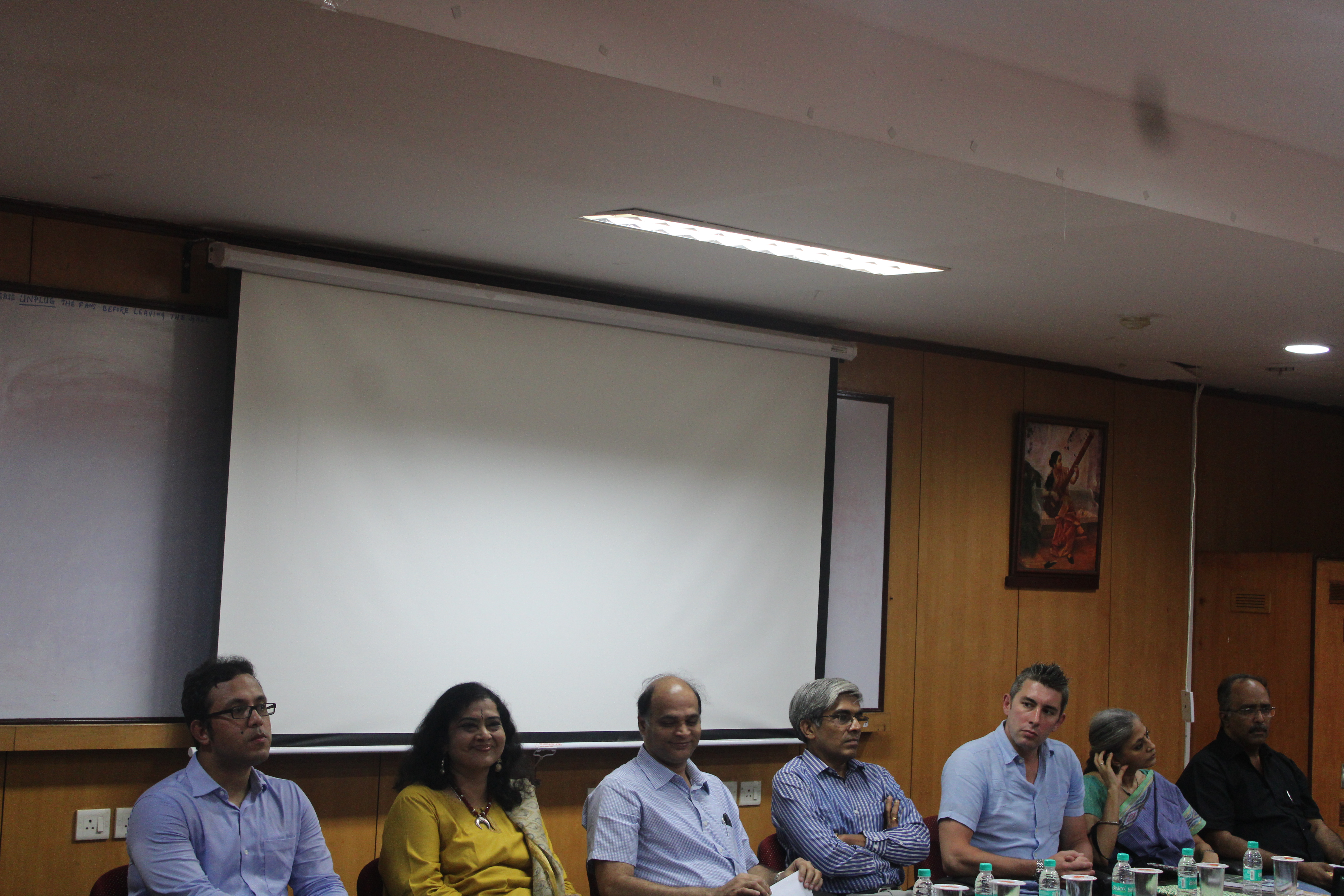
Professor Anindita Sahoo took on emceeing duties for the evening. Professor Ramamurthy delivered a short opening address, commending both authors for their work, in his usual composed yet witty style. Ms. Padmaja Anant also spoke on the occasion, thanking both authors for their dedication, open mindedness and cooperativeness. Following her, Professor Yates, visiting IITM on the invitation of Professor Parui, was asked to speak a few words, his impressions from both books. He said that there was there was an overlap between the concepts presented in both works. The transition from hierarchy to heterarchy, captured by the postmodern discourse had its reflection in the uncertainty surrounding the question of the anthropocene, which forms the core of contemporary ecocritical discourse. Professor Yates also mused on the concept of ‘certaintylessness’ that Prof. Parui brings up in the book, as opposed to uncertainty. His address ended with the question that stands: As a species, what now for us?
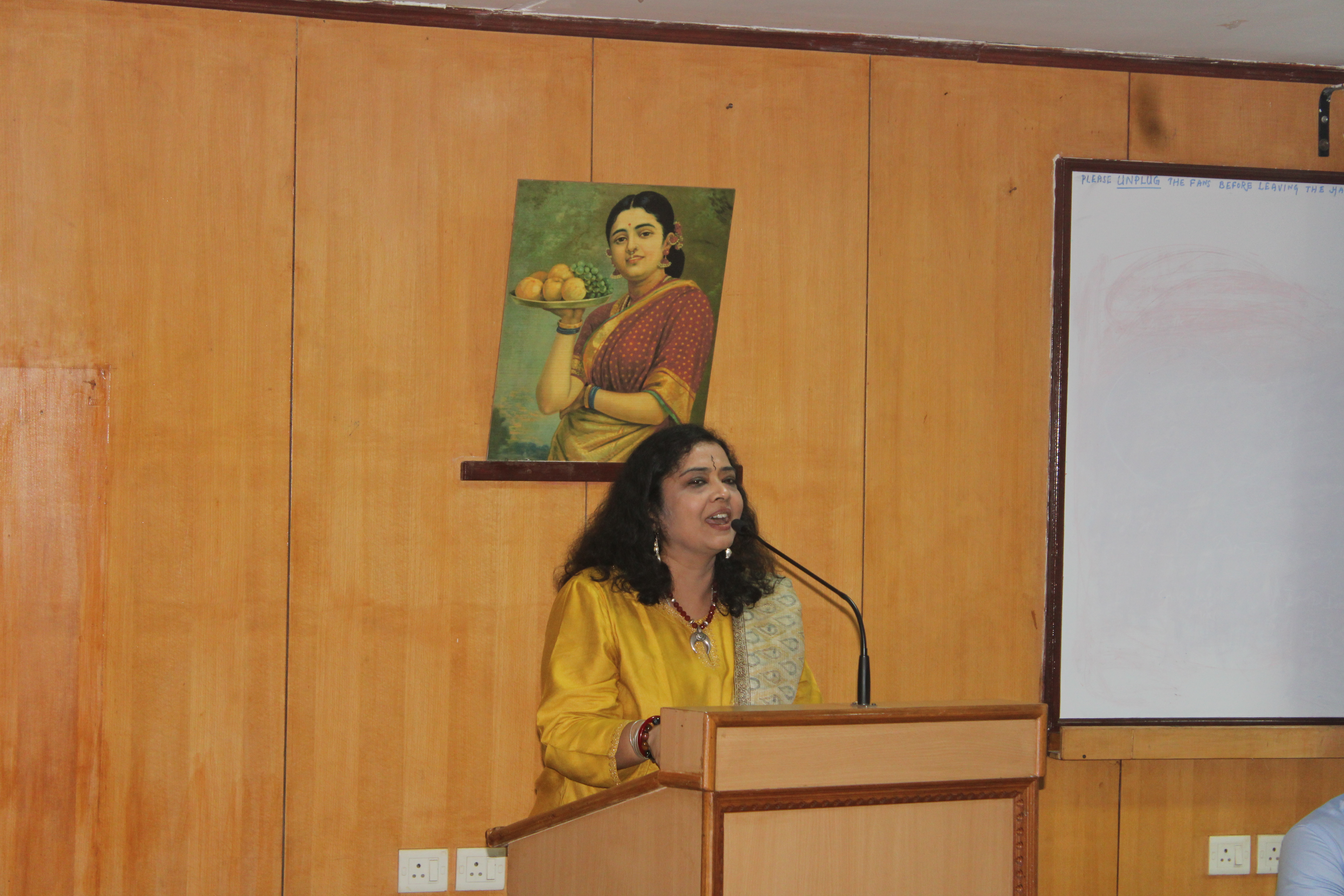 After his short address, both authors spoke about their work. Professor Swarna was first. She thanked everyone who’d influenced her and helped her in the composition of her book: her former neighbors in the department: Professors Suresh Babu, Jyothirmaya Tripathy and Srilata, the M.A students who’d worked in Ecocriticism for their final year projects (specially dedicating the book to Bhargavi Suryanarayanan, a beloved student who we lost to the Theni fires), the Ph.D. scholars currently working under her, the OBS team, Professor Pramod Nayar, a prominent authority on Ecocriticism himself and Professor Scott Slovic, one of the seminal figures in the field whom she was able to work with.
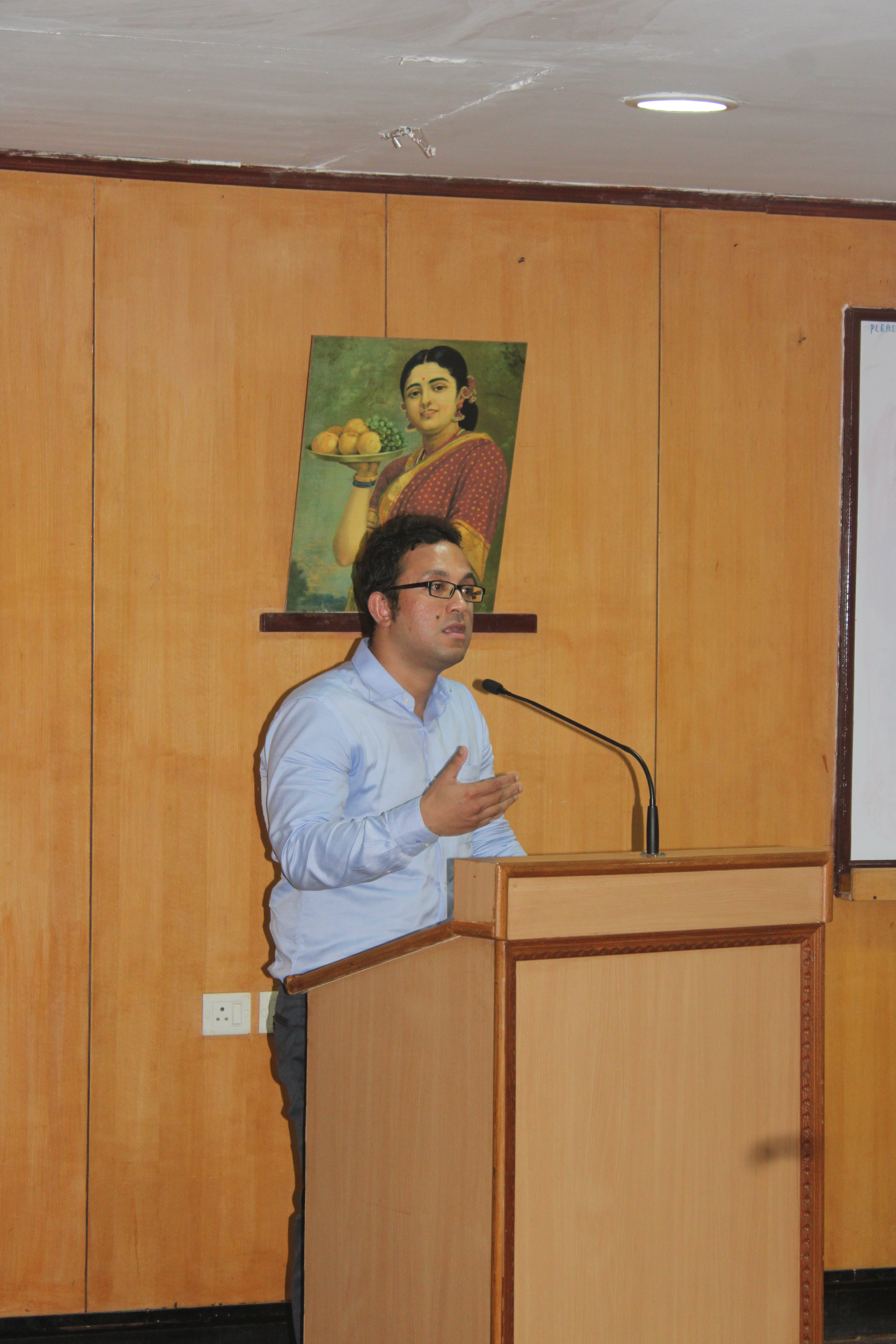 Professor Avishek Parui came next. He thanked several people, including Professors Swarnalatha and Pramod Nayar, the OBS team and his students. He shared a few witty observations on the practice of writing and the domains of postmodernism, which he described as perhaps nothing if not an ‘activity in ambivalence’. He also dedicated the book to his wife Ms Priyanka, and his infant son Ayanish, who was, as Professor Parui quipped, ‘mercifully sleeping’ during the event.
Excerpts from both books were also read out. The final part of the event was Professor Pramod Nayar’s lecture: “Genetic Prosopography: Natureculture in Contemporary India”. He began his address with a quip on authoring in India, which he described as usually a ‘deconstructive phenomenon’ that is ‘always perpetually deferred’. He was therefore appreciative of Professor Parui’s diligent and ‘non-deconstructive’ authoring exercise. He then moved on to talk about genetic prosopography – prosopography means collective biography, derived from the word ‘prosopophia’ which means face-making. Thus, the concept of genetic prosopography attracts great importance when one seeks to understand the complex interplay between culture, history and genetics. The talk revolved around three main themes – Genomic History, Cultural Genomics and Future Genomics, the finer details of which can be found in Dr Nayar’s paper on the same topic. He concluded his talk by bringing up some pressing issues of genetic vulnerability and helplessness. Professor Srilata then took to the dais and delivered the vote of thanks, after which students and professors gradually filed out of the hall, some of them lining up to a makeshift stall outside to purchase from an impressive selection of books from Orient BlackSwan, while others engaged in the rather challenging art of socializing, and chatted away in the department corridor.
Text by Rahul Jose and Sruthi Ranjani
Photographs by Sathya Priya

