Soft Power. One might have encountered this term used with an air of nonchalance in lectures, newspaper articles or even while walking by in the department corridors. Seemingly oxymoronic, this concept is one that rose to mercurial popularity during the 1980s. It is an important concept in International Relations that shaped many an academic debate – one that is as ubiquitous as it is impactful.
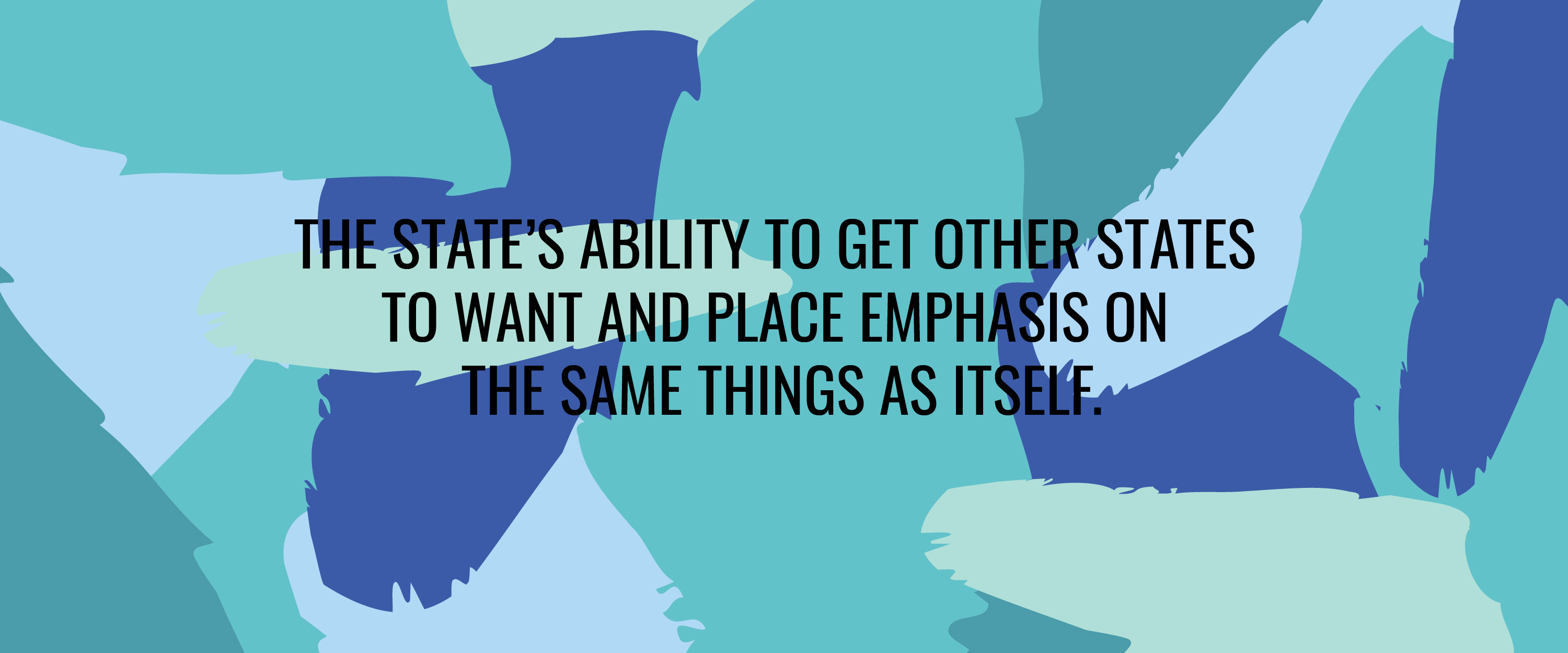
An American political scientist Joseph Nye was the first to use the term ‘soft power’ during the post-Cold War era. He distinguished between two kinds of power: hard power and soft power. Nye defined hard power as that which is traditionally accepted as power, i.e. military strength, territory controlled, size of the economy, and political stability. However, soft power is the non-coercive, subtle ability to attract others to a certain political, social, cultural and economic systems, values and policies. To put it in simpler terms, soft power is a state’s ability to get other states to want and place emphasis on the same things as itself, be it a certain economic system like capitalism or a form of governance like democracy.
After the end of Cold War, states across the world realized that “direct use of force” for economic and political gains, was both expensive and risky. Soft power became a potent, non-violent substitute which was used extensively by the U.S. during the 1980s and 1990s. Nye identified three categories of soft power: cultural, institutional and ideological. When we examine America’s behaviour and policies, the pervasiveness of its soft power is marked. Through Hollywood, American music, clothes, fast food or in terms of institutions, such as World Bank, IMF, WTO, which propagated ideologies like liberal democracies and free markets, USA’s soft power penetrated deeply into different corners of the world. Many states began accepting and adapting their policies, values and lifestyles based on the American values. Beyond just lifestyle and culture, America’s soft power also made ripples in academia, economic policies and the operations of international organizations. Many argue that the dominant powers used military, economic and developmental aid as a way of wielding soft power to garner support and make alliances. An example of the same would be the World Bank and IMF promoting liberal markets and placing conditionalities of liberalization on all the less developed countries that they provided aid to.
For a long time, America enjoyed a monopoly on soft power, permeating across countries. Soon, different countries realized the advantages of pursuing soft power in order to strengthen its sway in the international system. Countries like South Korea and India have invested a lot on culture, with K-Pop and Bollywood holding a significant weight in the global cultural industry. The rising state in terms of soft power, is China. With its advent into aid and development projects in different parts of the world, especially Africa, the country is sinking its teeth into soft power. With projects like the Belt and Road Initiative, and the Asian Infrastructure Investment Bank, China enjoys an important position in the economic activities of Asia.
Like with all academic concepts, the relevance of soft power in contemporary times too, is questioned. Many scholars have argued that the soft power of the U.S. is in decline, partly due to the rise in soft powers of other countries and partly due to its internal political, economic and social instabilities. The failed interventions in Iraq, the global economic crisis in the EU and its effects on the U.S., racial and religious intolerance, paint a grim picture of an America that is losing its sheen and appeal to other states. The soft power of other dominant player, China, is also contested due to the country’s sour relations with its neighbours in Asia. While the concept of soft power might have lost its academic fervour, it still remains a cogent manner of understanding international relations and policies, that manifests all around us.
As always, for confused, post-class Googling: http://internationalrelations.org/soft-power/
Article by Meenakshi Viswanathan
Poster by Namrata Nirmal

