
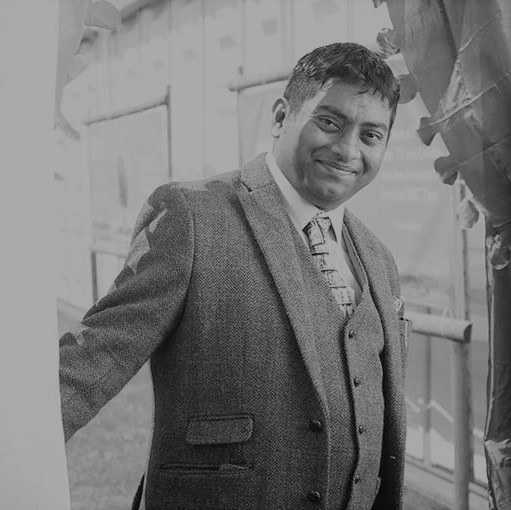
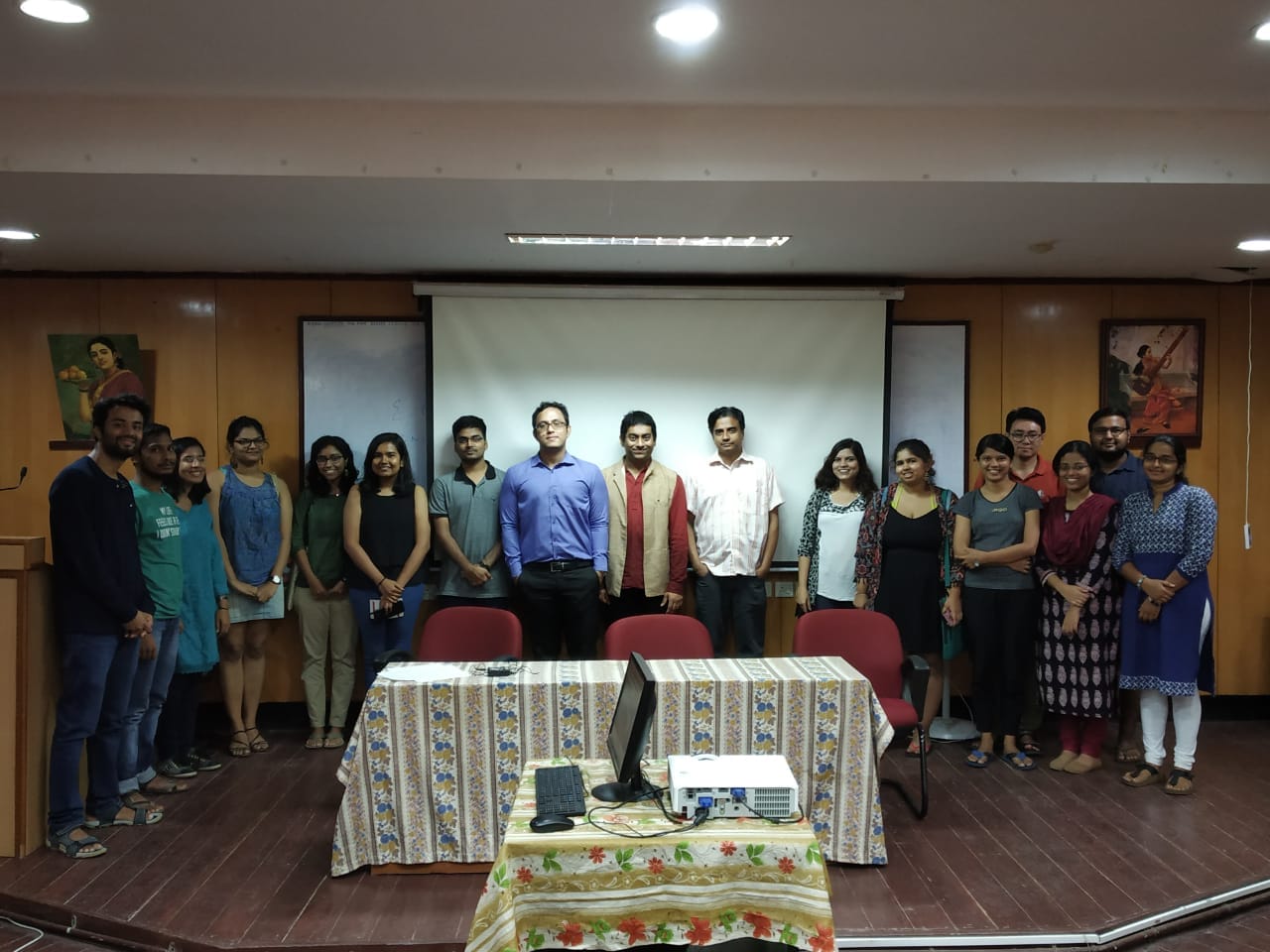
It’s a Thursday evening and many of us gathered in HSB 356 for an ‘appetising’ R & D lecture titled, ‘Aloo-gobi, Mangoes and a Small Aubergine: Food, Foodscapes and Nostalgia’. The speaker was Dr. Anindya Raychaudhuri, a lecturer and academic from St. Andrews university, UK. With ‘diasporic identities and cultures’ as one among his key research interests, one of the two projects he is currently working on is on the role played by ‘postcolonial’ nostalgia in the ways in which diasporic South-Asians construct their individual and collective identity*.
When it comes to nostalgia, especially for the diasporic communities, foodscapes** represent one of the most intimate realms through which they identify with their homeland, its culture and ethos. In his lecture, Dr. Anindya illustrated how foodscapes facilitate a nostalgic recreation of narratives for the diasporic communities through a host of instances from cinema and literature which connect their protagonists’ culinary abilities with their identities as immigrants. For example, ‘The Hundred-Foot journey’, the 2014 film portrays a battle between a restaurant run by an Indian family and a Michelin starred restaurant in rural France. It depicts the bridge between the upscale French cuisine and the devalued Indian cuisine in a diasporic context. The 2013 film, ‘Jadoo’ directed by a British-Indian, Amit Gupta, is a comedy feature film based on a food-feud between two families. In the movie, when the father finds himself uncomfortable with the thought of his daughter marrying a foreigner, his brother consoles him with this subtle humour filled statement, “As long as they have an appetite, God has blessed everyone with the potential to be an Indian!”
Dr. Anindya asserts that whether India has a distinctive appetite or not, there’s certainly a particular appetite for Indian foods – whether produced in India or in the diaspora. He does agree that some of these illustrative films contain problematic portrayals of the ‘model immigrant’ which reinforces certain hierarchies of race, class, gender and caste. Nevertheless, he endorses a parallel reading of these stories as attempts at “imaginary and imaginative recreations of reality – a way of questioning hegemonic identities and hierarchies in favour of new imaginary value systems”.
Further, he moved on to discuss Chitra Banerjee Divakaruni’s ‘The Mistress of Spices’ whose central character is Tilo who runs an Indian grocery shop in Northern California. She is known for her powerful skills at deploying the “magic of spices” to solve the problems of the diasporic South Asian population- “protect them from violence, find work, find husbands and have babies.”
The memories around food help to bring down the distance between the “home that’s left behind and the home one is making for oneself” in the foreign land. Having one’s food validated often translates into having one’s home validated. He read out a few excerpts from one of Jhumpa Lahiri’s articles in which she nostalgically shares her reminiscences about “smuggling” Indian food and traditional Indian culinary tools to her ‘home’ overseas. Dr. Anindya, at this point, recollected his own memory of packing fresh fish from Calcutta, his hometown and taking it to London where he is currently settled. He distinctly remembers packing not just food, but also the heavy cutlery and utensils including heavy mortars and pestles traditionally used in Bengali kitchens. The speaker also referred to Jhumpa Lahiri’s works like ‘The Namesake’ and ‘The Interpreter of Maladies’ that offer intricate descriptions centred around the nuances of the relationship between diasporic communities and native foodscapes. He alludes to the son in ‘The Hundred-Foot journey’ for whom the box of spices evokes all his memories of his home and the lessons of food and life his mother had taught him and simultaneously the possibilities of success and acceptance in a hostile land.
His lecture had an abundance of mouth-watering descriptions of food from the works of art and literature. They feature the magical power of food to evoke memories of ‘home’ in the diasporic minds but along with its inevitable outcome of a tensed relationship between hybridity and authenticity. Dr. Anindya’s work argues that hybridity as the model to describe postcolonial diasporic life is deeply flawed. Hybridity is accidental. It’s never the goal. The desire is always for ‘authenticity’. The desire to replicate the ‘home-food’ is metaphorically, an attempt to transcend geographical rift between the homeland and the foreign land. The desire to use the ingredients in a new manner in the act of producing the so called ‘hybrid’ foods is, in fact, an act of fulfilling a deeper sense of nostalgia.
The latter part of his lecture took up cooking as an act of political significance and warns us of the potential distortions in such a narrative. Dr. Anindya argues that nostalgia for food, does not challenge, rather reinforces existing hierarchies. Nostalgic recreations often result in distorted fictions as they tend to remain blind towards structural inequities. Of course, narratives constructed out of nostalgia are fictional and imaginary but we shouldn’t obliterate their “fracturedness, restorative, agentic power”. He doesn’t forget to point out the sexist nature of narratives of food production, consumption and domesticity. The valuing of food economy of restaurant over that of a housewife is one of the most visible example. Gendered culinary narratives with its hierarchies induced by patriarchy can’t be ignored. Therefore, he reiterates the need to rediscover and value diverse narratives, especially female recreations of negotiations with food and kitchen spaces. For the diaspora, ‘smuggling’ of Indian mangoes and fish overseas is an act of rebellion or resistance. To sum up, Dr. Anindya offers us an interesting perspective about food nostalgia as a tool that reinforces various rebellions central to the diasporic identity – “fighting against the logic of patriarchy or capitalism or a nationalist struggle for self-determination”.
*Check out Dr Anindya’s detailed research profile here.
** places and spaces where you acquire food, prepare food, talk about food, or generally gather some sort of meaning from food / a metaphorical landscape of foods and their production methods and cultural associations.
Article by Aswathy Venugopal.
Image 1 from here.
 Article 19