
Article 19’s correspondent Swathi CS interviews the incumbent Branch Councillor Parthiv Kidangoor on his manifesto, his accomplishments so far, and his plans for the next semester.
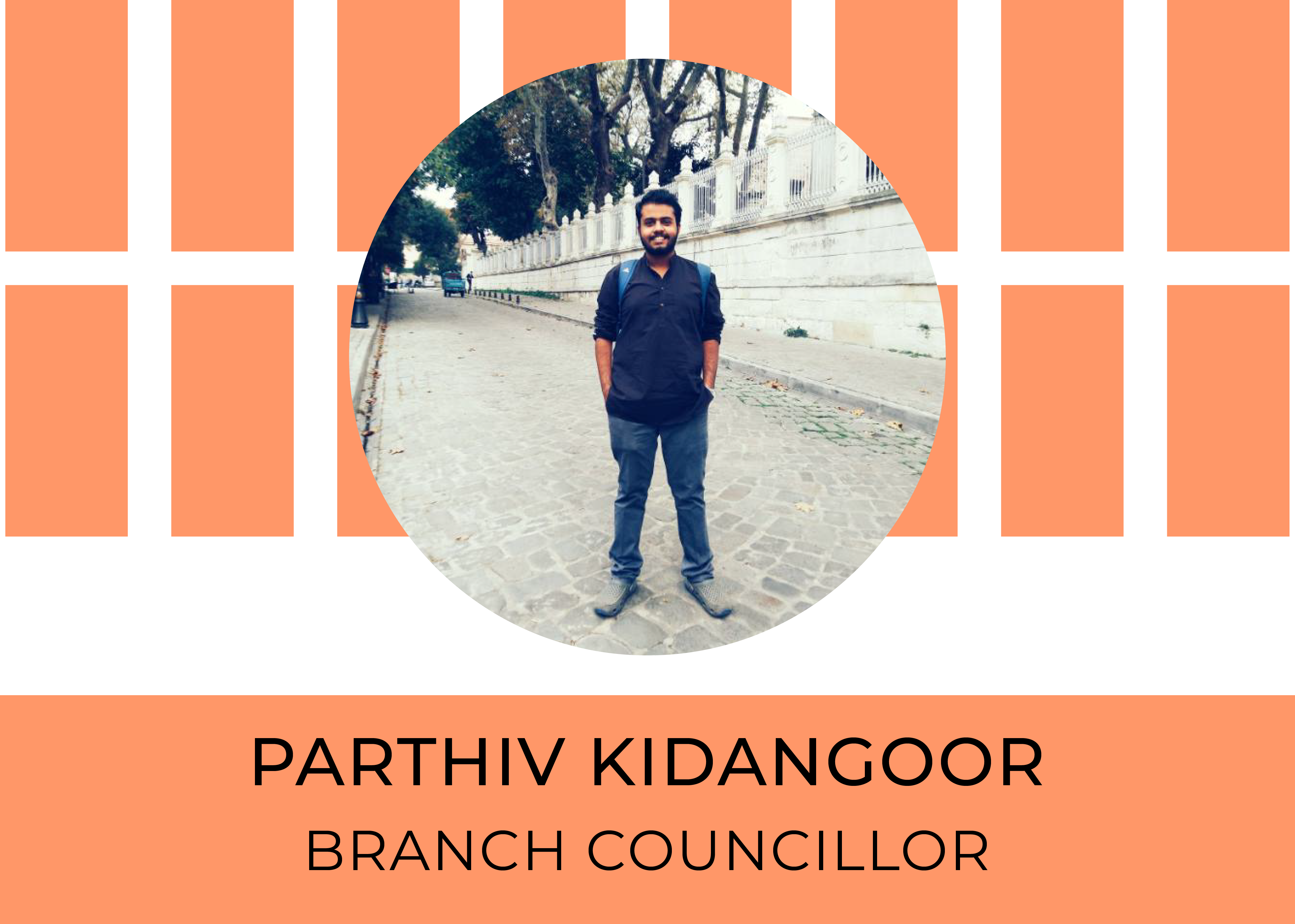
The manifesto of the HS Department Legislator-Branch Councillor consists of 23 points, including 5 Student Legislative Council (SLC) proposals. Of the 18 initiatives within the department, 6 have been completed, 3 are partially complete and 2 are ongoing. The rest are either at the deliberation stage, deemed unnecessary or untenable in the current context, or are set to be taken up in the next semester. The progress on the SLC side has been disappointing, but this can be attributed to only three SLC meetings being conducted in the past semester. There have also been 6 initiatives outside the manifesto, either proposed or implemented by the BC or approved by him as stipend work. Some of these, if implemented and sustained, would significantly contribute to improving the state of affairs in the department. Among these is the proposed formation of the Humanities and Social Sciences Association (HSSA), which is likely to be the lasting legacy of the present BC’s tenure. A brief analysis of manifesto points follow.
The manifesto begins with four proposals aimed at ‘promoting research culture and facilitating avenues for interdisciplinary research’ in the department. These include the initiation of a Department Academic Journal, fundae sessions on aspects of research, a catalogue of faculty projects and a structure to receive and fund project proposals by students. The Department Journal, which will increase visibility and research output of the department, is in the process of registration. The Editorial Board, consisting of seven faculty and a Student Team, consisting of 5 members have been set up. The first Call for Papers for the journal is scheduled to be released during the Department Conference in January. Fundae sessions on academic review writing and résumé-building were conducted, as promised. The BC informs that a session on publishing will be conducted in the next semester. Cataloguing projects undertaken by faculty is underway, and would be circulated by January. It would include research opportunities the professors are offering to students in the course of the project.
An innovative idea the BC mentions in his manifesto is the inception of a formal department level structure to receive project proposals from students and connect them with a larger network of academic mentors, intended to encourage research projects by MA students. For a start, three projects were to be selected per year for funding with 5-6k allocated equally to each project, with the additional provision of a certificate for selected students. A system for feedback regarding spending of the money was also planned. This initiative, however, had to be stalled due to the severe monetary constraints that the department faces. The Branch Councillor is hopeful that it can be taken up with the aid of alumni contributions through the proposed Humanities and Social Sciences Association (HSSA). In fact, the roadblock faced by this initiative is a reason behind the formation of the HSSA, the BC says.
The second section of the manifesto consists of new academic initiatives. The BC has been very successful here, with 5 of 7 initiatives completed, partially complete or ongoing. The Branch Councillor has been able to extend the functional hours of the MML, making it available 24*7. With regard to establishing a formal timeline for the MAP procedure, an MAP Guidebook has been circulated. This includes a tentative timeline, along with other aspects from preparing an abstract to grading.
The first point promises introduction of new courses every semester as per popular demand. It proposes to introduce highly requested courses that lie within the academic interest of the faculty as free electives or stream electives. The BC informs that this initiative is under progress. The course catalogue compiled during the previous BC’s tenure was circulated across batches to assess interest to reintroduce any courses that are currently being offered. Two new courses can be accommodated; talks with professors regarding this are underway. The next odd semester will also see three new courses, chosen by faculty, introduced as electives. Another point involves 3rd year quantitative courses being made exclusive for DS students. A verbal confirmation has been received from the professor of Statistics (HS3014) that the course will be made exclusive to HS students from the next year, the Branch Councillor says. But the same is not feasible for Mathematics for Economics (HS3015) since there is no equivalent course being offered by any other department.
The manifesto also promises the creation of an academic study circle aimed at the first years. A mail titled Basic Concepts Study Group was sent across the mailing list on September 12 and responses collected. Only around six people have signed up to be instructors for the study circle. There has been no further progress on this.
The remaining two points involve the standardization of course syllabus and reordering courses to reduce coursework in the final year. These are currently at the deliberation stage. Talks are underway regarding this; however, there has been the concern that standardization of syllabus might affect the pedagogical independence of each professor. Standardization of syllabus and reordering of courses essentially have to be long-drawn processes, the Branch Councillor says.
The third section is titled ‘Streamlining Access to Resources and Opportunities’. It comprises 5 initiatives, of which 2 have been completed and 1 is underway. A catalogue of academic conferences previously attended by both MA and PhD students was circulated. This also includes their sources of funding. Similarly, a GRE & NET Resource Pool has been circulated. The compilation of a foreign exchange programme catalogue is underway as stipend work.
The Institute finalises the list of universities it plans to enter into a Memorandum of Understanding with during the first two weeks of January. The catalogue will be released by the same month. The last two points include the purchase of a premium department LinkedIn account and journal requests to the Central Library. The BC says that the Placement Team found the Premium LinkedIn account unnecessary. The Central Library calls for new journals in the month of January. A list of journals based on the request of students will be compiled by then.
Under ‘Enhanced Inclusion and Accountability’, there are two points. The first involves increasing the participation of research scholars in the Department Conference. Toward this, a minimum of 2 PhDs in the concept team and 5 in the abstract review team would be mandated, the manifesto says. This has not been done, apparently due to very few PhD scholars volunteering for the positions. Currently, there are the same two PhD scholars in the concept and abstract review teams. The final point involves an end semester report of all the department PoRs. This has not been done, except for a report on the money spent from the Department Student Body Fund (collected from the students) circulated by the Department Secretary.
The manifesto includes 5 SLC Proposals. These have not been taken up, due to only three SLC meetings being conducted this semester, the BC says. Also, the BC says that several of the SLC Proposals in his manifesto were based on the assumption that he would be allotted the Social Equity Committee of the SLC. The BC is currently in the Health and Hygiene Committee.
Outside the manifesto, initiatives like an informal library, a department alumni database, an MAP database and the UPSC Study Circle have been approved by the BC as stipend work.
The greatest success of the first half of the BC’s tenure are also two initiatives outside his manifesto. The first is an increase in the total final-year stipend amount by ₹ 5.5 lakhs; the second the proposed formation of the Humanities and Social Sciences Association (HSSA). The latter, as has already been stated, is a landmark development in the department. The HSSA is envisaged as an association with the students as members, with a basic subscription fee. There will also be annual call outs to the Alumni and faculty for raising money. The funds of HSSA will be used for activities decided upon by the BC, the Department Secretary and the Placement Core. It has been decided that for the initial years, HSSA would not be legally registered.
A Policy document is being formulated by a group consisting of representatives selected from each batch. This would be released in January. A bank account in the name of HSSA would also be started by the same time. Necessary amendments would be made to the Department Charter to accommodate HSSA.
Overall, the Branch Councillor has had a successful first half of his tenure. He has taken up important and innovative initiatives within the department, especially the Department Academic Journal and the HSSA. The task before him now is to ensure that these take off successfully and are sustained. We also hope that the BC takes forward his SLC proposals the next semester. The Article 19 team wishes him all success in the way forward.
Article by Swathi CS
Poster by Sanjana Acharya
This article is the last in a series of manifesto reviews of the elected and nominated members of the Department Council.

