
The panel on Friday afternoon consisted of two presentations. Chaired by Prof. Milind Brahme, the two were “Twin Disasters’ of Indo – Canadian Migration: Identity and Citizenship in Multicultural Canada” by Urmi Sengupta of Jadavpur University and “Being Kokni South African: The Diaspora experiences of the Kokni community of Cape Town” by Ruta Y. Paradkar of the Deccan College Post-Graduate and Research Institute. The theme of the two presentations was clear – it was to represent the marginalized sections of society in South Africa and Canada – who originally belonged to India.
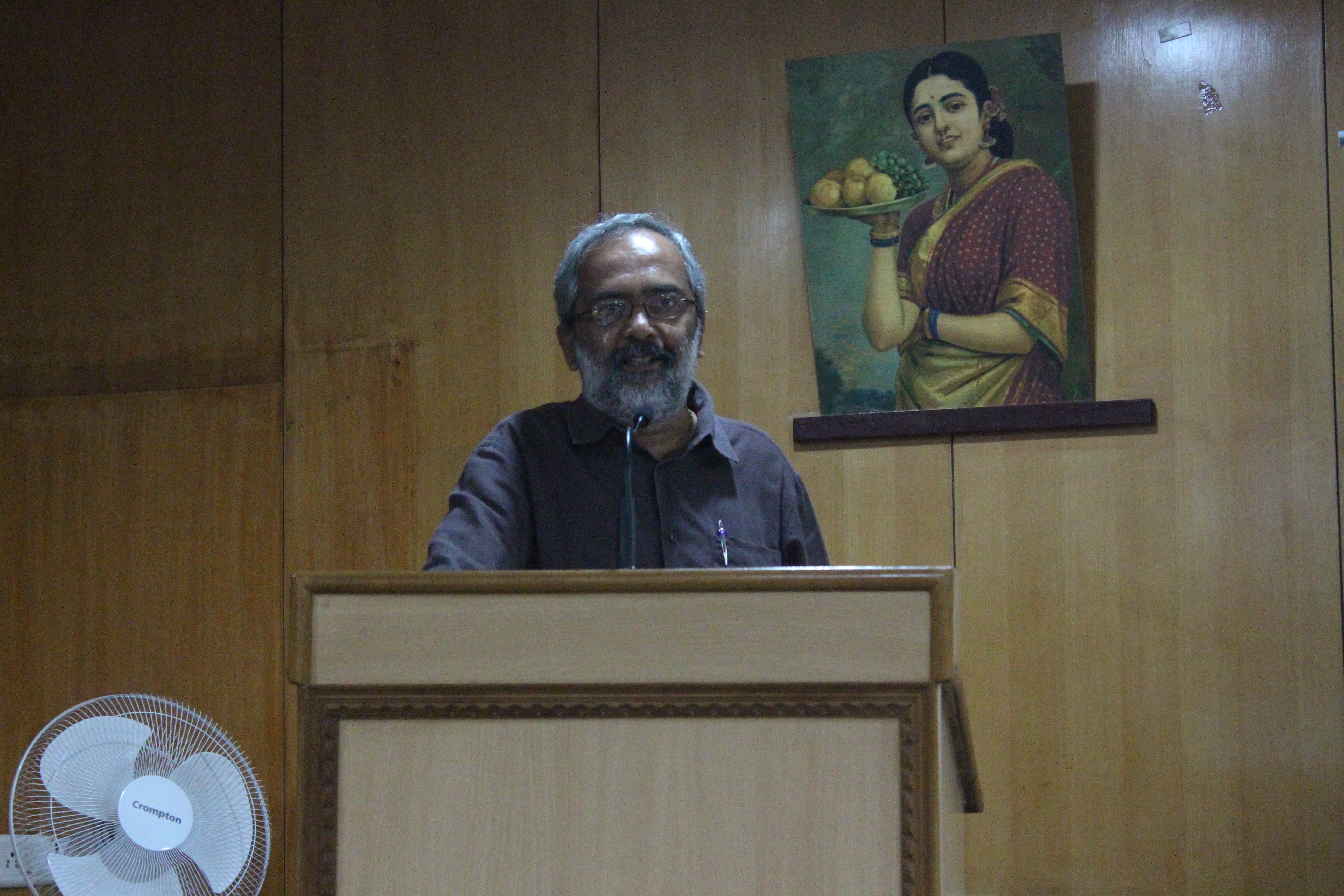
Urmi Sengupta, presenting first, illuminated the fact that while Canada is certainly seen as a welcoming country for immigrants, it doesn’t have a perfect history. Case in point are two incidents that took place at various times in Canadian history which were highlighted in her presentation. The first took place in 1914 and the other in 1985. However, some background leading up to these events was given to provide a suitable context. What is quite the shocker is that, Canada too had racist overtones painted all over its immigration policies until relatively recently – the 1980s. Its governments made no bones about trying to create an all white society – disregarding both the natives of the land as well as the immigrants from anywhere outside the western world… In connection to this, the Komagata Maru incident was narrated to us in chilling detail. Indian families migrating to Canada were detained at the Vancouver port and not allowed to settle or even come ashore – which led to several people starving to death on the ship. Even vital supplies weren’t allowed to be distributed among the refugees. In addition to this, Canada had made a discriminatory law, allowing only direct journey Indian passengers to emigrate to Canada. Since the only shipping company which provided a service from India to Canada had stopovers in between, it was clear as to the directions of said policies. In addition, when the Indians onboard applied for refugee status, the lawyer who fought their case was himself heckled and mocked by his fellow lawyers. It came as no surprise that the Indian’s cause was defeated with ease. On returning to India, the passengers onboard who survived the return trip were treated very harshly by the British government. The kicker comes in the fact that it was only with Justin Trudeau, who became PM of Canada a century after the incident did an official apology arrive for the descendants of the victims of the disaster. Then 71 years later came the Air India disaster in which over 300 were killed when a plane from Canada to India carrying large numbers of Indian Americans plunged into the sea off the Irish coast. The Canadian officials who were in charge of helping the Indians to identify the bodies so that proper rites could be administered treated the grieving Indian relatives with suspicion refusing to cooperate and were under the impression that the entire incident was just an elaborate scheme for the Indians to sneakily immigrate into Canada. And like in the incident seven decades prior, the apology was again only tendered by Justin Trudeau. More damning was the fact that Ireland honoured the victims before Canada did! The issue was not monetary compensation, but actually acknowledgement of the crime and then steps to commiserate the victims.

Acknowledgement of a mistake is a difficult step to make. However, the fact that the Canadian government did offer an apology is a step in the right direction; nonetheless there remains a long way to go. In contrast to this comes the experience of the Koknis who immigrated to South Africa. Inherently Indian, they preserve their culture even today. They originated from seven villages in Raigad and Ratnagiri. It was presented by Ruta Y. Paradkar. They practiced circular migration, wherein they migrated to South Africa after learning about the tricks of the trade, after which they would come back to India and settle down. Africa was just a place to work. They too were repressed by the apartheid era government which forbade any language except Afrikaans and English, and made it harder for the movement of Indians in and out of South Africa. Trying to make the best of the situation, the Koknis preserved their language and cuisine, which was distinct from the South African natives and whites as they had a deep love of their ancestral land, which was the Konkan coast of Maharashtra. Growing problems in South Africa due to apartheid continued, but they were able to preserve their culture. This was due to a strong kinship bond between the members of the community and active social networks which still persist today. The first generation had a strong desire to go back to India, but the newer generations feel South African. They have no wish to return, but still preserve their Indianess with cricket tourneys, FB groups discussing Indian cuisine, etc.

All in all, a definite success story in the case of suppressed migrant communities. Resistance and preservation has definitely prevailed. While no apology has ever been tendered, extreme incidents haven’t happened either. A excellent example of how assimilation can happen without
fear of losing one’s identity. These are two very contrasting tales which were presented, and told us much about how a better handling of immigrant situations can be done from both sides – the immigrants and the government that rules them. My biggest takeaway from it all.
Report by Y.N. Simha
Photographs by Aditya Parameswaran

