
The 7th panel of the annual department conference was organized around the theme “Statelessness”. Professor Sonika Gupta moderated the panel. Three papers were presented, and the presenters were Angshuman Sarma and Rintu Borah (Jawaharlal Nehru University and IIT Bombay), Swati Condrolli (Panjab University) and Abhijit N.P. and Neelanjana Das (Tata Institute of Social Sciences, Mumbai).
In her opening remarks, Professor Sonika explained that the focal questions all 3 papers would try to address were the experiences of state and statelessness; how the displaced and oppressed experienced both.
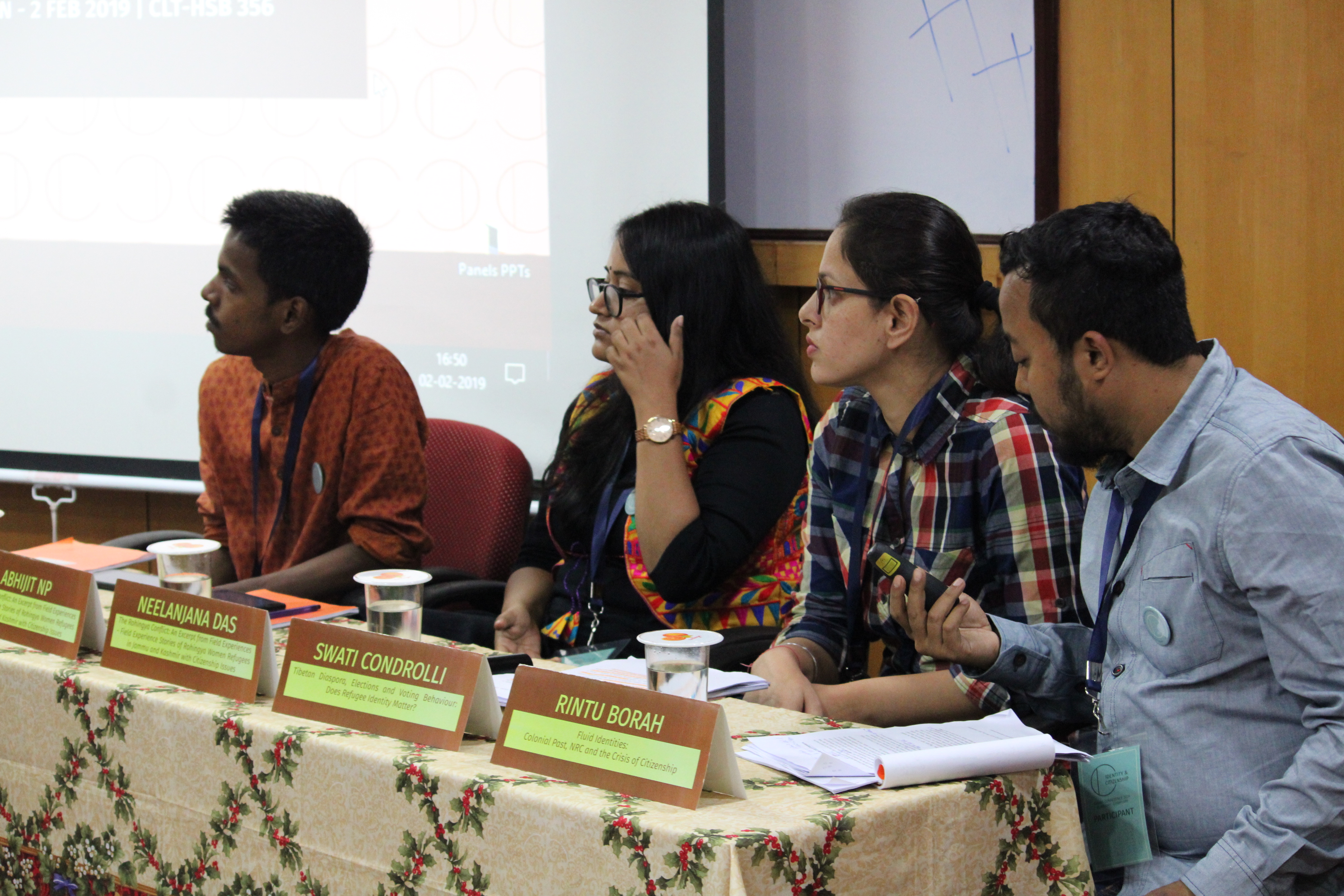
The first paper, titled “Fluid Identities: Colonial Past, NRC and the Crisis of Citizenship” was presented by Rintu Borah in the absence of Angshuman Sarma. The paper’s focus was on the changing sense of identity that the indigenous folk of Assam felt, in regard to the current legislation concerning immigrants from Bangladesh. Through a study of land and forest laws harking back to the colonial era, the presenters wished to demonstrate how the indigenous people were slowly divorced from their land and practices and made to feel powerless. A parallel reading of certain texts of continental philosophy was also employed to better understand the fluidity of identity and thus provide an ontological framework for the conditions of the indigenous populace of Assam.
The colonial era saw the implementation of Lockean categories of the wasteland and property in land policy. Through the implementation of commercial cultivation, the imperial overlords helped the indigenous tribes increase the productivity of their lands, but also took away their proprietary rights over those lands. A competition was imagined between field and forest, the forest being a ‘barrier’ to civilization. The East India Company used these imaginings to great persuasive and coerced effect amongst the natives. Ideas like the theory of rent and the criminalization of indigenous practices like slash and burn agriculture were used to alienate the natives from their land and thus appropriate it. The factors that led to the influx of immigrants were also elaborated. Due to lack of time, Rintu Borah was unable to deliver his presentation in its entirety. He briefly spoke on the fluidity of identity which was a theme in continental philosophy and how the emasculation of a community takes place by removing their identity and then their rights. A new vocabulary was required to understand the postmodern reality of the state and community; one that captured the fluidity of identity.
The second paper was presented by Swati Condrolli and was titled “Tibetan Diaspora, Elections and Voting Behaviour: Does Refugee Identity Matter?”. The paper dealt with the factors that influenced the participation of the Tibetan diaspora in Indian elections. The community she interacted with was based in Dharamsala, so she precluded her presentation with a statement of understanding that her research was not meant to generalize the habits of the entire Tibetan diaspora in India. Another curious occurrence in her research happened to be the absolute lack of women participants. The Tibetan refugee community has managed to thrive after the turmoils of the past. The Tibetan government and the Dalai Lama represent the Tibetan community, both native and abroad, yet their representation is homogenising and does not consider the minorities in exile. In recent years, a certain section of the populace has chosen to take citizenship and participate actively. She took a moment to define citizenship in this context as a performance, enacted in the form of voting.
The Tibetans are de facto political refugees, and their provisions have been prescribed under the Foreigners Act, though Indian born Tibetans are considered to be Indian citizens. The Tibetan community has been generally reluctant to acknowledge this, in consideration of the possibility that this could affect the efforts to attain sovereignty. Thus the larger populace has shied away from the processes of citizenship. But amongst the minority that did, it was important to learn what understandings they had, and how their refugee identity informed their choice regarding voting. When it came to choosing refugee hood over Indian citizenship, there were concerns like the question of shelter and survival, the role of the Tibetan government in exile and the overall lack of information among the officials operating in the community. The Tibetan government wished its citizens to deny Indian citizenship, though after 2014 it no longer does so. When consulting those who did take up Indian citizenship, it was understood that these individuals had internalized their ‘Tibetness’. They did not consider the nation and culture as synonymous. Their cultural identity was Tibetan, even if they chose to adopt an Indian political identity. For them, it was a matter of easing their daily struggles as opposed to staunchly holding onto a fixed identity.
From these findings, it becomes clear that the identity of citizenship and its universality cannot be considered static anymore. The fluidity of such identities and the context within which they operate has to be considered. The state centric model of citizenship has to be questioned and reevaluated. Lived experience challenges the notion that elections are the essence of a democracy.
The final paper was titled “The Rohingya Conflict: An Excerpt from Field Experiences- Field Experience Stories of Rohingya Women Refugees in Jammu and Kashmir with Citizenship Issues” and was presented by Abhijith N.P. and Neelanjana Das. The presentation started with an analysis of the history of the Rohingyas. A comparison between the official literature and the narratives of the refugees reveals differences in their origin, positing their identities differently. The Rohingyas maintain they are indigenous to Myanmar whereas official literature states otherwise. The power dynamics that inform the official narratives cannot be ignored. The Rohingyas have been an oppressed group since colonial times and matters have not improved. The presenters then moved on to the conditions of the refugees in Jammu and Kashmir. The condition of the Rohingyas is heart wrenchingly deplorable and yet neither of Myanmar’s neighbors, India and China have acted to actively protect the refugees due to their vested interests in Myanmar (in trade and arms). Islamophobia has no small part to play in this matter as well. India’s lukewarm reception towards refugees is also not surprising, considering that India hasn’t yet signed the UN Refugee Convention. Refugees are considered as foreigners under the Foreigners Act. Their vulnerability is not taken into consideration. This situation is a lesson in how conflict models identities. In India, the refugee status helps the Rohingyas access health and other public goods instated by the government and international agencies. However discrimination acts as a severe deterrent in their access. Education is an accessible service, but the attrition rate is historically so low, that it has become a devalued commodity. There are issues of child labour as well because the requisite laws haven’t yet been implemented in Jammu and Kashmir. The Rohingyas have been traditionally patriarchal and domineering over women. However their vulnerability has brought their customs in conflict with their situation, the result being deeply reinforced gender stereotypes. And the predominant strife that colours their lives has left its imprint on many a psyche of a Rohingya refugee. Their mental well being has been severely affected. But despite all of the trauma and loss they have to cope with, the Rohingyas are still unwilling to let go of their identity, the only thing they can claim for themselves. The paper ended on a sombre note, with questions arising about the future of the Rohingyas, India’s attitude towards them and the value of identity under hegemonic pressure.
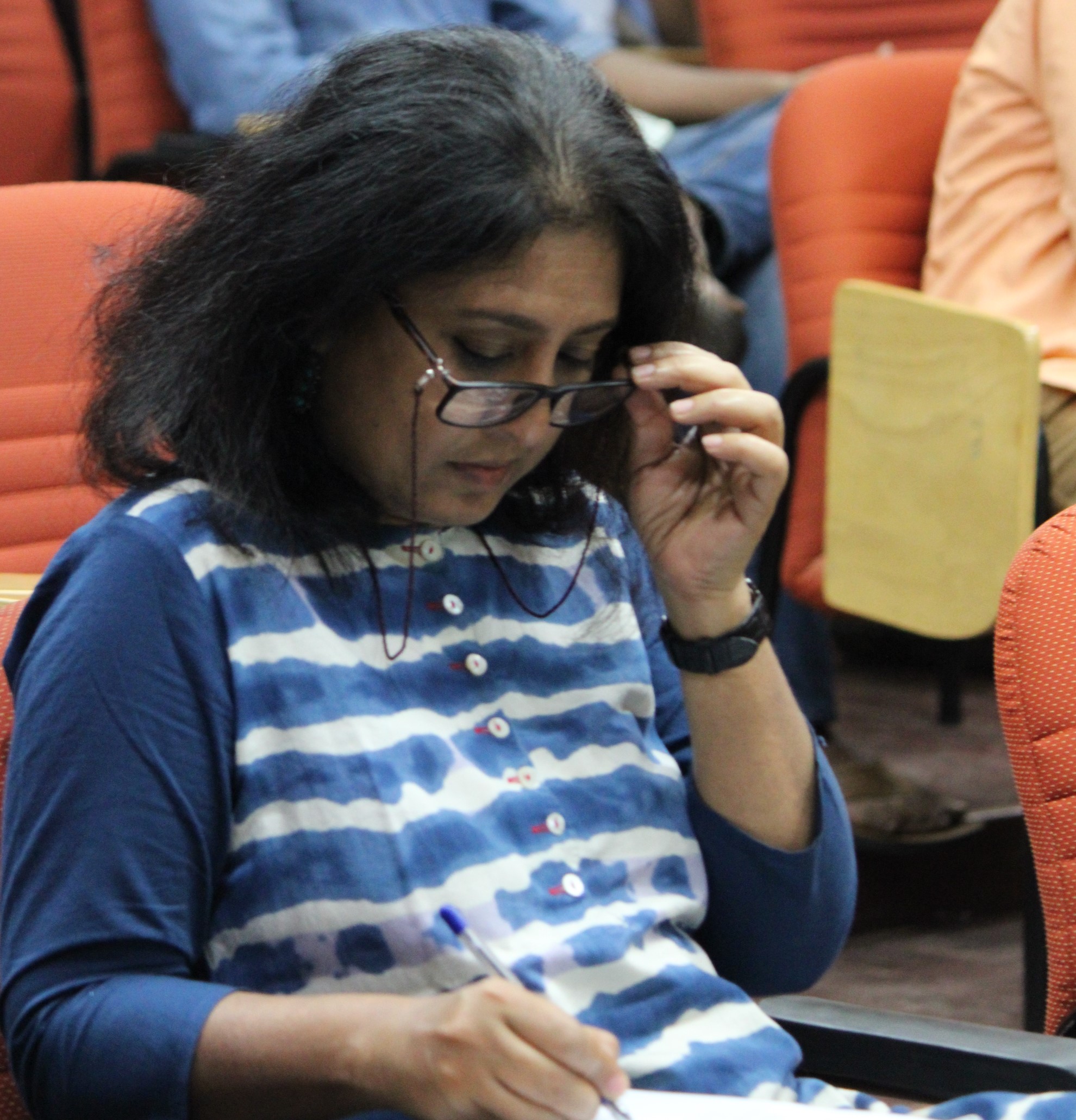
Professor Sonika lauded all of the three presenters, for their well researched and thought provoking papers. Owing to a pressing paucity of time, the Q&A session was restricted to observations and questions by Professors Sonika and Milind. This panel was among the best panels of the conference, because of the presentation of identity as a token among the displaced and the consequences of exercising it.
Report by Rahul Jose
Photographs by Sathya Priya
 Article 19