
The eighth and final panel of the Department Conference, titled “Alternate Identities”, was moderated by Prof. Milind Brahme. Three papers were presented at the panel: “Diaspora and the Sketches of Citizenship: Opening Mics and Minds to Inclusivity” by Ms. Anusha A. J. from the University of Kerala, “Football and Diaspora: The Problematic Identity of the National Hero” by Mr. Srutayu Bhattacharya, University of Calcutta, and “Stem Cell Technology, Biological Citizenship and New Social Formation” by Mr. Shambhu Chaurasia from the Delhi School of Economics.

The first paper took a closer look at highly successful stand-up comedians of Indian origin, whose “pieces” rely heavily on their fragmented citizenship and unconventional yet undeniable allegiance to a “mother country” that is far-removed from their day-to-day reality. In many ways, they are public intellectuals who mediate in the breaches of social order and create narratives of “documented” versus “emotional” citizenship through their performances. The paper takes a look at specific individuals to bring out this, such as Russell Peters, who recalls that he realized, even as a four-year old, that he would always only be an Indian in Canada, rather than a Canadian. His jokes use stereotypes against white people, disdaining their superiority, thus engaging in cultural confrontation. This consistent deprecating humour could possibly be an indicator of the insecurity and alienation that such a divided citizenship engenders. Another example is Lilly Singh, who addresses issues of mental health and her difficulties in embracing “Indian-ness”. Her subversive tactics essentially exaggerate “brown” stereotypes to ridicule the people who use them. Ms. Anusha also brought out other examples, such as Paul Chowdhry and Hasan Minhaj, whose narratives are fraught with confusions but articulated through instances of observational comedy, which is relatable across this spectrum of citizenship. While stand-up thus emerges as a powerful medium to express the conflicts of those who are emotionally divorced from their legal, documented citizenships, there is a distinct lack of representation in terms of LGBTQ+ and female voices as well.
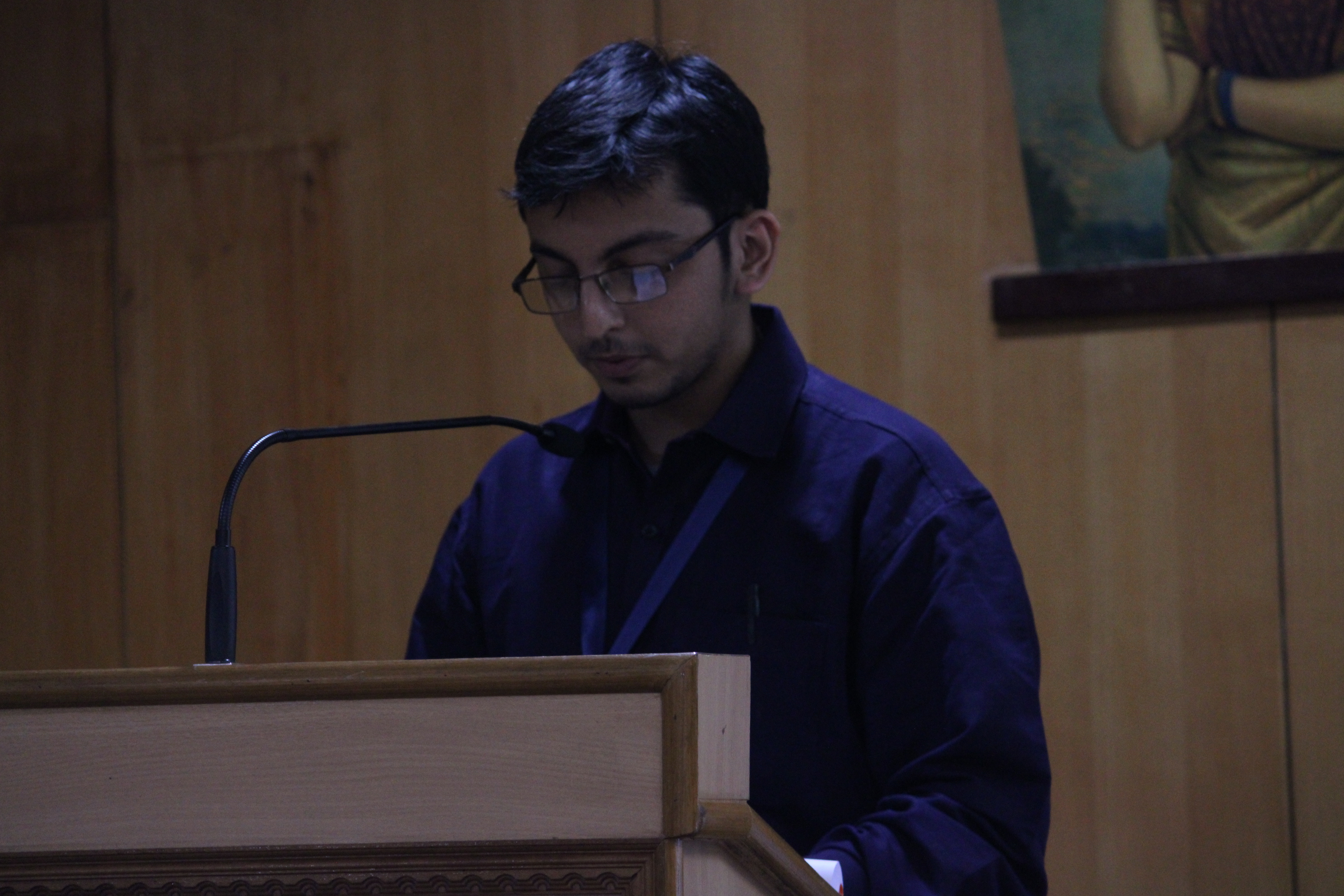
The second paper, Football and Diaspora: The Problematic Identity of the National Hero, was an exploration into the complex negotiations of identity of football players who are “national heroes” in the countries that they play for – an example being France – while also emotionally identifying as part of diasporic communities that emerged after the disintegration of Yugoslavia. Taking three internationally renowned footballers – Zinedine Zidane, Granit Xhaka and Xherdan Shaqiri – as case studies, the paper brought out the divide between an individual’s rooted consciousness versus their lived experiences, particularly when belonging to a diasporic community that was dispersed from their homeland almost traumatically. Zidane, for example, is a French footballer of Algerian origin, forever suspended between both cultures; his prowess as a footballer is a validation of the diasporic Algerian community in France, looked down upon by the French as “not French enough”, and derided as “Harkis” (loosely translated as “traitors”) by the Algerians. As for Granit Xhaka and Xherdan Shaqiri, who displayed the symbol of the Albanian Eagle after Switzerland’s win against Serbia in the 2018 World Cup, the Eagle is a visible trace of their Albanian identity while in the Swiss uniform. Adding to this controversy, their boots featured the flags of Albania, Switzerland and Kosovo, a powerful and political expression of resistance against a single cultural identity. The paper also invoked Stuart Holt’s concept of cultural identity, which posits that in a hybridized cultural scene, a person’s cultural identity itself becomes a dynamic process capturing all the ruptures and disruptions. Prof. Milind, adding to these examples, mentioned the German footballer of Turkish origin, Mesut Ozil’s meeting with Turkey’s President Recep Tayyip Erdoğan, and the subsequent controversy spurring his retirement from international football.
The third paper, Stem Cell Technology, Biological Citizenship and New Social Formation, detailed the role of stem cell therapy as an important tool in treating several diseases, and the social factors involved in its use as treatment. As cells which can change into other types of cells, stem cells are important both as a biological substance and a medical tool. There are two kinds of stem cells — adult and embryonic; however, the use of embryonic stem cells is controversial due to religious and ethical objections such as those within the Catholic Church. The paper talked about the bureaucratic nature of hospitals and criticised their overemphasis on bodily discourse, invoking Foucault’s notion of panopticism in order to demonstrate the fact that a person who enters the hospital system is subject to total surveillance of their body, even after their treatment has been completed. The individual’s actions and movements are all restricted and controlled by the hospital, who determines how long the patient must stay and what kind of treatment they are to receive. Biological citizenship was also discussed, with the concern that discrimination would be levelled against groups including ethnic minorities, economically backward communities and infertile people, not only in receiving stem cell therapy but also in that stem cells from such people would be rejected. The paper described the illegal medical trials in Madhya Pradesh that were conducted without the knowledge of the government as an example, which targeted vulnerable and marginalised groups. In such cases, even if informed consent was obtained, it did not make a difference because such documents were in English and difficult to understand. The paper thus posited that such exploitation would take place without sufficient understanding of the social and medical ramifications of stem cell therapy, and its regulation by the medical community.
The Q&A Session was extremely lively, with a multitude of relevant comments and questions being raised. Prof. Milind also added that these instances of popular culture, particularly in the case of stand-up comedy and football, present themselves as a serious text to be studied, given the proliferation and reach that it enjoys.
The panel was followed by a brief closing ceremony, with concluding remarks by Prof. Umakant Dash and Prof. Milind Brahme, and a heartwarming vote of thanks by the Conference Secretary, Upasana Bhattacherjee.
Report by Pauline Mathew and Abhirami Girish
Photographs by Sathya Priya
 Article 19