
Shortly before the DoHSS conference got underway, a book was launched by our own department’s Professor Swarnalatha and her partner in the project and her PhD advisee, Sreejith. This book is an English translation of the semi-autobiography of Mayilamma, a tribal woman who lived near the Kerala-Tamil Nadu border, in a place called Plachimada, originally written by Ms. Jyothibai Pariyadath in Malayalam. Mayilamma was especially noted for her famed struggle against Coca Cola, who had built a plant nearby promising jobs and development to the region. However, things would take a dark turn when it was found that Coca Cola was both over utilising the water resources as well as polluting the groundwater. And so followed a long and hard legal battle for the water. Although a lower court ruled in the company’s favour, the villagers, led by Mayilamma persisted and eventually won the case some years after the issue was first brought to light.
The David and Goliath situation was brought up multiple times during the entire launch. It was clear that the template had been set. There was no mistaking the enormity of the situation. The dignitaries present – including the Dean I&AR Dr. Mahesh Panchagnula, the HoD Professor Umakant Dash, the Vice President of Orient BlackSwan Ms. Padmaja Anant – all reiterated the fact that it was an honour for them to have been part of the project. Be it publishing, allowing extra time off for the project to take place, or otherwise. It was clear that this story of a courageous woman who had fought against all odds to win had to be told.
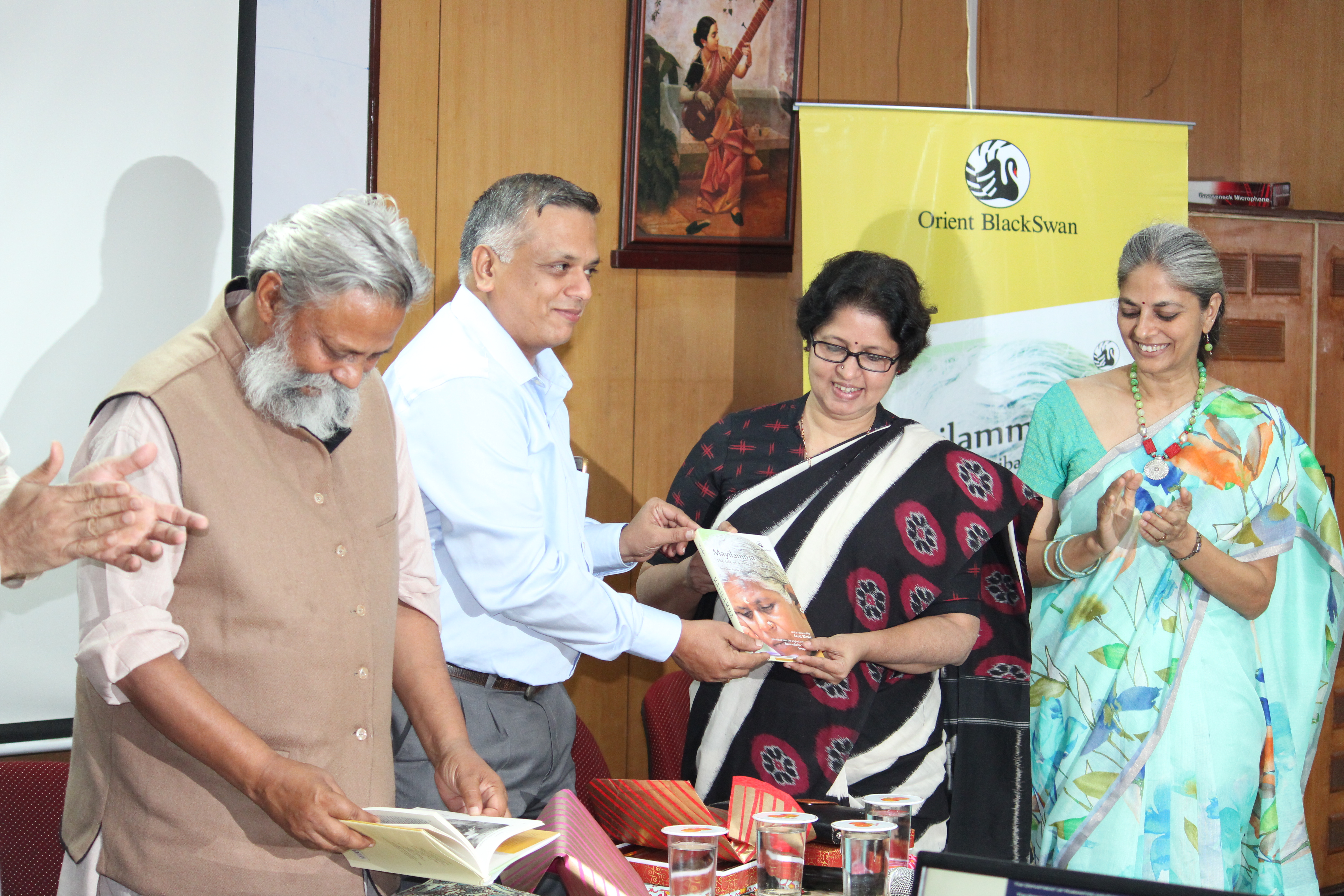
Mayilamma’s biographer Jyothibai – whose original work in Tamil had been translated into English by the two people mentioned above – was also highly appreciative of the work and the effort which had gone into it. She remarked that she still looks up to Mayilamma today. Being from the same district as her, she shared a personal connection with her that went above and beyond. The English translation would be a huge step forward as the world at large could now learn about Mayilamma in intimate detail – her leadership, her relationship with her children, her life, and so on.
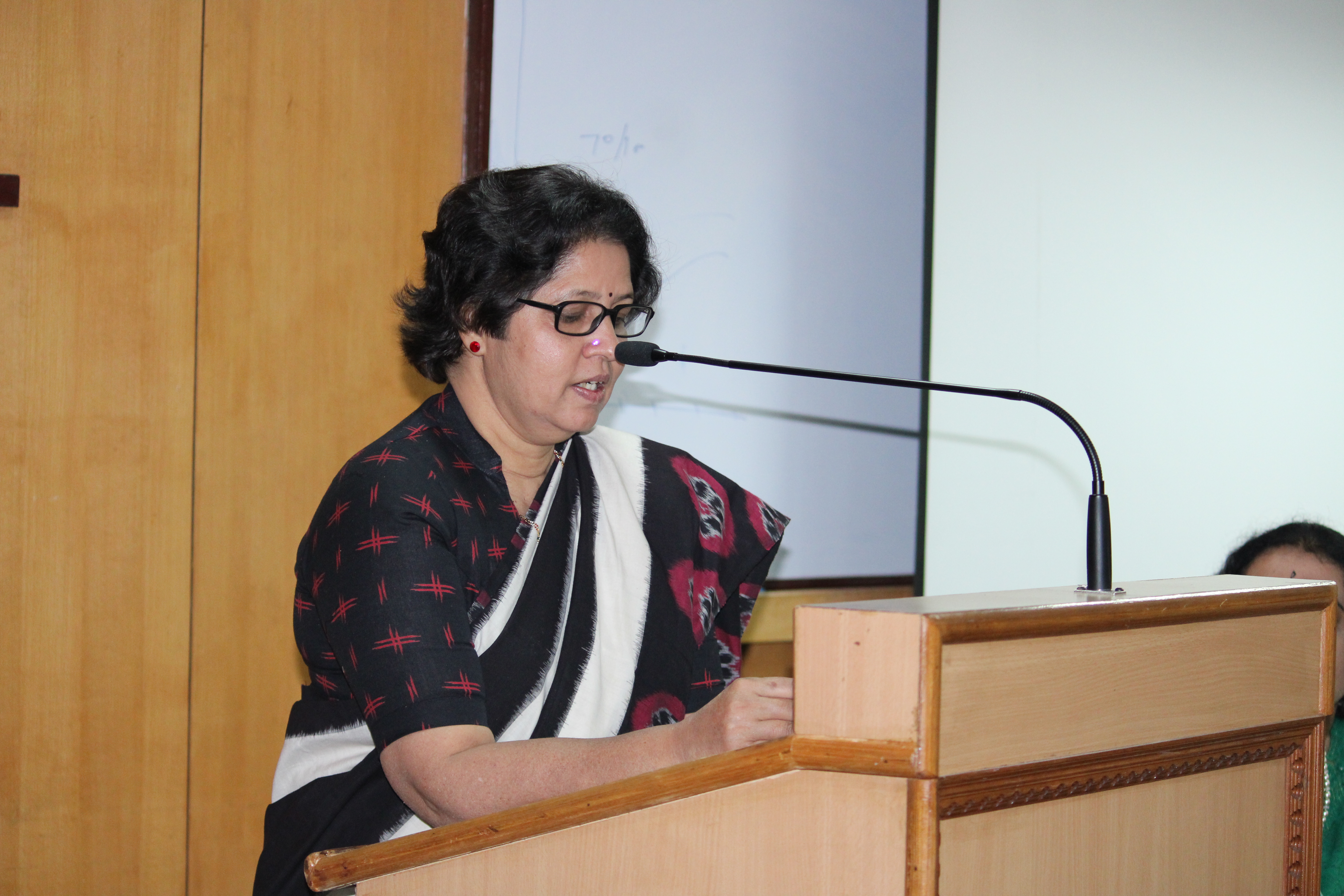
Professor Swarnalatha and Sreejith were next to speak. They were very pleased with the final outcome and were immensely thankful to all of the people who facilitated their project. It was no easy feat to do this, they confessed, as many of the Malayalam and Tamil phrases were extremely context-specific. However, Sreejith assured us that the translation had been as faithful to the original as was possible, cutting down on linguistic discrepancies and explaining unfamiliar contexts in a painstaking manner. It has tried to overcome literalism. An oral autobiography, which was obtained by speaking to people who had known her in life in addition to Jyothibai, was utilised to give a far more personal touch to this lady who had the ‘strength of angel’. The subaltern storyline of these macro narratives is an important document in its own right, and it exposes a darker or different reality. Now, the other side of the picture could be understood.
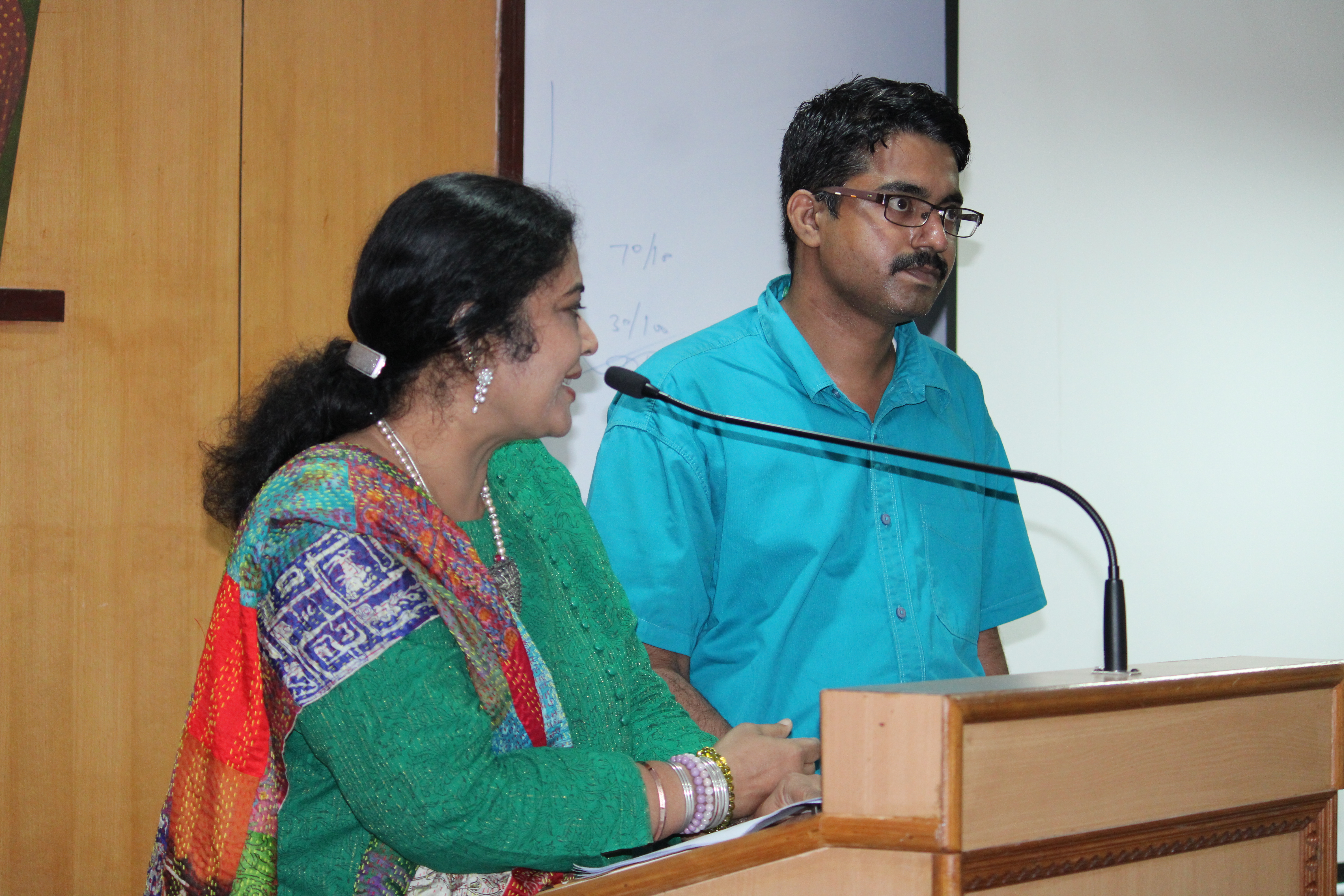
Finally, a touching reading of a passage in the book was presented. All in all, this is a very important book indeed, and the Department takes pride in Professor Swarna and Sreejith for completing this monumental project. I do wish them success in getting the story out to a larger audience, and hope that it may inspire more Mayilammas, as we could do with more of them for sure – as well-known water conservationalist and environmentalist Rajendra Singh so eloquently put it in the lecture that followed.
Report by Simha Y.N
Photographs by Sathya Priya

