
On Thursday, the 29th of August, the Theme Release Event of the 9th edition of the Annual Academic Conference of the DoHSS kicked off, after refreshments of course, at 4:30 pm in HSB 356. Yati of HS18 introduced the event and the conference, followed by the theme release video introducing this year’s theme- ‘Rethinking Violence’. Professor Dash gave the felicitation speech followed by Professor Kalpana, the moderator of the discussion, who gave the welcome address, and introduced the concept note, as well as the speaker of the day, V Geetha.
The speaker began by addressing the interesting title of her speech. The standard definition of a noun that is taught to all of us as children fixes both grammatical and semantic meaning, and in a sense includes almost everything in the world. Similarly, when thinking of violence in an expansive sense, it appears equally saturated in terms of meaning, and yet it also appears very local – and hence, we should think about it in small clusters. She then talked about how violence is abhorrent because it is consequential, and therefore always fundamentally relational – be it with the self inflicting harm on itself, or the self and the other in a relationship where violence plays a huge role. The phenomenon that linguists call the prison house of language, where one cannot think of themselves out of an idea, is also a form of violence and can have immense impact.
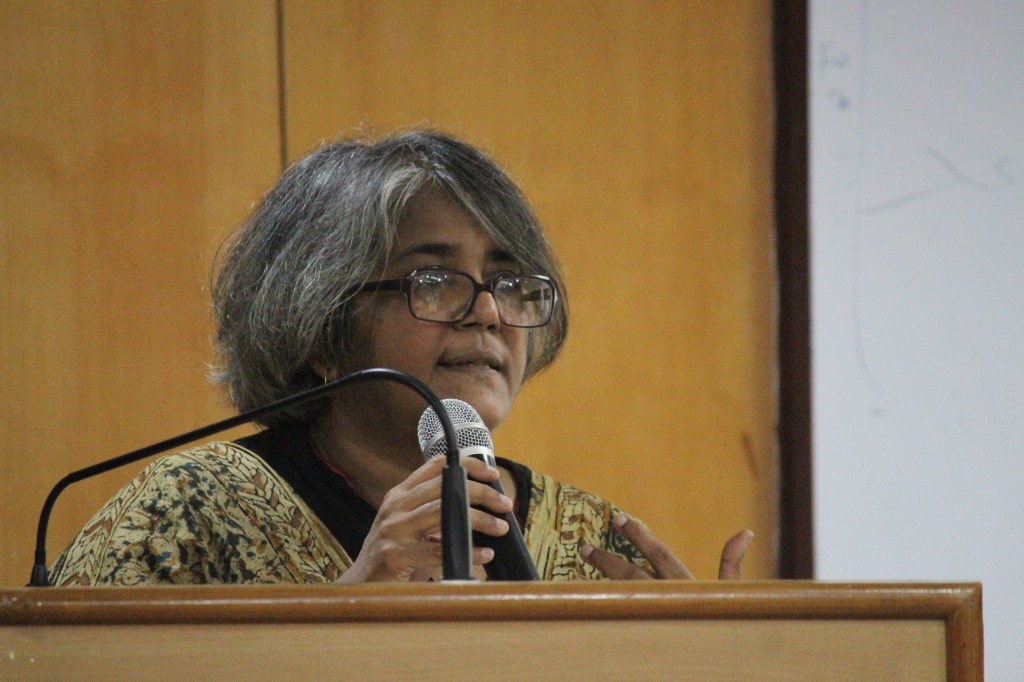
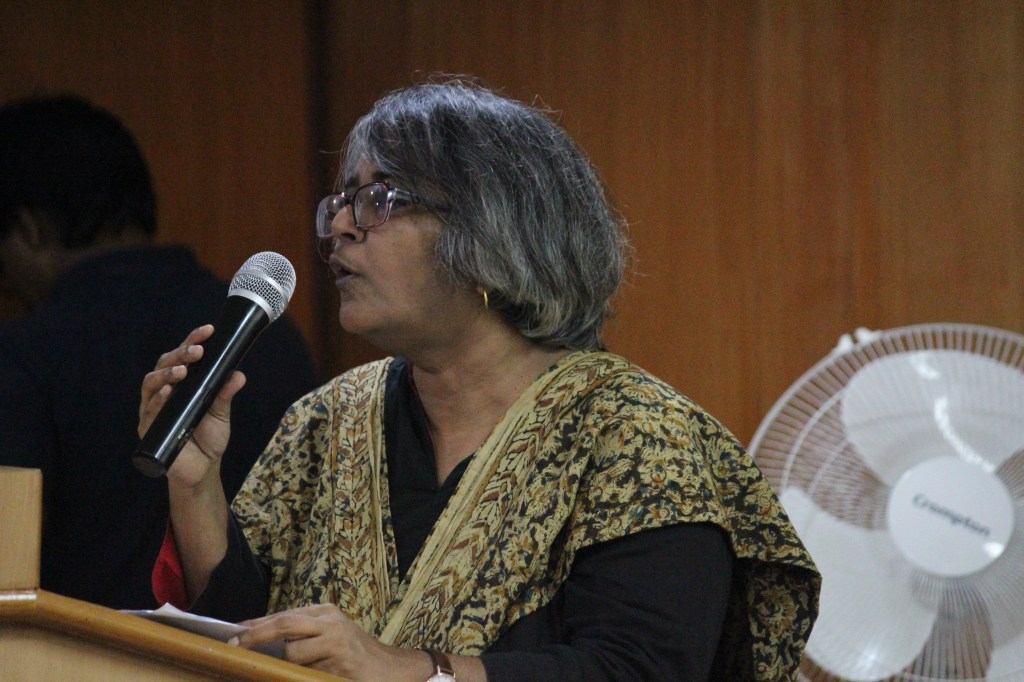
While we talk about violence as an experiential category, we must keep in mind that people engage with it in a resilient way- that people engage, suffer, and transcend – maybe not everyone, but some do. To think otherwise would make it all pervasive. This is also true, she says, of people who torment themselves. We seldom talk of mental health- a fraught and complicated subject. Self torment is also a form of violence, which we need to talk about in ways more than just the language of psychiatry.
What is it that causes violence? Who is it that is violent? Who has this tremendous will to violence? Is it all of us, or some of us? Is it circumstantial? Is it that the fact that we are born into certain classes and castes? The basis for crime is often sociological, and not something that can be ascribed to the individual actor. Often perpetrators of violence are victims themselves. This raises the questions on who the criminal is, and what the basis of crime is. She also spoke on how easy it is for those of us who come from privileged castes and classes to place criminality on someone who is not like us. Is the person who carries out an act of violence the only one responsible for it, or is the larger social structure that naturalizes inequality equally responsible?
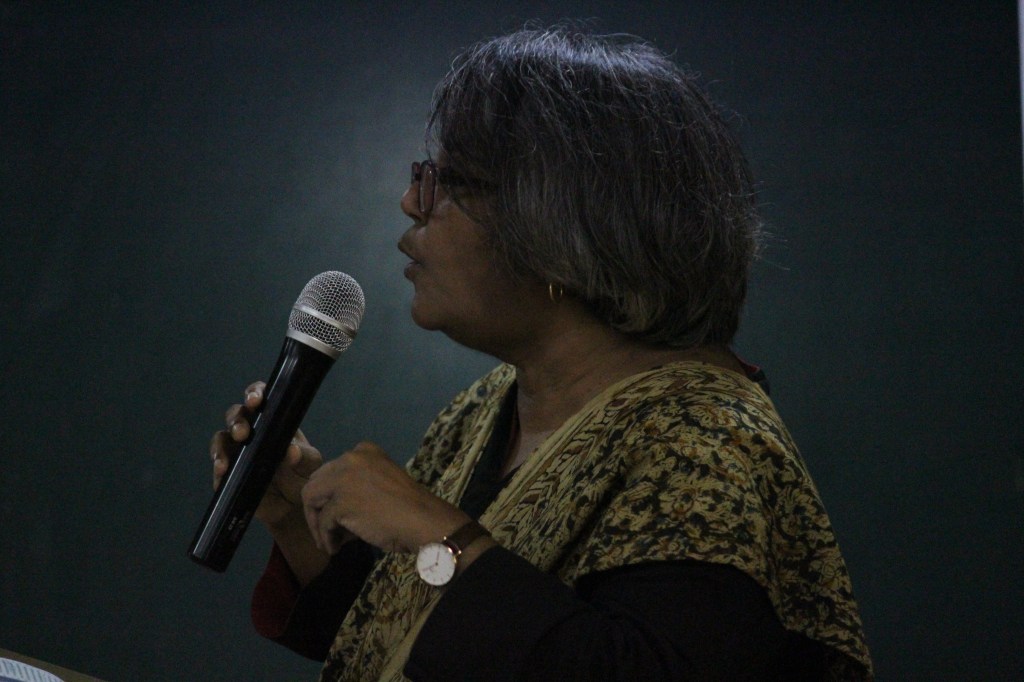
She then spoke of the political reasons for violence that vary from everyday activities like parties beating up each other during elections, tearing up ballot papers, to far more complex ways in which groups that stand for various ideologies, whatever they may be, resort to violence to establish their position. How does one read such acts of violence? Could one talk of just violence and unjust violence? Is it possible to take an absolute stance on it and say every sort of violence is wrong? Here she invoked Gandhi’s view that when a small vanguardist group of people commit acts of political violence, then the state turns against its own citizens to find out who else is supporting them, causing ordinary citizens who did not consent or even have a stance on the issue into the purview of state surveillance. Questions on consent in just violence, and whether all had consented, and whether they had not consented to particular acts of violence but only to a general idea of protest are very difficult ones to navigate through. Hence, she pointed out how the State is an entity that embodies violence more than any other, and that its fundamental anxiety is that it cannot control its citizens’ minds. The act of protest itself is not as concerning to the State as the fact that you will not recant your views or betray your accomplices, and that you’ll stand up for your principles. The power lies with those who dissent.
Moving on to violence of the state, she talked of how all modern states across the world, whatever political ideology they may appear to take on, have all constitutively been violent. Drawing parallels between India and the USA, she spoke about how these two largest democracies in the world were formed in the context of violence. She pointed out how while the constitution was being framed in India, there were thousands who were killing each other at both sides of the borders, and how one of the first things that free India did was to promulgate a public security act. What is it that makes the state demand that part of its own citizenry be sacrificed for it to exist? The possibility that state violence is something that goes beyond political divides and is constitutive of the modern state itself is something to be explored, she noted.
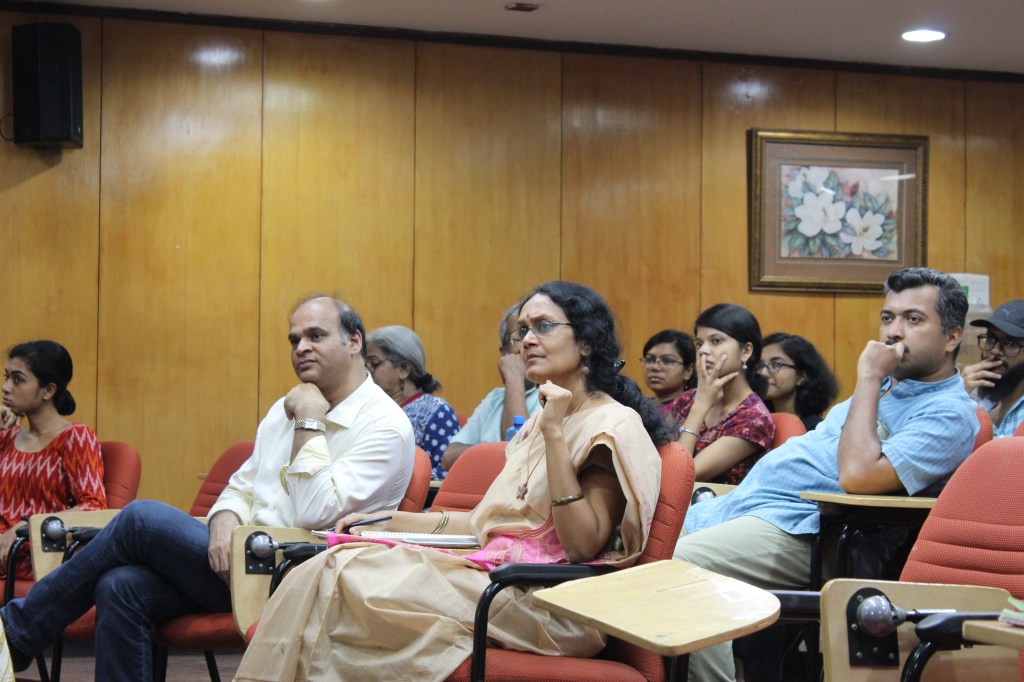
Further, she spoke about how violence affects us in an immediate personal sense. She referred to Cornel West, who had, in the context of American racism, called this violence that racism was capable of ‘ontological wounding’. When someone is denied the right to exist as a person, they are being wounded the very core of their existence, their being. This can be used to understand the atrocities against Dalits, and the fact that untouchability was also ontological wounding. Taking this further, as Ambedkar once said that we live in a society of greater inequality, where no one is equal to anyone- this, too, she says, is a form of ontological wounding. Your sense of self is always a sense of aggressive lack, and impairs you at a very fundamental level. Caste is not simply about atrocities, it is also about the construction of the self. We are all partial, fragmented, incomplete, fairly horrible selves in the caste system, rather than humans. Here, she notes, what is central to the creation of the self in a caste society is gender. What keeps one tied to his or her caste is that you cannot go against your own caste by marrying into another. One’s gendered identity invites violence due to a hatred towards those who don’t conform to gender norms, which has found complete expression in misogyny. In the biographies of transgender people, what angered their families the most was how they dared to opt out of or into manhood, an anger that expresses itself in acts of utter humiliation. This illustrates the kind of masculinity that is central to acts of violence, which doesn’t mean the male sex, but a way of thinking about the world. What isn’t taken into account about violence against women is that it’s not just men abusing and killing women, it is also a form of violence that is very necessary for this caste masculine society to stay as it is. Even in the case of verbal abuse that is directed on caste and caste names and sexual organs, the belief is in sexual morality and exclusion of those who don’t conform to the cis-heterosexual social life. The upper-caste women are always told to never be like lower-caste women, and to see them as their enemies, which is perhaps why that these women are seen to egg their husbands on when they attack the lower-caste women. Hence, this misogyny which tells the women that they ought to be women in a certain way is then extended to attack a wide range of other bodies as well. This is a feminization of violence, across the sex gender spectrum. It is why the assumption that LQBTQ issues are different from feminism is a dangerous assumption; these issues have the caste-Hindu system at stake.
She then raised the topic of discursive violence, mentioning Foucoult, Edward Said and the like who spoke of how ideas, systems of thought and ways of categorising human history, races, and genders can create the concepts of inferiority and superiority among societies. We should remember that discursive violence or epistemic violence does not exist on its own, it is underlined by actual acts of violence- as seen in the manifestation of British racist attitudes in the Jallianwala Bagh tragedy. In these times of post-truth, those of us who speak a truth other than the state’s truth stand to be convicted. There is a very dialectical relationship between discursive violence and actual violence.
Lastly, she spoke of how any understanding of violence must include an understanding of resilience and transcendence. The best example for her would be of the Italian writer Primo Levi who survived the holocaust and lived to write about it in a completely non-bitter manner. His manner of engagement with Germany moved from great suppressed, dismissive, judgemental anger to coming to terms with terms with the fact that you cannot equate the whole of the German people with the Nazi state- a very difficult position to take for someone who had survived Auschwitz. She further noted that the irony, witticisms, beauty and grace he shows in his writings tell us something of what it means to survive violence with great dignity and grace. And hence, she concluded, that in these talks of violence, we should all look at those who have tried to achieve some kind of transcendence above violence and remember that since much of it happens through art, literature, we should also look at literature, art and films, culture and how people express through these platforms.
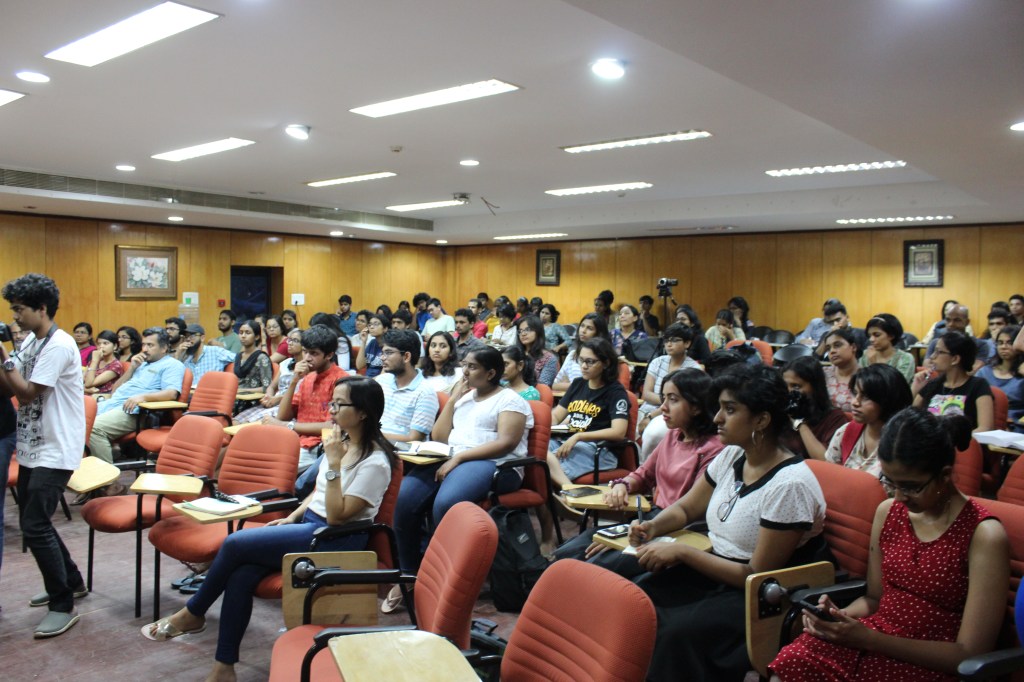
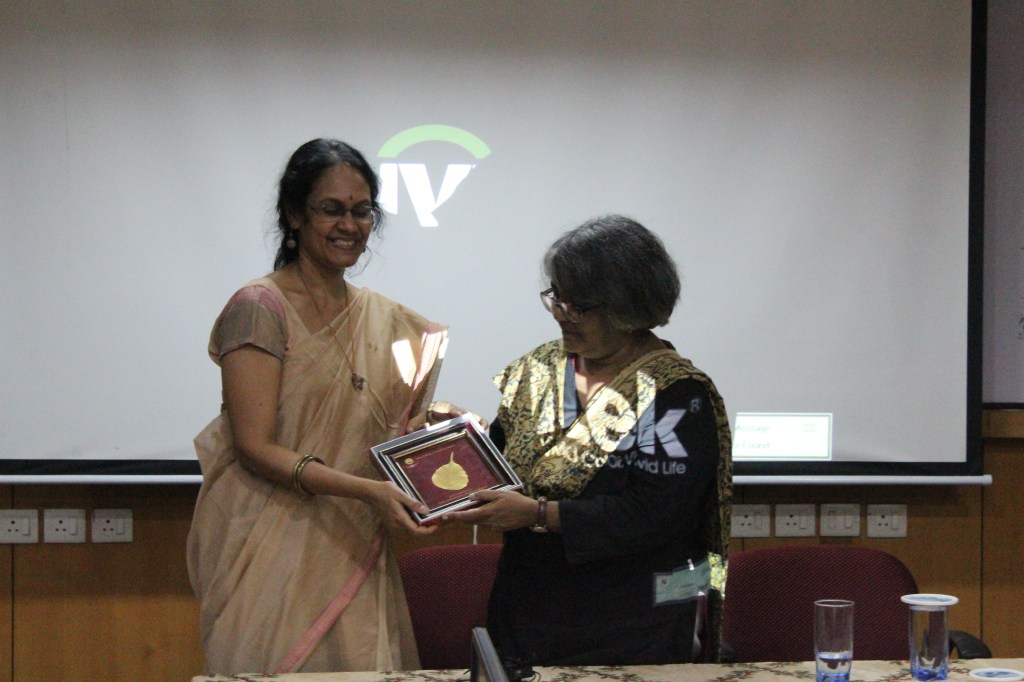
Professor Kalapana then opened the Q & A session, during which detailed discussions on various topics were done, following which she thanked the speaker and the audience and invited scholars to participate in the conference. The event came to a close with Professor Kalpana presenting a memento to V Geetha, and a vote of thanks by Yati.
Report by Meghna M
Photographs by Ajsal E. A.

