
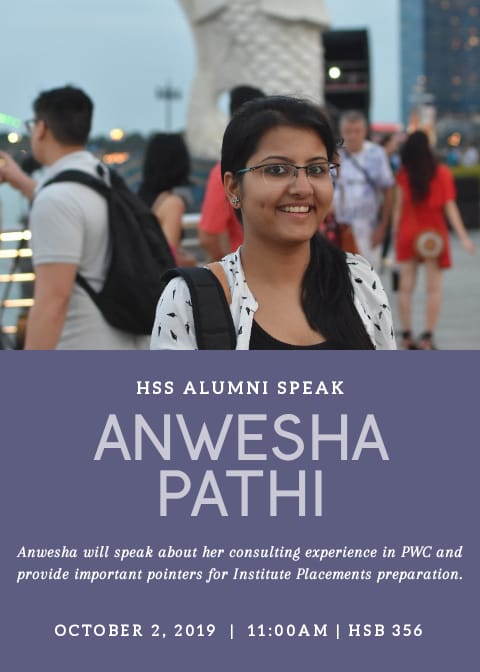
On 2nd October 2019, the first alumni talk of the year was kickstarted by Anwesha Pathi. Scheduled on a holiday and at 11 AM, HSB 357 saw the rolling in of lazy students who did not want to miss an opportunity to explore their future prospects. Anwesha is a student of the HS14 batch, who graduated last year. She is currently working as Associate Consultant in PricewaterhouseCoopers. She spoke about the challenges and opportunities of pursuing development consultancy and also gave insights into preparation for placements.
A major challenge that she mentioned was the difference in funding that the sector receives in developing countries as compared to the developed countries. While in the global north, it is a sector that receives enormous funds, it is not the same in the global south. Hence, compared to their counterparts, the individuals in the global south get paid less. She also talked about how many feel that the compensation received is disproportionate to the amount of time and effort that goes in, as opposed to management consulting or entrepreneurial endeavours. This is also because these sectors are often short-staffed. Some may even go as far as to call it a thankless job.
However, the above claims were also thwarted by putting forth the following argument – the job allows one to comfortably make the claim that they are actually making lives better and impacting people directly. The multidisciplinary approach offered by the department is incredibly helpful while analyzing a problem, since it equips one with the ability to provide a holistic account. The exposure gotten in the institute enables one to deal with different kinds of situations rather effortlessly. Surviving as a social science student in an engineering institute for 5 odd years exposes one to diverse opinions, and empowers one to be able to deal with them.
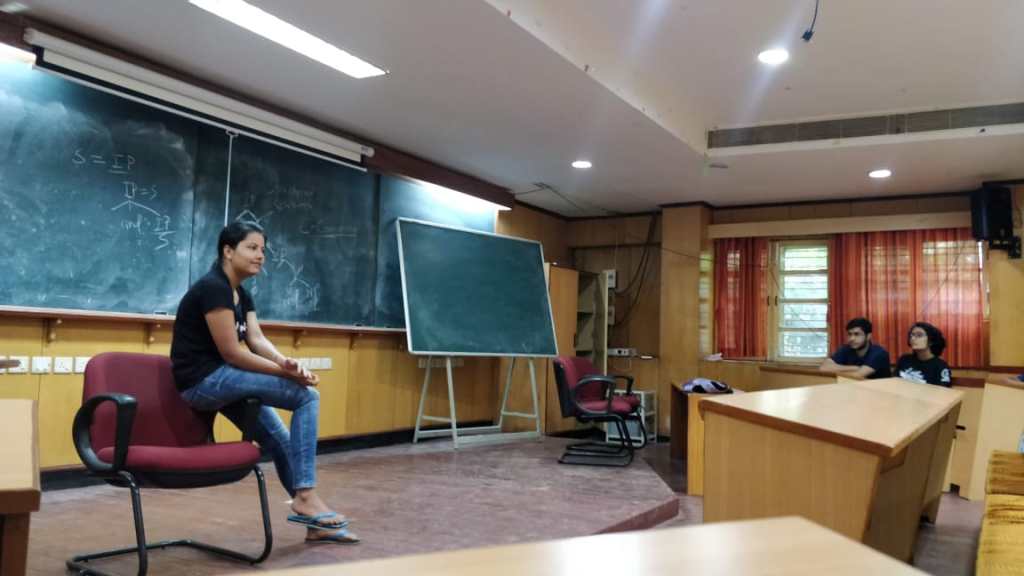
In an attempt to simplify what exactly the job of a development consultant is, she said that they contribute to the human touch of any project. IITM graduates from our department will be able to perform an efficient cost-benefit analysis, and recognise the gaps in the project owing to our interdisciplinary background. Consulting refers to a process by which firms help clients analyse very specific problems and give suggestions. In the developing sector, the role is to help the government, NGOs, development banks, etc. There is never a single straitjacket solution or a replicable model, as each situation is unique. Owing to the particular nature of a problem in terms of geography, people, culture, and so on, even if two projects are similar, the solutions will have to be different. Moreover, the impact of such a job is also highly significant. Each project has the ability to impact a large magnitude of people.
Anwesha also talked about the importance of gaining hands-on experience through internships, as the Department offers a solid backing in theory but does not equip one with practical knowledge. She also stressed the importance of econometrics and other quantitative courses by citing instances where being able to read the data properly, more than being able to play with it, greatly impacted the course of her projects. She urged the students to push for the jobs or companies they want to try out for rather than waiting around for the department.
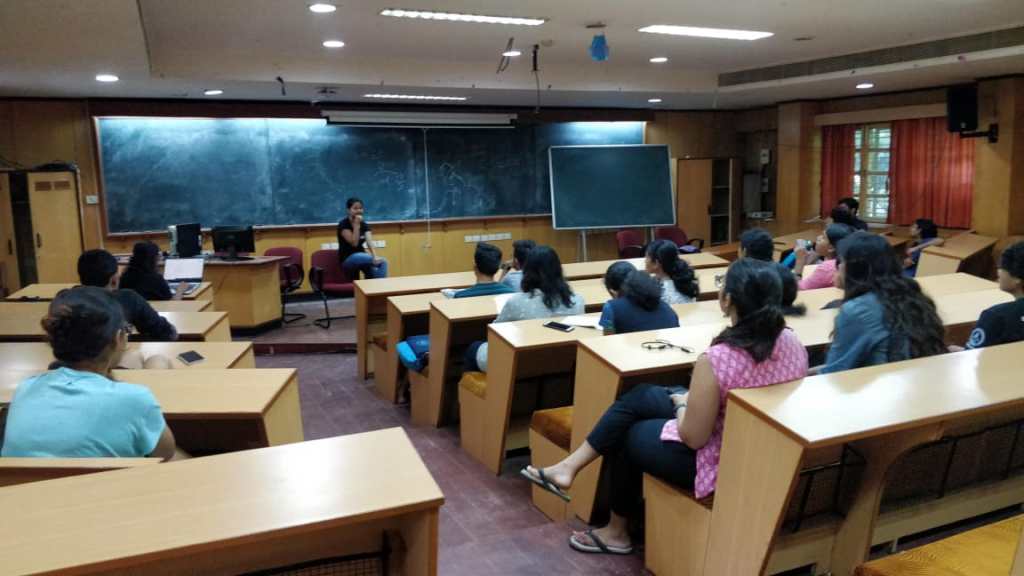
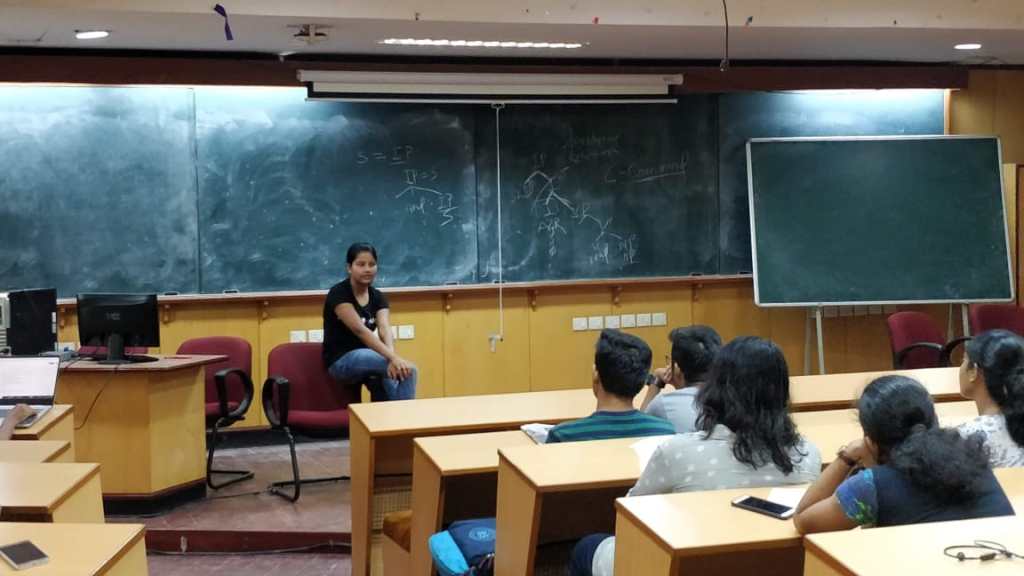
Lastly, she shared some valuable tips and her own experiences in the placement process. She emphasised the need to do thorough case preparation and stressed on the importance of preparing for HR as well. While in the onset, one might feel that they may be able to “wing it”, deliberate thought is necessary to actually ace it.
Report by N.J Sadhana and Gayathri S.
Photography by Sai Chandan Kotu

