
The second lecture of the DoHSS Conference was by storyteller and founder of Saffron Tree, Ms Praba Ram. Her creation, Saffron Tree, is a blog known for reviewing and listing new and diverse forms of children’s literature. In her lecture on Children’s Books as Change Agents, she focused on the need for diversity in children’s books, since these books are the perfect vehicle for welcoming children into a life that is much more multicultural than mainstream representation would have us believe. She began by introducing a few of her favourite books in the genre which, apart from being delightfully illustrated, were repositories of stories seldom told. The first one Ms Ram displayed was ‘Ziba Came on a Boat’ by Liz Lofthouse, which described the harrowing tale of a refugee girl. The next book, ‘Bijoy and the Big River’ was her own, and told the story of a young boy living on the banks of the river Brahmaputra in Assam. She weaves information on Bangladeshi workers, non-violent forms of silk cultivation and the vibrant wildlife of the river into the story. With simple language and elegant illustrations, the books convey their message in a way that even small children could comprehend.
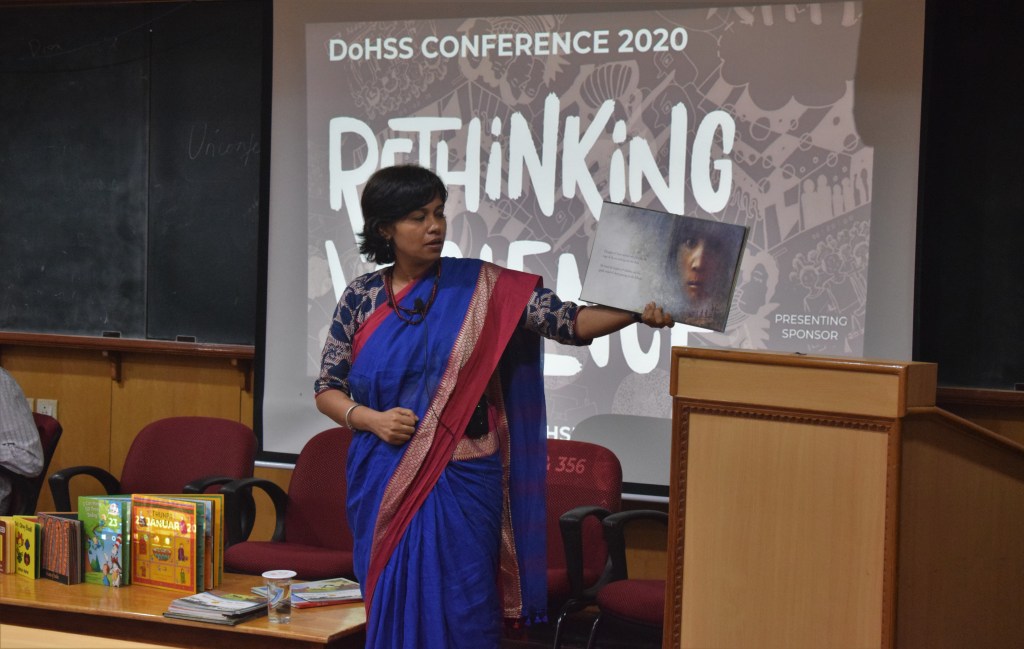
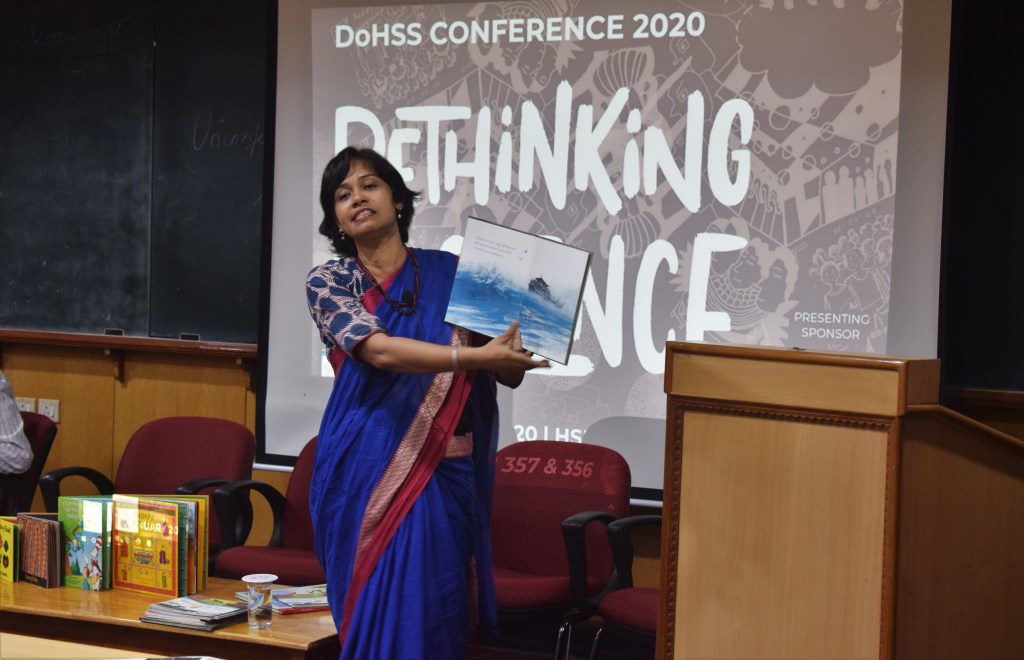
After presenting a few more examples, such as a book of Zen Shorts and a book with tales of saffron pickers and khadi weavers, Ms Ram moved on to address the audience on the importance of such new stories. Stories have power, she said, especially when told to an eager recipient such as a child between the ages of three to ten. She mentioned how literature, particularly children’s literature, is under threat of the ‘Single Story Syndrome’, whereby complex cultures or societies are devoid of their nuances and reduced to a single, overpowering narrative. Children need a realistic picture of the world, and for that to happen, the Single Story Syndrome needs to be dismantled. Exposure to children’s books has also been linked to higher levels of literacy and sensitivity, as it teaches them to embrace the various social, cultural and geographical similarities and differences between people across the globe. When questioned on the subtlety with which to approach sensitive or controversial topics, Ms Ram said she believed that children were capable of comprehending much more than they were thought capable of doing. Adults don’t necessarily have to talk down to the child.
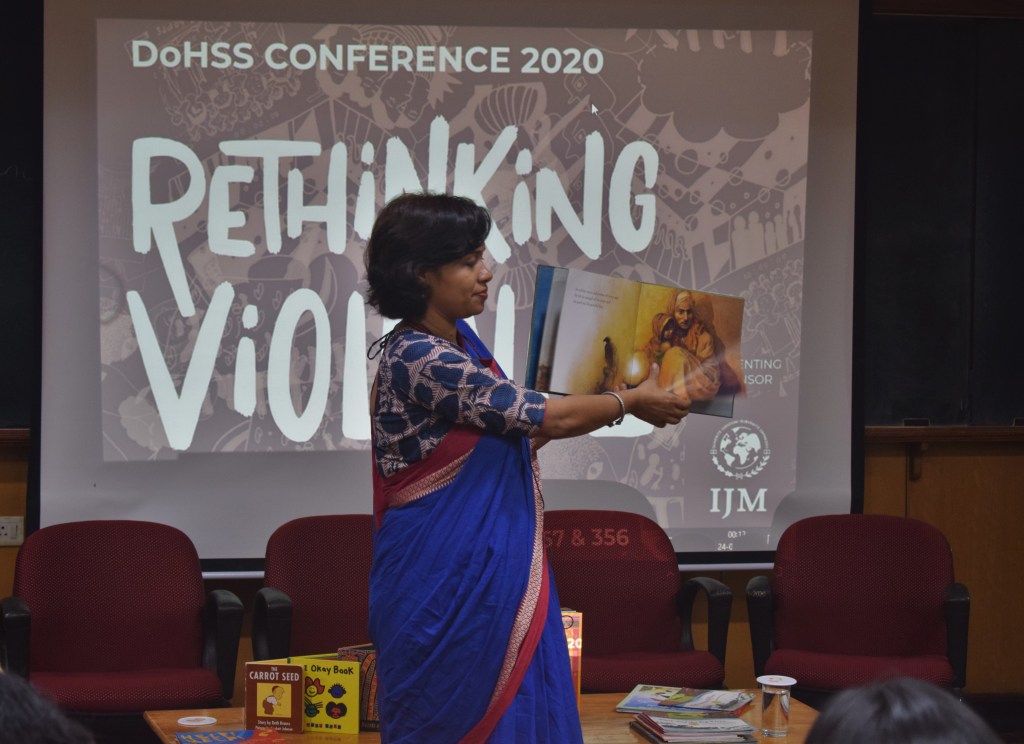
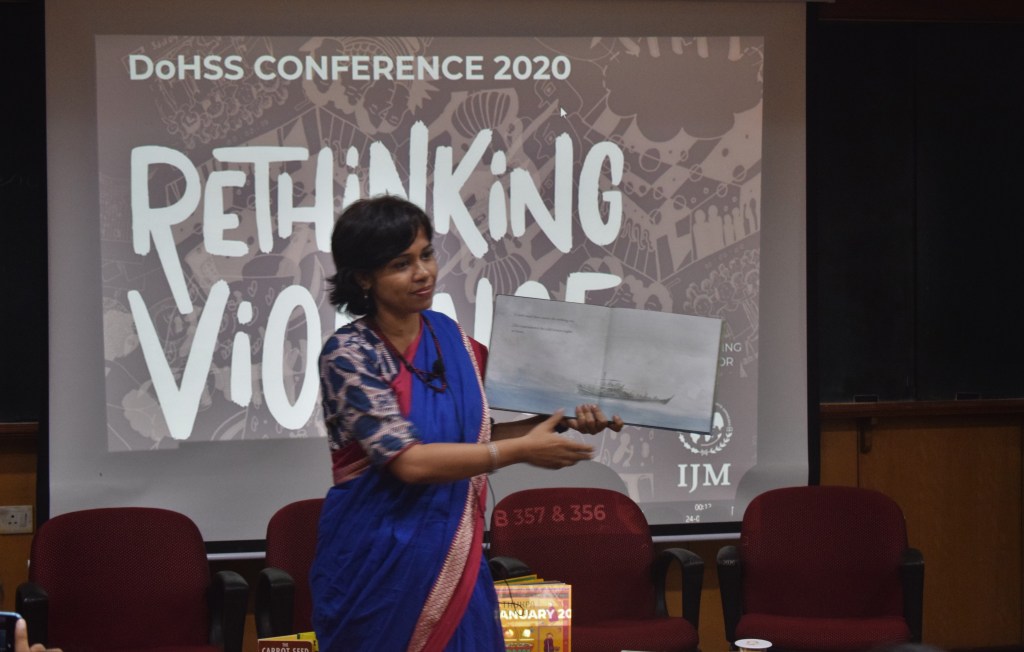
Stories in the literary realm seldom reflect reality. This can be changed by including truths about economic circumstances, gender, identity and social class. When children grow up without seeing diverse images or hearing diverse stories, their ideas about life are often limited to the norm. Therefore, it is important to introduce them to alternate narratives from a young age onwards. She mentioned a children’s book called Disaibon Hul, a publication of Adivaani books, a platform to enhance indigenous voices, which contains the story of the Santal Rebellion of 1855–57. Ms Ram believes that even stories of rebellion and violence can be fodder for children’s books, provided they are handled appropriately. Unlike violent tales of animals, the human component in stories of violence confuses children. Grassroot level publication firms such as Adivaani can increase the circulation of unheard stories, and it is important to support such ventures.
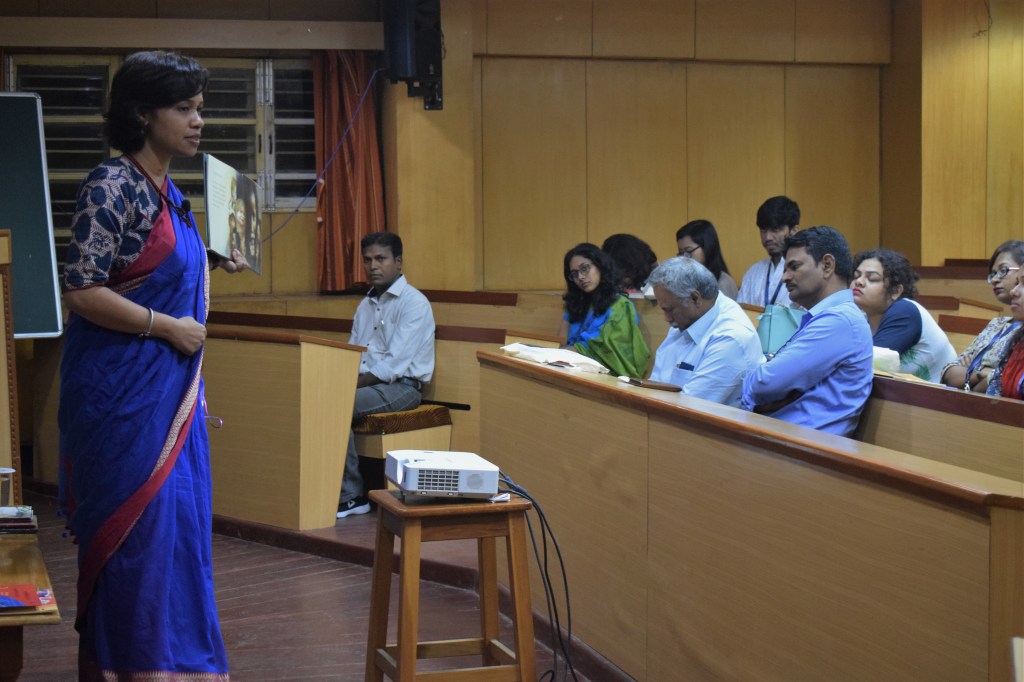
A large percentage of children do not have even basic levels of reading comprehension and unfortunately, this seems to afflict marginalised groups more than anybody else. Hence, building community libraries, conducting workshops and spreading awareness at schools can help improve the current situation. The gamut of vibrant and varied stories available has increased exponentially, but increasing access to them remains a major concern. Ms Ram ended her lecture by reiterating the need to be cognizant of diversity and to accommodate the cultural and linguistic context of young learners.
Report by Kiran A
Photography by Sakshi Malpath

