
The keynote lecture on the second day of the DoHSS Conference 2020 was delivered by Dr. Mahuya Bandyopadhyay, titled “Everyday Violence and ‘Ethical Loneliness’: Narratives from Prison”. The speaker used two main narratives recollected by prison inmates as punctums (a concept borrowed from Roland Barthes’ Camera Lucida) to explore the various kinds of violence experienced both in prison and outside of it by those who are incarcerated. The first of the two narratives was that of Bhai, a local don in Kolkata who had been in and out of prison multiple times throughout his life. Dr. Bandyopadhyay took the audience through his violent life and the factors that resulted in his multiple arrests. After a brief summary of his story, she brought up the fact that there are many insurmountable obstacles faced by those belonging to the lower rungs of society which often result in them turning to violence. She brought to the notice of the audience a network of pre-cast factors and actions that constituted the sense of continuity between the outside and the inside of prison. The narrative brought to the fore the constant fear and violence that surrounded Bhai his entire life; he had even said that sometimes he felt safer inside the prison than outside of it. In the end, he had been killed by members of his own family. Dr. Mahuya concluded the first narrative by stating that it is not just the state that plays a role in the making of this carceral state; that the citizens also participate in making this carceral culture and entrapment that is essentially built on hierarchy and the submissiveness of subjects.
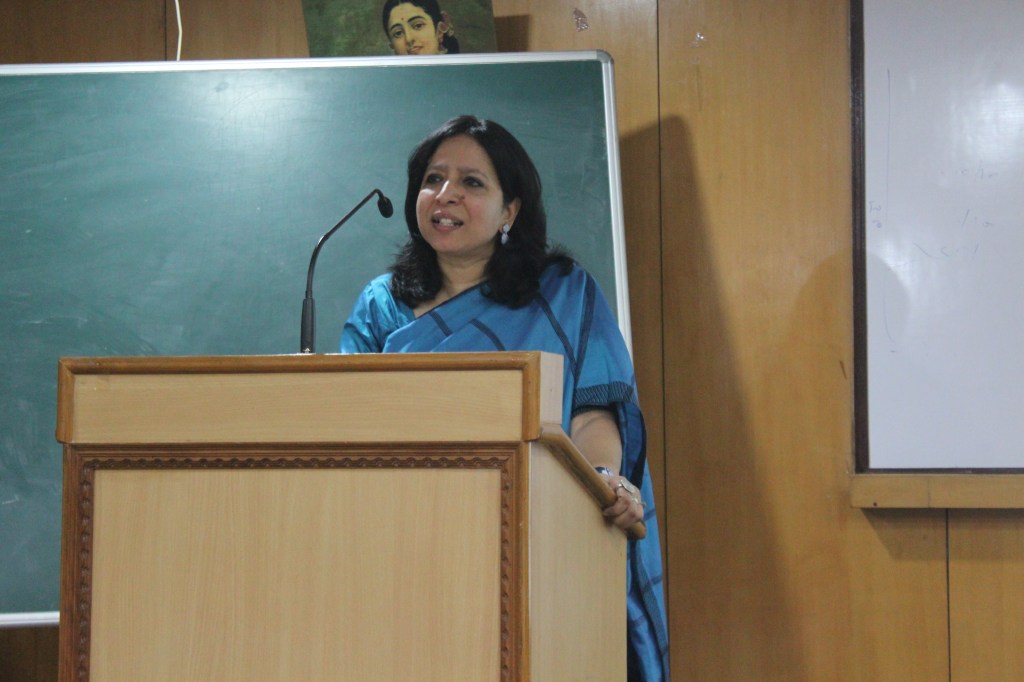

Sandwiched between this narrative and the next was a small section on the importance of narratives themselves. Dr. Mahuya stressed on the important role that narratives play in the sense-making process for the subjects of such carceral entrapment, and that control over narratives should not be limited to institutions. She also introduced the concept of ‘ethical loneliness’- a state of being in which the persecuted feels abandoned by humanity. This is caused by unjust treatment and dehumanisation. Before moving on to the next narrative, she also mentioned that “stories without an audience don’t survive”, and that in many cases, the narratives of those who aren’t privileged have many interlocutors who may disturb their temporal and spatial aspects.

The second narrative was that of Champarani, a Bengali sex worker, taken from a book written by a Bengali author who was a political prisoner and an inmate with Champarani. Champarani had been sold to a brothel by a family friend who had promised employment. She had been beaten up by the people in the brothel to make her comply with their demands. She met a man who wanted to help her escape sex work and planned her escape. Right before her escape, however, the brothel owners came to know of their plan and the man was killed. Faced with no other way of escape, Champarani set fire to herself; and was put in prison for attempted suicide. During the first few months of her incarceration, Champa had been very silent and machine-like; listening to the orders of the matron with no protest and not talking to any of the other inmates. Her sentence was commuted and she was slated for early release due to good behaviour. From this point onwards however, Champa’s behaviour had completely changed; she had become violent towards the inmates and often wailed and screamed incoherent words. On further probing the matter, the author had found out that the warden who had arranged for Champa’s early release was hand-in-glove with the brothel owners, and arrangements had already been made to ensure that Champa doesn’t escape and that she is taken back to the brothel. This clearly brought out the continuity between the inside and outside of the prison that the speaker had mentioned earlier. The speaker then pointed out the fact that family, marriage, and kinship are often recurring themes in the lives of those subjected to these kinds of violence. The speaker then concluded the narrative by raising a question which was very pertinent to the theme of the conference- what is classified as violence and who has the ability to engage in this classifying?
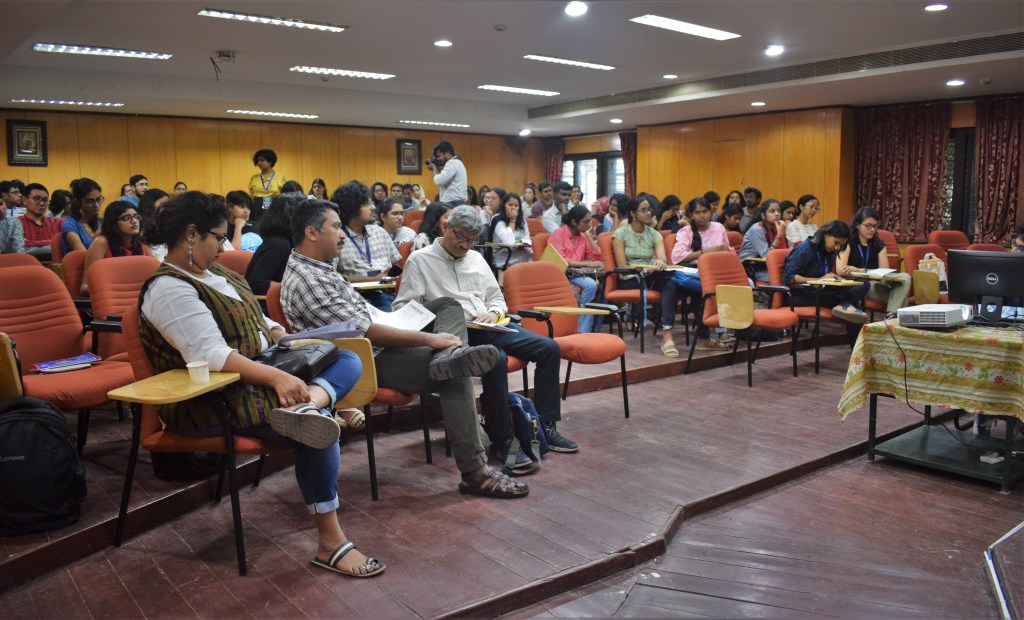
The speaker concluded the keynote address by talking about the three main advantages of using the idea of a punctum; firstly, that it can help bring out the hidden aspects of a scene which may be before our eyes. Secondly, there could be many aspects of one’s research that one may be aware of but unable to articulate properly; in such cases, a punctum could be very helpful. Finally, the presence of an ethnographer might enable participants to signal to certain animated or charged moments which enable us to see things that are not usually noticed. Events such as Bhai’s death provide insights into how such a life should be examined. The speaker ended the keynote by saying that if one has the tag of disposability as citizens the way
Bhai and Champarani did, there is a certain degree of certainty with which one might say that they will experience these kinds of violence. She then said that as researchers it is also our responsibility to ensure the survival of the narratives of those entrapped in the carceral system, and to decenter the established hegemonic narratives relating to punishment and violence. The lecture was followed by a lively Q&A session in which students and researchers participated with great enthusiasm.

Report by Sherwin Rodriguez
Photography by Sakshi Malpath and Ganesh Dileep
 Article 19