
The session hosted Dr M Devasitham, the Associate Director of Strategic Development at International Justice Mission, Chennai and Dr P M Nair, a UN recognised expert on human trafficking, from IJM. After the welcome address, the session began with Mr Devasitham, who talked of the hidden violence that many victims of trafficking are inflicted with. He shared five stories, where the violence was hidden, unrecorded and almost always unnoticed.
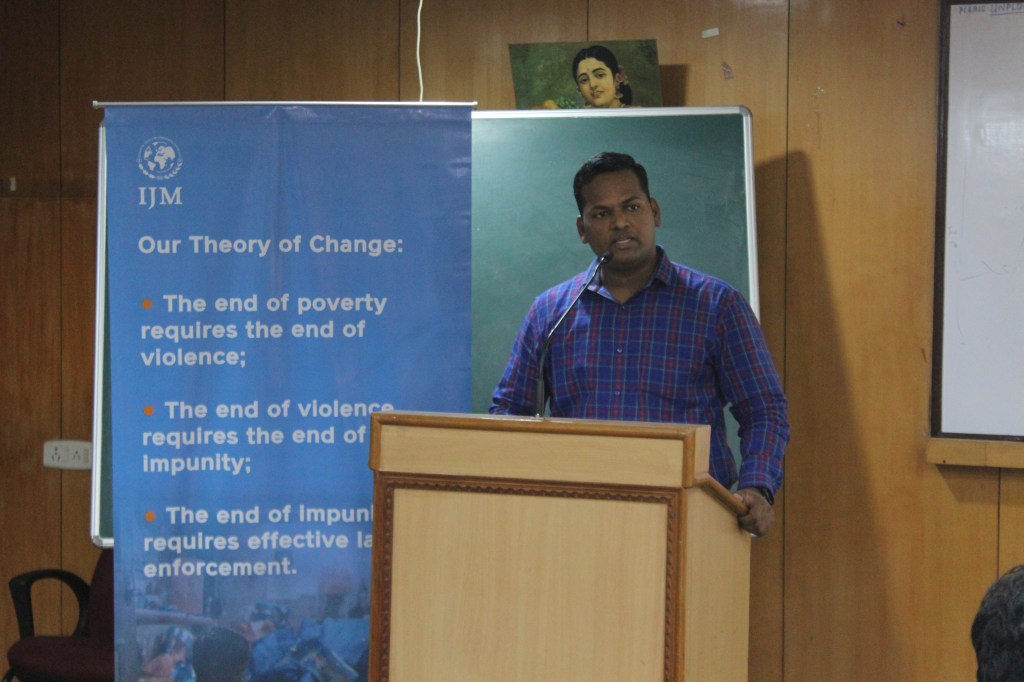
These stories included the horrifying accounts of people who were rescued from various situations – The first case was of a boy who worked in a brick kiln. He was made to work for 16 hours a day. His movements were restricted as he was constantly watched over by a person. He was not allowed to go outside the factory. The second case was of a boy working in a confectionery unit. He had to remain in a dark room and given food only two times a day. He could not enjoy his childhood. The third case was of a girl who was in a brothel. She had 4-5 customers a day. In the evenings, she was locked up in a room. During the “seasons”, the customers were numerous. The fourth case was of a man who worked in a rice mill. He was made to work even when his son was very sick. He was not allowed to perform the last rites of his son’s funeral as there was work in the mill. The last case was of a woman, who even in the advanced stage of pregnancy, had to carry heavy bricks, due to which she had a miscarriage. According to the doctors who informed her of her miscarriage initially, she was so upset that it took many days of counselling to bring her back to normalcy. These people were rescued, but the issues remain.
He talked of the importance of going beyond what we can see and recognising the hidden violence that others are going through. He also talked of safety on the internet, and taking care of each other as well.
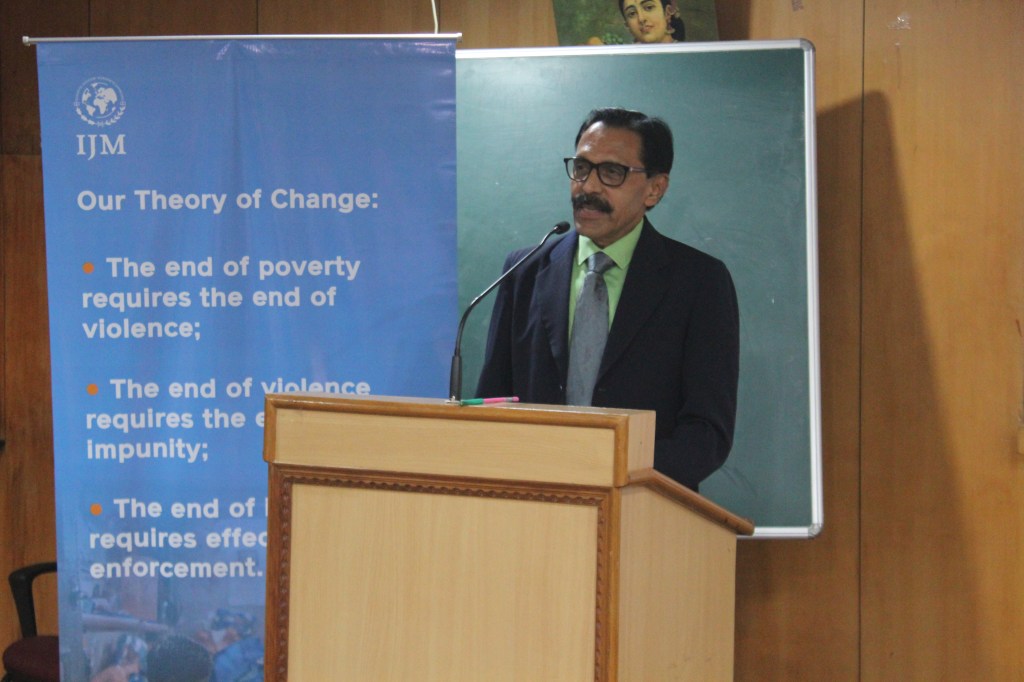
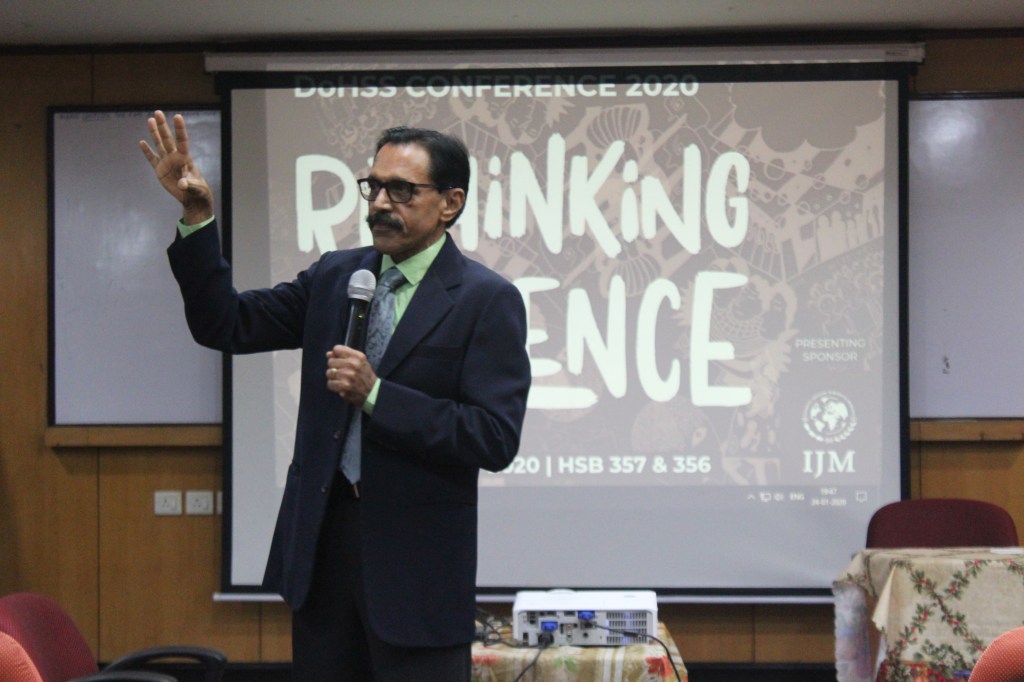
Dr P M Nair spoke next, and he began by expressing the hope of starting a mission to end violence by the end of the session. He spoke of the dangerous organ trafficking networks across the country. He then spoke of the difference between sex trafficking and prostitution, and how confusing the two would be detrimental to the victim of the trafficking. He gave examples of real cases he had worked on over the years, and talked of the trafficking that happens right under our noses. The violence meted out to the victims here is very real and happens in front of us without our knowledge. He explained a case where trafficking happens under the facade of job offers abroad and tourism. A lady who was offered work as a housekeeper abroad was actually used as a sex commodity. Offers of a job as tourist guide also proved to be a ground for sexual exploitation. He talked of the danger we ourselves as common citizens pose with the demand for these. He shared horrifying stories of trafficking from Chennai, that went unnoticed by the people here. He talked of 27 boys who were taken from a village to work in a carpet factory, where they were made to work for 18 hours a day with only a small amount of food per day. Most horrifyingly, they were also abused sexually, in front of the other children. They were traumatised for the rest of their lives.
He then pointed out the ways in which we can help in our own way – by spreading awareness. He also spoke of our constitutional duty as citizens to make sure each of us are safe from violence. Regardless of who we are – students, teachers, police, and so on. We have the duty of ensuring that each of us are not trafficked.


Coming back to awareness, he talked of the importance of getting the youth involved. He concluded by presenting an SoP on how to stop human trafficking, in order to begin a club in the institute, to Conference Secretary Avantika. The mementos were presented to the speakers, and the session was concluded.
Report by Meghna M.
Photography by Ganesh Dileep
 Article 19