
The second panel was on the theme ‘Violence and Space’ and was moderated by Dr. Solomon J. Benjamin. Unfortunately, the first two presenters were absent due to personal reasons. The third presenter, Mansa’s paper on ‘Mapping Space and Gender in Nihal Vihar: Young Women’s Aspirations and Experiences of Violence in the Lower Middle Class Neighbourhood of Delhi’ seemed to make up for it with its extent of intellectual and experiential engagement. She narrated her experiences during her field work and placed it in the context of a systemic structure with ease. The hidden categories of how agency gets played out were exhibited through this ethnographic study.
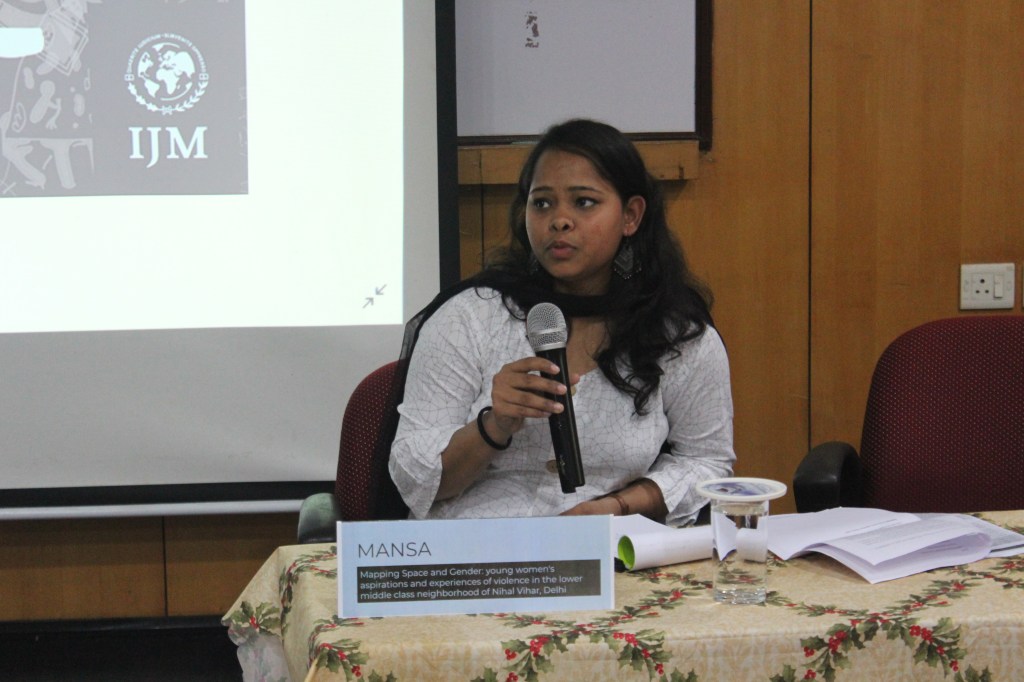
The tool of research used was through interviews. The sample age group was 17-26 years, and the study was conducted in Nihal Vihar which is an educational hub (JNU, Jamia, etc.). Women from lower-income groups are usually engaged in low-income work or are housewives. The study portrayed how different spaces play a role in shaping aspiration for young women, as several of these can potentially become violent spaces for them. It was argued that violence has been institutionalised and the traditional norms do not allow women to break free from this pattern of structural violence. Aspirations are shaped by individual and structural experiences. For these women, violence plays a massive role in their daily experiences. It is not an occasional event, but rather a constant thing. Time, distance, money, etc. are causes for stifling these aspirations. Lack of money in the household, inability to commute, need to be the primary carer all results in their own aspirations becoming secondary. The women of the study were from lower middle class families and were financially not very well off.
Women are confined by the boundaries of time and space. They are expected to be back home at a certain time, do the household chores and train to become a mother because they that is the ideal conception of a “perfect woman.” A strong case was made on how control on a woman’s sexuality was secured through control of time and boundaries. The fear of women getting involved with other men is so overpowering that their clothing is also heavily policed. The different forms of violence and control exhibited in the private sphere gets reproduced in higher educational institutions. However, the autonomy of women in the space of college is different from the space of home because in college, they are able to function as a group and mobilise for their interests rather than as unagentic individuals. She drew attention to the point that even in the recent anti-CAA protests happening across the country, women are leading it despite being vulnerable, because they are able to function as a group and look out for their interests.
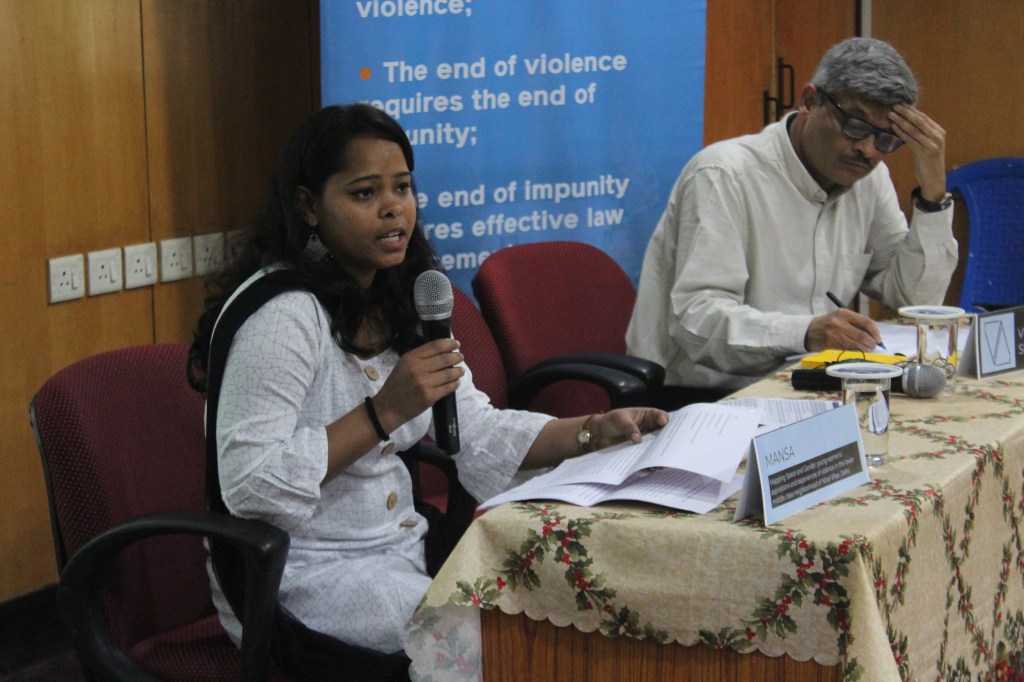
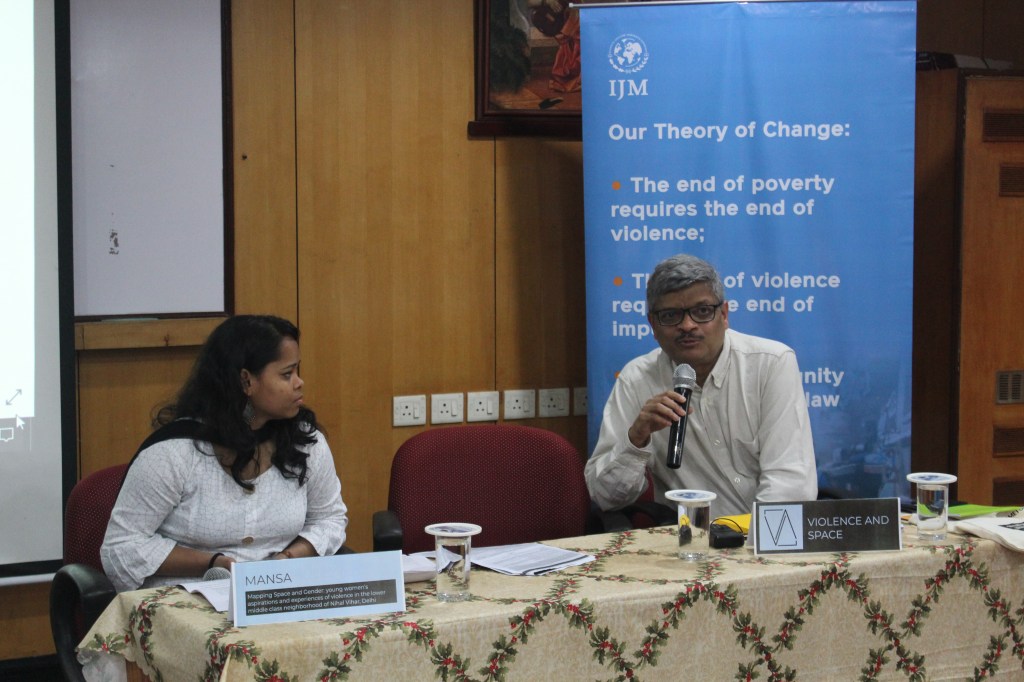
Mansa ended by talking about the need to bring to light the nuances in the lives of women, despite getting “educated.” The moderator, Dr Solomon Benjamin, ended the panel by adding another key point. He pointed out that the use of sophisticated language in universities is also an act of violence as it becomes a tool with which the crowd can be divided based on their ability to understand. He called for a rethinking of the connections between violence and command over a language while questioning the apparent success of these institutions.
Report by N. J. Sadhana
Photography by Ganesh Dileep

