
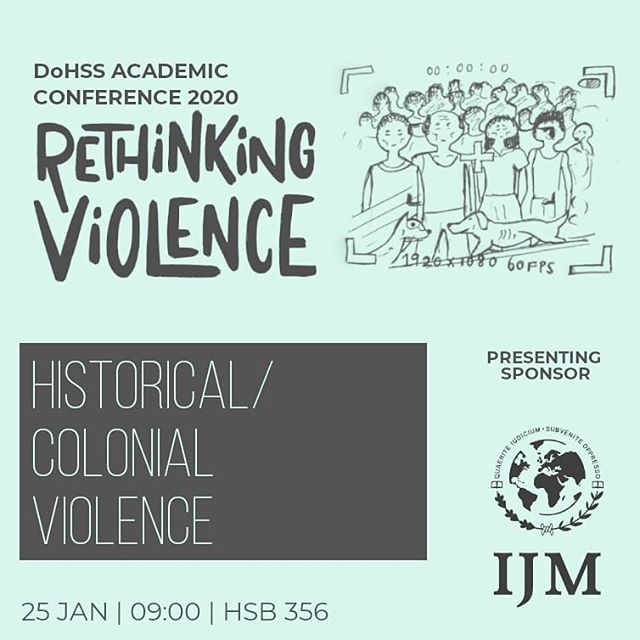
The sixth panel of the Conference was titled “Colonial/Historical Violence” and was moderated by Dr Arvind Sivaramakrishnan. The first presentation, ‘Paper Citizens of South Asia: Delineating “Violence” in the Identification Regimes of Post-colonial India and East Pakistan’, was presented by Jigme Wangdi of Jawaharlal Nehru University. The paper examined the documentary practices of India and East Pakistan in a retrospective reading of the Partition, and how documents such as passports and visas meant more than just travel documents to minorities in both states, as well as the violence they faced with respect to these documentary practices. After Partition, both India and Pakistan did not focus much on their eastern frontiers, as the violence there did not necessitate attention – the border on the eastern frontier remained open till 1952. However, Partition did not affect everyone equally – caste, religion, and gender all determined the legitimacy of a person’s claims to citizenship. Post-colonial state formation practices meant that officials felt the need to determine who rightfully belonged to India and Pakistan, with people being classified as citizens, aliens, evacuees, migrants, and/or infiltrators. In the absence of a permit system, identity- affirming documents helped in identification by both countries. Documentation was implemented to control mobility as well as to portray oneself as a loyal citizen in a non-literate and paperless society. Travel documents showed one’s national identity, and passports and visas, meant to categorise people based on purpose of visit, implicitly granted one the right not to be deported. Fraternising with the “enemy” would lead to confiscation of one’s property, and would make you liable to deportation if you could not provide enough evidence to prove the legitimacy of your visit. This became a problem especially when a person wished to reside on one side of the border but maintained family ties on the other. Thus, documents meant just for travel acquired nationalised meanings in the post-Partition context. They were markers of one’s nationality and allegiance even though they were not legal citizenship documents. The violence manifested thus due to the post-colonial and cartographic insecurities of both the newly-formed nations was widely felt.
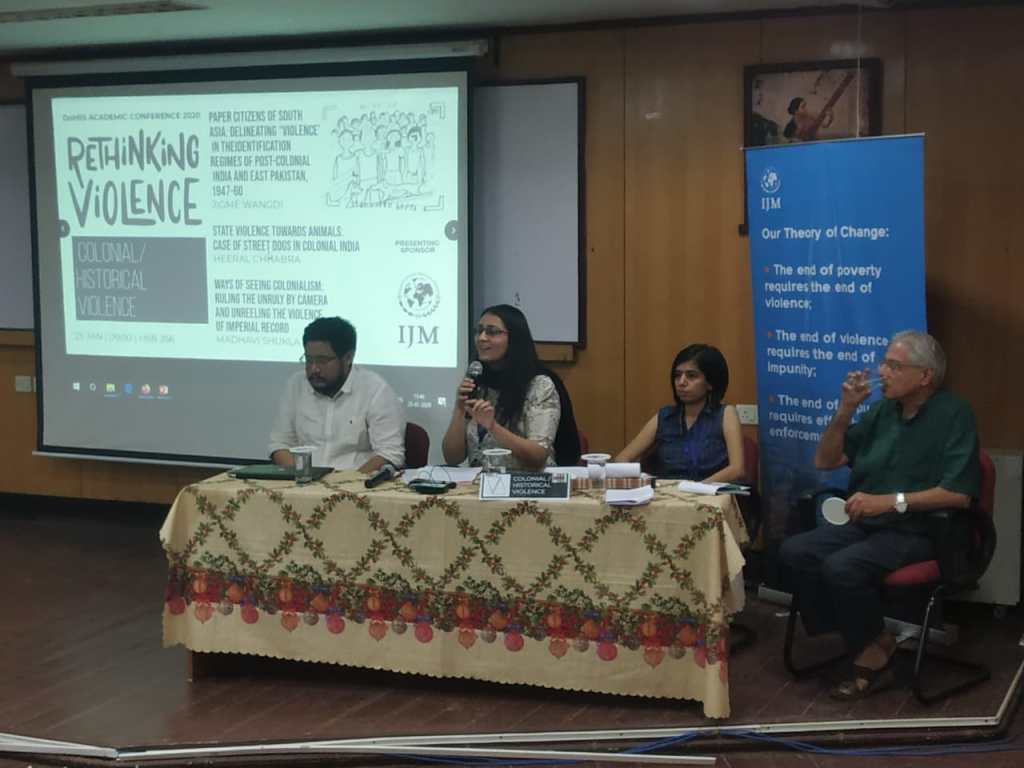
The second paper, State Violence towards Animals: Case of Street Dogs in Colonial India, was presented by Heeral Chhabra of the University of Delhi. While the terms “street dog” and “stray dog” are usually interchangeable, they carry different connotations. “Street dog” refers to a dog which belongs to a particular street, while “stray dog” carries connotations of being a “misfit”. In colonial India of the 19th and 20th centuries, “stray dog” was the term always used. The present-day attitude of the establishment towards street dogs traces its origins from colonial times, when mass culling of dogs was common. However, actions such as these were not considered “violence” in the strict sense of the term, thanks to narratives given by the colonial state that made it legally acceptable to kill street dogs. The shaping of these narratives themselves forms a part of the violence exerted by the colonial state, as does the providing of legitimacy. Free-ranging of dogs was the norm until the 19th century, when colonial urban planning and control, as well as a fear of diseases such as rabies, rendered the ownerlessness of dogs problematic. Free movement of dogs reflected the uncontrollable elements of society, thus threatening the authority of the modern state. The ideal of a clean and hygienic city led to dogs being pushed to the margins of urban spaces, embodying nuisance and disease, and led to a need for their “destruction”. The legal killing of dogs was justified with the argument of “humaneness”. However, this argument served as a smokescreen to mask the need of the state to get rid of dogs in the easiest and most efficient ways possible, using painful methods of culling. The violence exerted by colonial authorities reflects the violence of the colonial state that forms the core of its identity. Its self-assumed civilisational superiority allowed it to wage violence against not only the people it ruled over, but also its animals. The institutional and structural epistemic violence of the colonial state is clearly visible through its establishment of narratives that not only sanctioned violence against animals, but also normalised it, giving it a veneer of humaneness and acceptability.
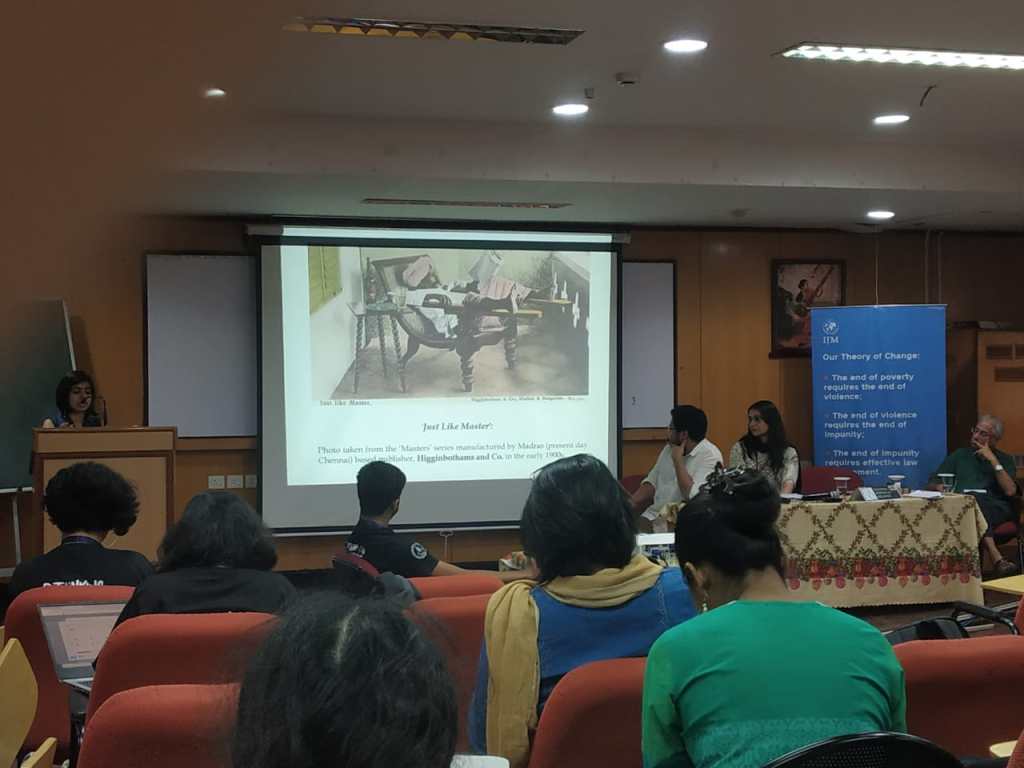
The third paper, by Madhavi Shukla from Jawaharlal Nehru University, was titled “Ways of Seeing Colonialism: Ruling the Unruly by Camera and Unreeling the Violence of Imperial Record.” As an other, the camera allows one to access hidden subjectivities and imbues the image with the ability to gaze back at the observer, while simultaneously masking relations of violence in plain sight. The colonial Indian subject of the 19th century is a victim of such violence. Photography came to India as an aftermath of the Sepoy Mutiny, where there was an urgent need to know the loyalties of subjects in order to prevent future rebellions. People of India, by Watson and Kaye, was the first ethnographic account of India, and included textual analysis alongside photographs abstracted from sociocultural history, paraded as colonial artifacts. The paper talked about the legal archive as a site of violence, which eliminated civilizing discourse and gave the colonial overlords a moral impetus to govern. There is a high degree of contrast between descriptions of Muslims and Brahmins, which mirrors the British perception of the Indian colony. The sexuality of the subjects of the photographs, especially that of women, is laid out for the observer to peruse and consume. Even child pornography was not taboo, where they are portrayed as “wild and timid creatures”. The translation of traditional and modern idioms in the colonial-era ethnographic study is embalmed by the colonial ruler’s own native fantasies. It hides violence by portraying its anthropological subjects as dominions of control, while resorting to racist stereotypes in order to enslave and dehumanise. Thus concluded, the panel was then opened up for a Q&A session.
Report by Abhirami G

