
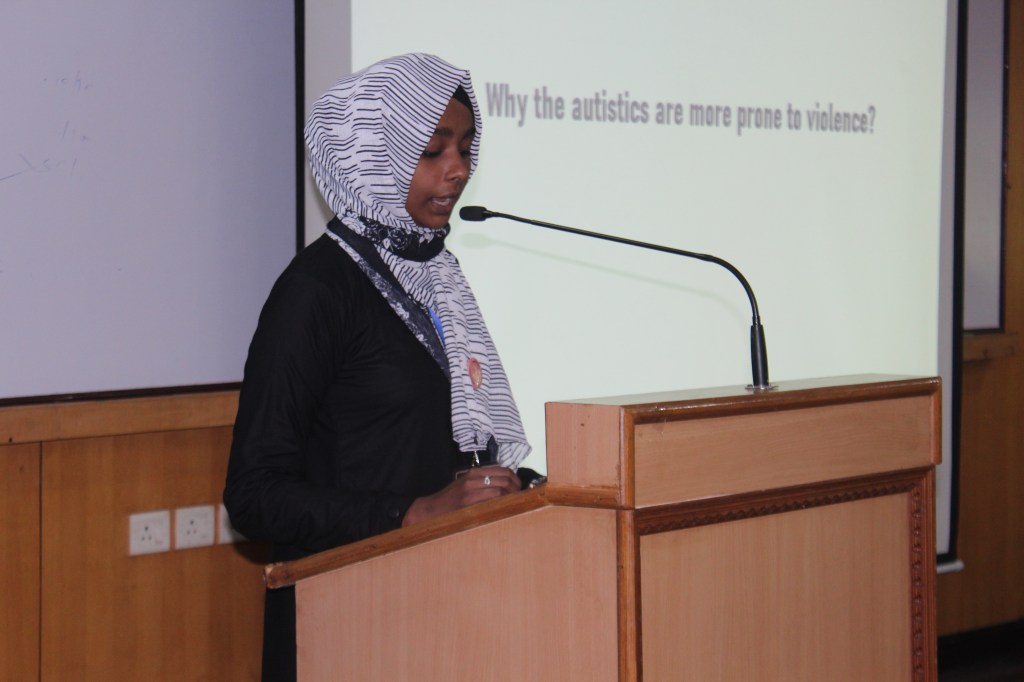
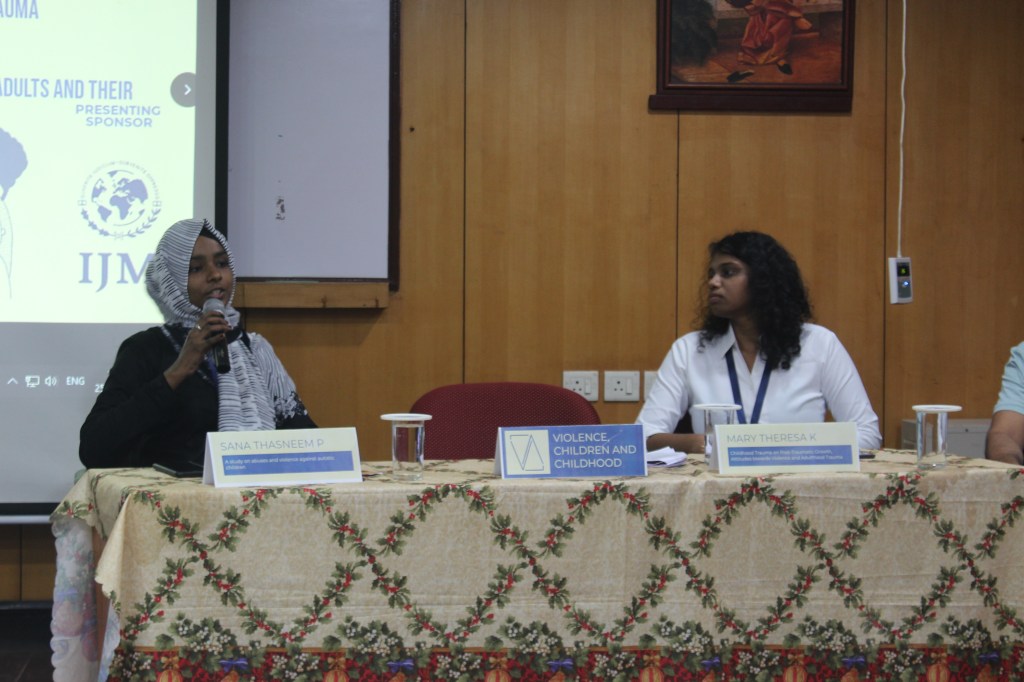
The 8th panel of this year’s annual conference was titled “Violence, Children and Childhood”. The panel was moderated by Dr. Hemachandran Karah. There were two panelists, Ms. Sana Thasneem VA from the University of Calicut and Ms. Mary Theresa K. from Pondicherry University. Dr. Hemachandran opened the session with a note on the varied forms of violence, sometimes conspicuous, sometimes lived through, and sometimes culturally given and taken. Sana was the first presenter. Her paper “A Study on Abuses and Violence Against Autistic Children” focused on the kinds of violence autistic children face, based on her findings from a study done with 30 autistic children in Kerala. The initial part of the paper was devoted to outlining the definitions of autism and the geography of the literature surrounding autism in children. The speaker was able to highlight the paucity of studies on adults with autism, as well as methods for autistic individuals to interpret and report acts of violence and abuse. She then proceeded to present her findings. 15 percent of her sample set had experienced sexual or physical abuse. 10 percent had experienced emotional abuse. An alarming statistic was that 26 percent had experienced sexual abuse from therapists. A significant number had reported physical abuse from their caretakers. All of these figures pointed to a concerning lack of education amongst children with autism regarding violence. Despite growing awareness and government legislation regarding the same, children with autism were at significant risk of abuse, much more than they could be expected to counter. Research was needed on developing effective methods for autistic children to learn about violence and report the same.
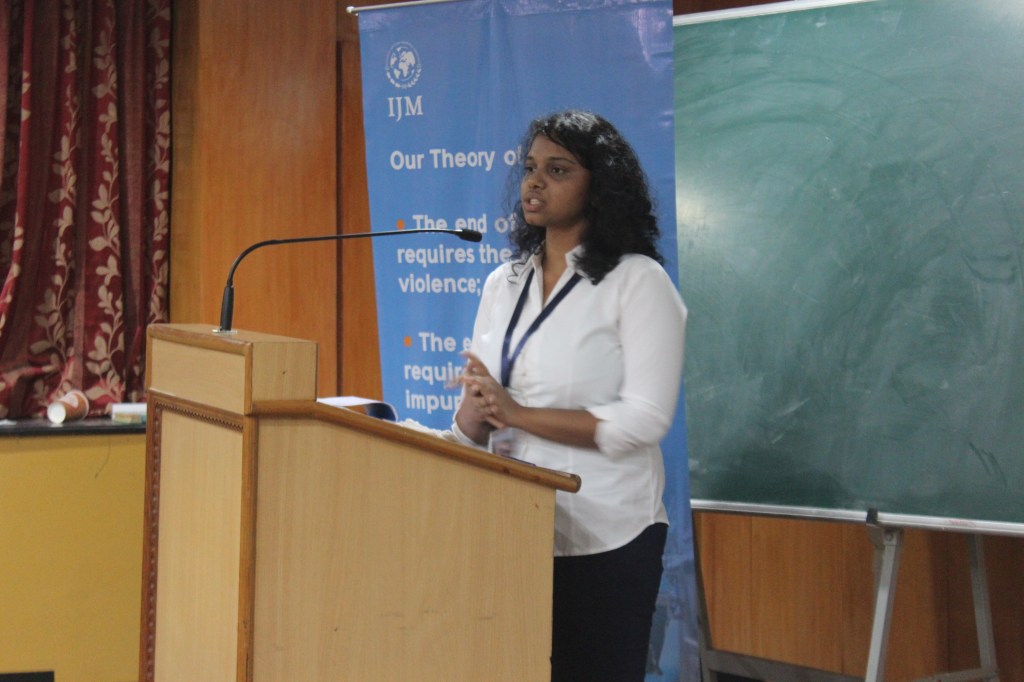
Mary Theresa’s paper was titled ‘Childhood Trauma on Post Traumatic Growth, Attitudes towards Violence and Adulthood Trauma’. She began by explaining how investigating childhood brought clarity to violent tendencies in adults. The purpose of her study was to understand physical and psychological consequences of childhood trauma in adulthood. She further delineated the novel aspects of her study: Penetration of sensitivity and disclosure inhibition of childhood maltreatment, Experience and Attitude based evaluation and consideration of both PTG and PTSD symptomology. She then explained the quantitative specifics and methodology of her study. 200 individuals (100 male, 100 female) with places of rearing spread across 16 states in India were arbitrarily interviewed through an online questionnaire, with complete anonymity, informed consent and freedom for withdrawal. Individuals who responded positively to the questionnaire’s schematic were selected for further interviews. From the data, she was able to make the following observations: The abuse experienced by men had a higher physical component, whereas women experienced higher components of sexual and emotional abuse. Child Physical and Sexual Abuse had a stronger part in adulthood trauma than emotional abuse. Victims of child physical neglect were accepting of abuse as adults across both genders. There was a gender difference in attitudes, rather than experiences. Men seemed to be more of domestic violence and rape myths as opposed to women, something she speculated could be an aspect of all Asian cultures.
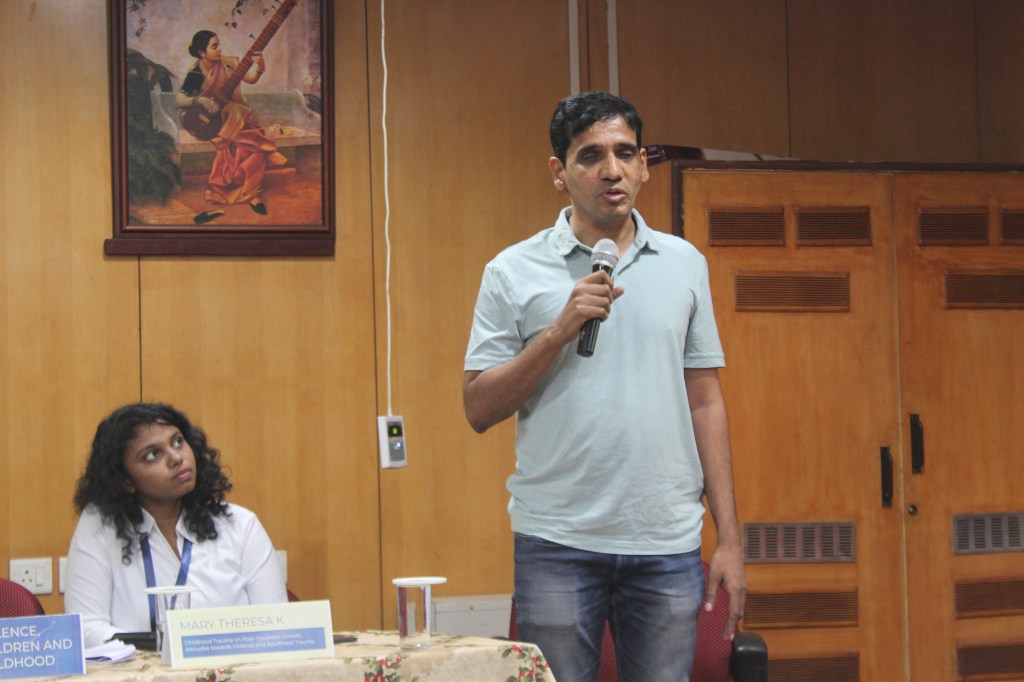
Dr. Hemachandran delivered the concluding remarks. He congratulated Sana and urged her to expand the scope of her work, by expanding the dimensions of domesticity and violence. Domestic spaces had to be re-imagined so as to understand the subtleties of violence. He conveyed his appreciation of the quantitative work in Mary’s work. He suggested working on an immersive ethnography to bring light on unacknowledged trauma. The panel was then opened to questions from the audience.
Report by Rahul Jose
Photography by Ganesh Dileep
 Article 19