
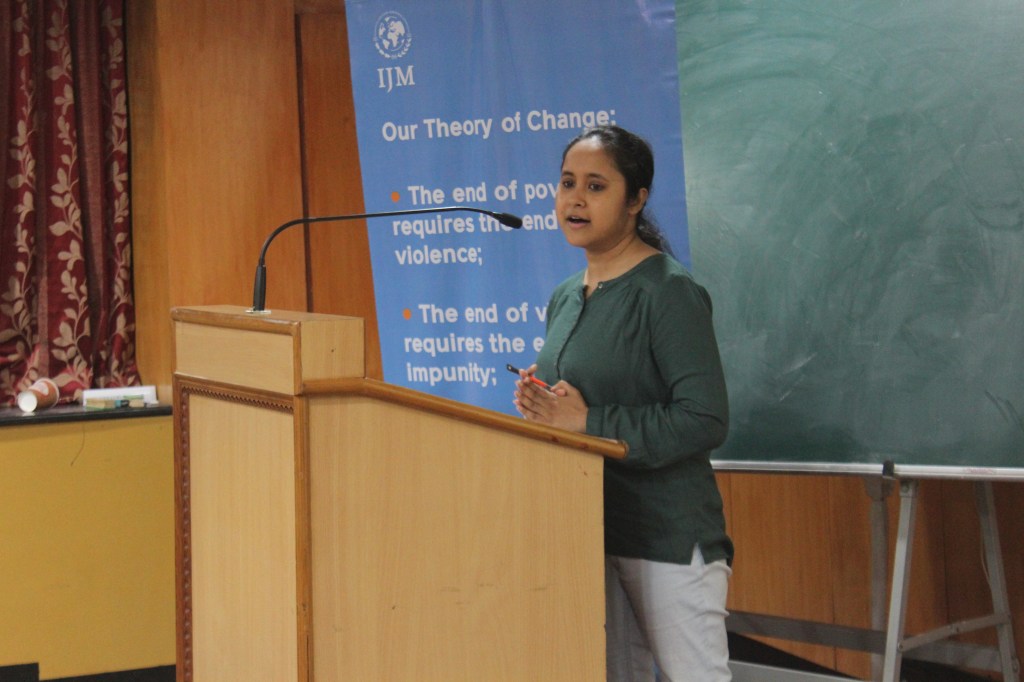
The ninth and final panel of the Conference was on Violence and Language, moderated by Prof. Rajesh Kumar. With three speakers from across the country, it covered topics of semantic, linguistic and emotional violence. The first panelist was Afrida Aainun Murshida from Sikkim University, who presented her paper on ‘Linguistic Violence in Salman Rushdie’s Shalimar the Clown’. She talked about how language is one of the most common yet pervasive vehicles of violence. Addressing the efforts of South Asian diaspora to undo linguistic violence, especially by authors who struggle between their mother tongue and adopted language, she took the case of Salman Rushdie and his employment of a ‘language in use’ as a problematic example of violence in language. She explored two sections in her paper – linguistic violence and violence in language – and went on to say how the metapragmatic and metadiscursive study of language can be used to analyse the linguistic violence inherent in postcolonial diasporic ‘Englishes’. These features can be used to question how elements of language such as idioms, genres and styles can control the functioning of language. She quoted various examples from the book that supplemented her point. She shed light on the narratives of gendered violence, the breakdown of language in the passages about genocide and the emphasis on religious zeal in ‘Shalimar the Clown’.
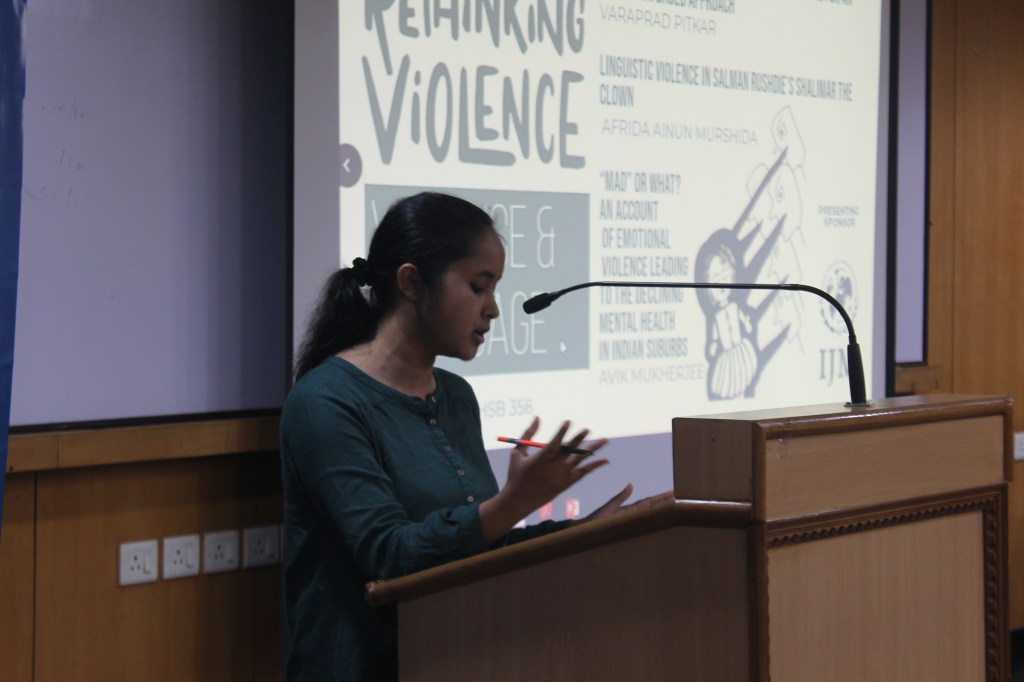
The second paper by Varaprad Pitkar from NALSAR University of Law was titled ‘Semantic and Legal Research: A Call for an Attention-based Approach’. Mr Pitkar began by defining a few words – indeterminacy, regulation, semantic, attention and legitimacy; and said that he aimed to connect all these terms. He defined violence in terms of meaning-making and detailing its forms – one being the embodiment of violence in law and the second being its occurrence in legal research. His argument revolved around the concept of attention as one of the primary components of truth itself and how this truth works in law. He claimed that it was essentially a semantic notion and also one of the most fundamental principles of the legal system. Truth, according to him, acts a guiding light by setting the parameters for the system. He identified attention as one of the components of truth creation. ADHD is an impairment of executive functions – self-restraint, time management, self-organisation, problem-solving, self-motivation and emotional self-regulation. Using RA Barkley’s framework of Attention Deficit Hyperactivity Disorder (ADHD) as an ‘executive disorder’, he attempted to figure out the notion of truth as in the manner of someone with ADHD. By drawing a parallel between the cyclical nature of choice for an individual experiencing a breakdown in regulation and stages of legal research, he emphasised the need to bridge the social sciences with other entirely separate fields such as medical literature to mutually improve both fields.
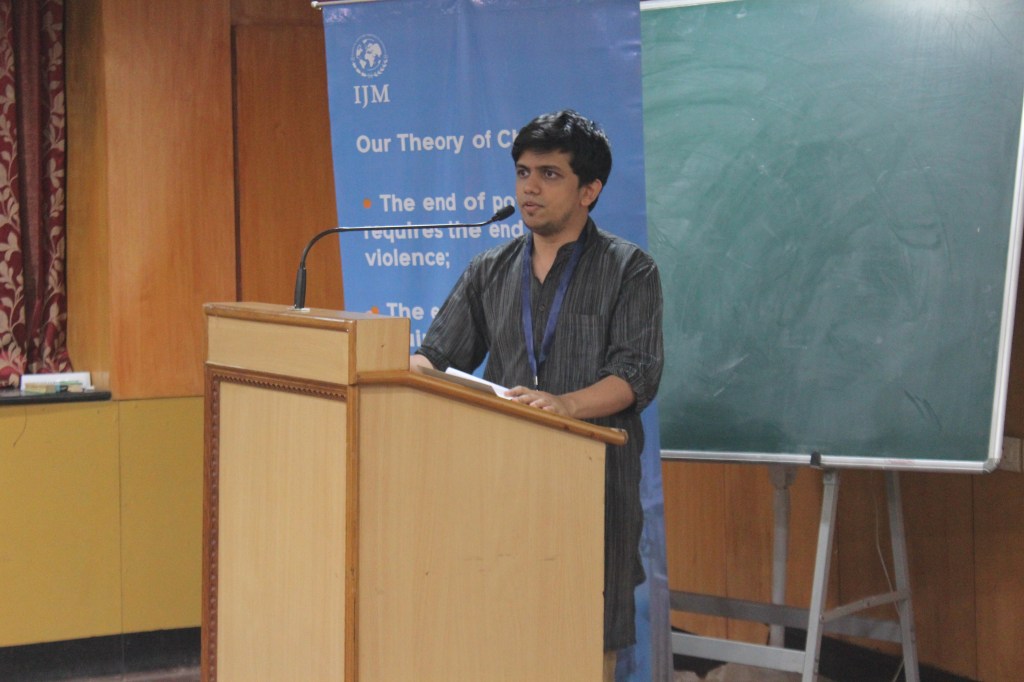

The final paper of the conference was by Avik Mukherjee from the University of Hyderabad. It was titled ‘“Mad” or What? An Account of Emotional Violence Leading to the Declining Mental Health in Indian Suburbs’. He attempted to look into the language or terminology used to describe patients with mental illnesses in the suburbs and how there is a particular kind of emotional violence associated with the way people treat them. He spoke of the social exclusion of ‘abnormal’ people from everyday life because of the lack of knowledge on the subject. The paucity of terms to describe medical illnesses only succeeds in deepening the stigma surrounding seeking psychiatric health. If language is to be considered a set of symbols with associated connotations, then the verbal and non-verbal symbolic representation used to describe such illnesses have resulted in the creation of a negative picture of patients as a drain on society and their families. He ended by reiterating the need for more nuanced terminology and the importance of raising awareness about the emotional violence that uninformed terms can cause.


Thus the panel and the conference came to an end, with Prof. Rajesh opening the floor for a Q&A session.
Report by Kiran A.
Photography by Ganesh Dileep
 Article 19