
Marva Kader from the HS13 batch is a freelance artist and writer. Article 19 correspondent Amina Mehboob talks to her about her experiences within the department and life after insti.
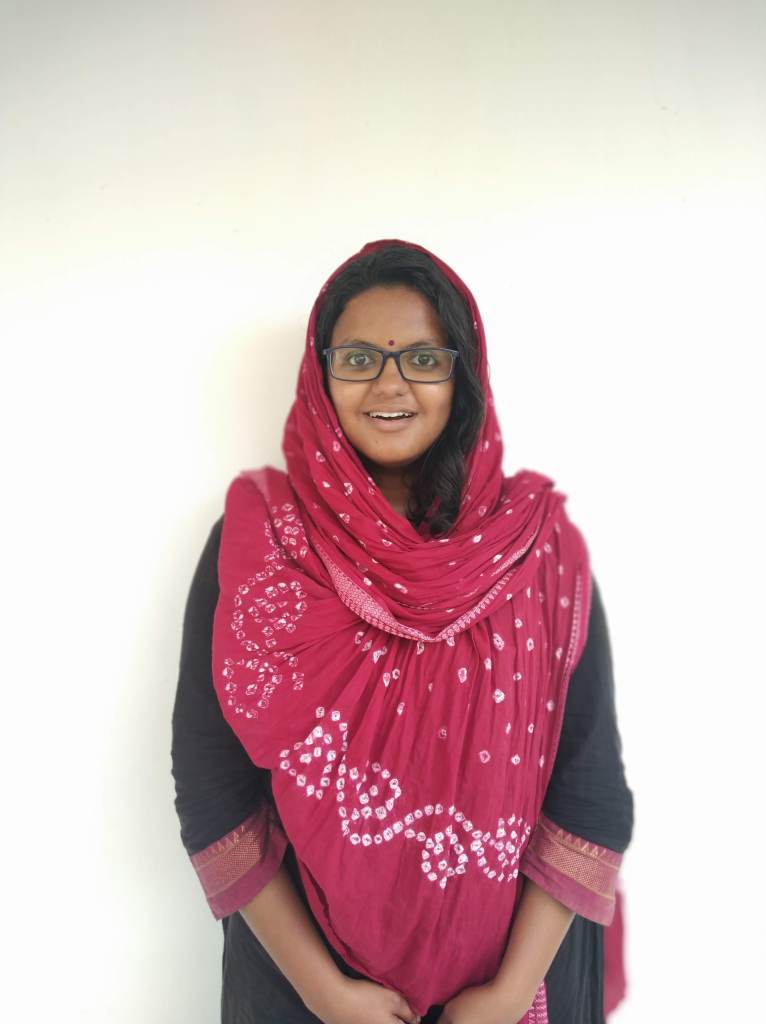
Can you brief us on what you have been up to after graduation?
From 11th grade onwards, I had always thought that my career would be in the social sciences as a researcher. But towards my final year, I became disillusioned with academics. I was shocked, I’d always thought I loved academics… yet I realized it is not creative enough to sustain my interest. Nor grounded enough to contribute to social change. Then I reflected on my life, on my passions and skills and decided to apply for a writer/teacher job via placements. Not that I was quite certain about my career, but I knew I needed financial independence and further exposure outside academics to figure out what I wanted.
I got placed as a travelling storyteller at Book Lover’s Program for Schools, a firm of bibliophiles, a few kilometres from insti at Adyar. I had a great time there going to schools in and around Tamil Nadu, telling stories to students, inspiring them to read and fall in love with stories and language. My job included educational/creative content writing as well. For the storytelling events and sessions, I also worked on art and craft – making props and puppets which rekindled my interest in art more passionately than ever. That’s when I began drawing digitally. I started with the Autodesk Sketchbook Android app, drawing on it with my fingers. I began drawing whenever I got a free minute, while traveling in trains or waiting for my bus.
Then I felt it was time to change the role and space, partly because the traveling part of my job was wearing me down. I moved to Bangalore, and took some time off to self-train in digital illustration while I figured out what and where I should go next, career-wise. I moved from drawing on my phone with my fingers to an Apple iPad and stylus. Meanwhile, I did a few freelance gigs as a writer, translator and so on.
With the crisis of the pandemic, I have now put my job hunting on hold, and am continuing to freelance as an illustrator/writer. I am simultaneously self-training in graphic design. I love working on branding!
A lot of your works involve social issues and incidents that happen around us. What prompted you to channel your expressions through art?
I had never perceived myself as an artist, at least till two years ago. I believed my artistic skills were too amateurish to be called art. Even then, I knew I always loved and appreciated the visual medium. But I never thought I could “paint” or “illustrate.
My paintings began as expressions of myself… my struggles, emotional turmoils, everyday turbulences. How can I not paint when I see things happening around me, being a Muslim girl-born gender fluid middle-class person in India, who believes in social justice and equality? Well, now I think I would have painted even if I was born in a different social location, a different milieu… Art is so irresistibly beautiful.
When you were a student, how did you manage academics and other activities like your interest In painting?
Haha. For me, it was hard to survive insti without going crazy. And it was hard to thrive crazily without art.
Lekshmy (goes by Kanja :D), my roomie and friend, filled our room walls with colours. I vacated Tunga after paying the 500 rupees fine for the graffiti… Well, the hostel office has no idea how valuable those moments of pouring colours on walls are, to me. My window panes were always vivid.
Yet, I never ever thought of art as a career at that time. It was just a way to vent out. Improving my style or colour sense wasn’t a concern to me at all. I just used to paint for the sake of it. Now, it is different. I consciously work on my style, colour codes, choice of brush and so on. Yet, sometimes I do indulge in mindless carefree painting. It relaxes me.
Our time at the department is a learning and unlearning experience at the same time. It also has the potential to influence our relations with friends and family. We could run into conflicts with our family or friends on different issues and might find it hard to even talk the same language. Have you had such experiences? If so, could you tell us how you embraced the situation?
Great question, you have put it well.
Obviously I had such experiences. I didn’t quite embrace it at first. I was young and I was so curious to learn. I was fascinated with the exposure insti gave me; a vibrant space with smart people of different cultures and perspectives. I read a lot and conversed with many people. Beyond conversations, I listened to and engaged in debates and discussions. When you know more, you think more. When you think more, you question more. Now some wouldn’t pursue such questions about life, reality, morality, religion, existence, politics, et cetera, because they are perturbing. But some will, until they find answers, and not just half-boiled replies. I am of the latter category, and this caused harsh conflicts with my close ones.
I was going through a lot of learning/unlearning of new language… but my family and friends weren’t. This created a gap. For a long time I couldn’t communicate with them about my changes in perspectives and so on without conflicts. It takes a lot of time, patience and love to bridge a gap despite disagreements. It was hard. It needed help from my friends, therapy, reading further on emotional labour, care and our social system to deal with these conflicts without getting saturated. Now, I can say such conflicts haven’t been solved fully but there is peace. I learned to be strategic in language, clear in arguments and creative in articulation. I learned to be empathetic despite political, religious or other disagreements.
What were the courses in the department that you were really interested in? Were there any courses that changed your perspectives and worldview?
The courses I loved were Gender and Development by Binitha Thampi, History of Medicine in Colonial India by Dr John Bosco Lourdusamy, International Relations by Dr Sonika Gupta, the literature courses by Dr Merin Simi Raj, discussions in the classes of the professors, Rajesh, Santhosh, Mathangi, Hem… Yes, the reading and discussions did influence my perspectives a lot. So did reading beyond the required coursework and discussions outside the classroom.
Can you share with us some fond memories of yours from insti?
The fondest are night walks to Balettan’s tea kada outside K-gate with my girls, cycling and running in insti, laughter riots in Tunga, our Mallu batch trip to Kodaikanal, Malabar chicken biryani at Zaitoon and then working on thesis and ranting together at the department library. I was never a DCF person.
And lastly, do you have anything you want to say to current students?
Make friends, friends whom you can rely on, trust and open up to. And don’t be scared to ask questions, just be kind in your language.

