
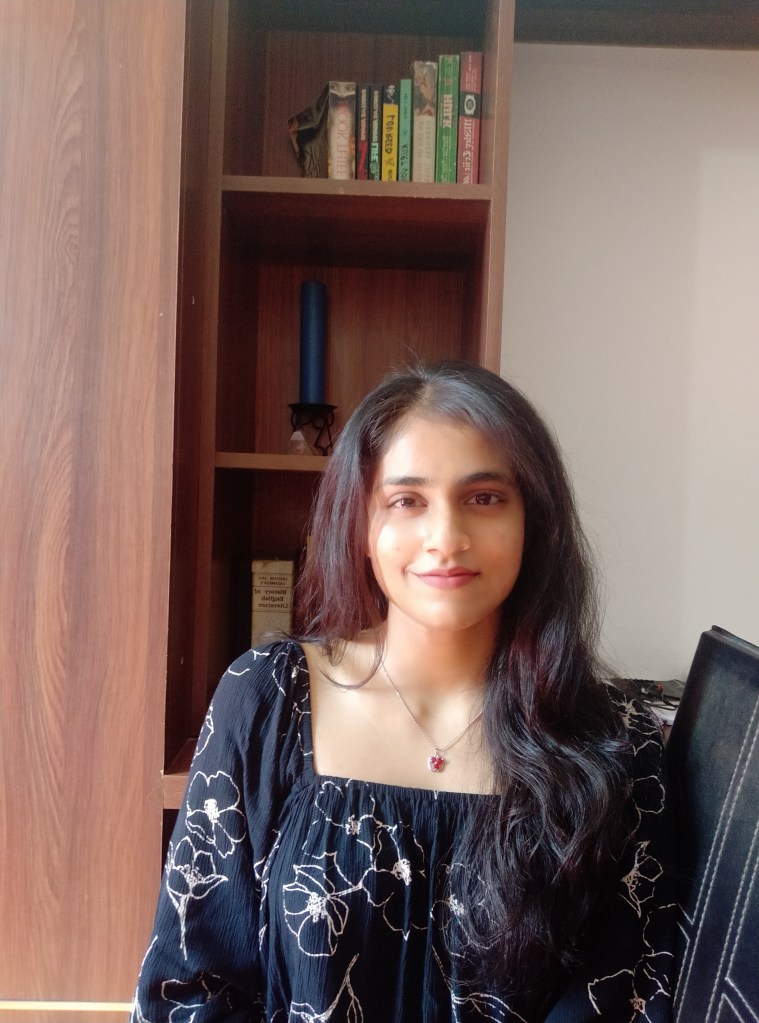
Zarin Shihab from the HS12 batch is an actress and writer. Article 19 correspondent Devika Dinesh talks to her about her experiences on and off the stage, within the department and after insti.
Could you tell us about what you’ve been doing since graduation?
The usual stuff that an actor does, auditions and all. I’m currently in the midst of getting represented by an agency. Other than that, I have a few projects of my own, theatre-based, for which I have received a grant. It’s been delayed because of COVID-19, but that also means that I get more time to work on it. The showcase was originally supposed to happen in December, but there’s a good chance of it getting postponed.
I’m also currently training for an upcoming movie called “Rashmi Rocket”, where I play an athlete. It’s directed by Akarsh Khurana who also directed “Karwaan”. I hope that turns out well!
You’ve talked about how college gave you the freedom to explore theatre. Could you tell us more about what insti’s drama scene was like in your time?
When I started out, it was definitely very vibrant. I think students were far more involved back then. As in, there was a lot of informal effort. I’m really glad that now, with clubs and other formal institutions, these activities have been pushed to the fore. And one marked difference I’ve noticed is that the Drama Club has really worked to dispel that notion of theatre being an “elitist” activity. And yet, I feel like somewhere along the line these efforts have become less genuine, with the focus shifting to quantity rather than quality. But of course, that happens with any theatre group when they start out. At the start what you need is traction. And once you get more people interested then you can focus on quality.
I started out with Saarang Dramatics. In my first year, that is 2012, they had started rehearsals in December and I joined in. Seniors were heavily involved, and there was a really nice peer-to-peer dynamic between seniors and juniors, despite the weird hierarchy (put intro and all). I personally find that horrendous, because simply being older than someone does not make you the authority on anything, except maybe in knowing the routes and the roads better. But, coming back to theatre, this healthy dynamic in the team fostered an interest in us to continue this cycle of theatre and its culture within insti.
There were also many theatre groups within Chennai that focused on campus theatre groups and scouting talent. That’s how I got noticed. For LitSoc one of the judges was from one such group called Crea-Shakthi. After the play, the judges asked me to audition for the Spotlight initiative. Crea-Shakthi had a lot of initiatives involving college groups. One of them was called Campus Theatre Initiative, and it was really fascinating. Basically, they would supply their own mentors to the college groups. Then they pick a play and the mentor would essentially guide the group, and they’d put up a semi-professional production. In our case, since we had an auditorium, it would be held at CLT. This whole thing was really great, because it shows people that theatre is not just a hobby, and that it can be much more than that.
Also, there was this really nice thing, where the seniors in the department would ask us if we wanted to tag along when a play was put up somewhere in the city. The department would go as a group to these plays, and that was how I’d initially gotten interested. It was a great form of socialising, as well as a way to learn your way around the landscape of Chennai.
How did your family take it when you decided that being an actor was what you wanted to do?
Initially my parents were not very supportive. They had some legitimate concerns. For one, they weren’t rooted in the industry so if anything were to happen to me, they wouldn’t be able to provide that safety net. And secondly, there are perverted people everywhere. No matter what professional field you end up in, you’re bound to come across them. So I explained to my parents how the entertainment industry is microscopically obsessed over, and that’s the only reason why its ugly side is so prominently exposed. But the reality is about the same as anywhere else. Over time they came to understand it, and they also respected the way I made my case. Now I’d say, they are very curious. And also worried, due to the recent celebrity suicides as well as the string of #MeToo cases that came up.
You’ve talked about several issues on your social media handle such as mental health, body-positivity, unrealistic beauty standards and so on. Have you received any backlash for keeping it real, and if so, how do you deal with it?
There is backlash for each and everything I post, and this is a sad reality for most people beyond a following of say, 5k. When you’re reaching out to a wider audience, everything from a really meaningless, harmless selfie, a post about skincare, to maybe something about politics or gender… backlash is guaranteed for everything. Even something as simple as posting about a movie that I liked would get hate comments. I’ve come to realize that these are from people who generally don’t have much else to do in life than picking at somebody else. These “trolls” are everywhere, but it is possible to ignore them. And I prefer to focus on what makes me happy generally. Sometimes, when the comments are really insensitive and if I am also in the mood for it, I will give it back to them. But for the most part, I have to pick and choose my battles.
What were your favorite courses in the department?
Quite a few actually. So I’d taken English Studies, and one of my favorite courses was one called “Chaucer, Milton and the Bible” taken by Prof Swarnalata. It was quite intense but a really fun course. The texts were pretty dense, and not that accessible for us at that time. Mainly because, for our batches, the entire programme wasn’t as structured as it is now, and so we didn’t have many foundational courses at the outset.
I also really liked this course called “Environment and Society”, taken by Prof Ajit Menon, who wasn’t part of our permanent faculty. The course was fun mainly due to this professor, because we had this course in our third year. And right at the peak of our cynicism and existential crisis there comes this person who, well, shared similar sentiments. One of my key takeaways from that course was that community engagement is quite important for any social movement. We had to do a couple of research projects due to which we had interacted with a few civic bodies in Chennai. This taught us a lot more than simply reading through texts. The course could have been really boring and theoretical, but his approach made it interesting!
Also, “World Literature” in second year. That was a really nice course, and was one of the few proper foundational courses we’d had. It introduced us to the canons of 20th century literature, and I’m sure I wouldn’t have read any of those works if it wasn’t for that course. It was taken by Prof Evangeline Manickam, and she was a very chill professor.
Then there was a course in my fourth year, “Post Colonial and New Writings”. It was a really, really nice course, with some very interesting takeaways. We had great readings and our instructor Prof Mathangi was really good. She also taught us “Feminism”, and her approach to the whole course was pretty interesting.
Film Theory. Definitely one of my favorite courses.
What aspects of the MA Programme do you think you’ve carried with you post-graduation?
So career-wise, I’m not exactly doing course-related work. However, there are a lot of takeaways from the course. For starters, the fact that this programme does not have an instrumental approach to education. Education is not a mere means to an end, i.e. a job. It gives you the freedom to think beyond that framework. It makes you realize that merely being employed is not the end-all and that there are other possibilities. That’s the long-term learning that I always look back on, that not everything has to be a means to an end. For that I’m really grateful for my time at the department.
Another takeaway is how my time at insti has made me more observant. I have more perspective now about why people say what they say. Similarly, all the courses in the department have really helped me with critical reading. I realize only in retrospect that this is a really important skill. Now I’m able to read articles from say, EPW or New York Times and actually understand it far better, and pick out the portions that say, make for a good conversation. I am able to view things better, through a good lens. And you know, the whole point of Humanities being not to answer all questions but to ask the right kind of questions. If that’s the parameter, the programme has definitely accomplished it in my case.
Of course, at the same time, you need to take care so that you won’t plunge into this world of cynicism where you keep questioning endlessly. It’s important to not get carried away by that, and to appreciate the little things in life.
Also, we had a lot of courses related to theatre and that’s how I read a lot of plays I probably wouldn’t have otherwise. It turned out to be essential for me, as a student of theatre, to be familiar with those archaic works. Knowing the history gives you a good point to take off from.
One of the main questions I’d wrestled with during my time in insti was how I wasn’t really interested in academia. I was not doing any research internships or planning on doing any more academic work after graduation. But over time I realized that it was okay for me to not want to do these things. It was my time in insti that gave me the perspective to understand what I did not like, more than what I did like. And that it was possible to simply step away from what didn’t work for me.
And sure, not everyone’s experiences at insti are the same, but it’s what you make of it afterwards that matters.
Looking back is there anything you would have done differently in your life at insti?
I think I would have liked to take better care of myself. And I don’t mean the more fashionable forms of self-care like bubble baths and manicures. Sure, those are nice too, but I felt like amidst this whole race to get good grades, to write good papers, to fit in and be accepted, I wish I’d taken some time for myself. For me theatre was a way of doing that, but at some point I think I was depending a little too much on it. I hadn’t realized for a while that theatre was something I really wanted to do. It was only a way for me to spend some time outside of academia.
And so it was around third year when I realized that this could be more than just a hobby. And when that happened I wish I’d taken some more time for myself, to maybe just sit and read for a while. Because things happen so quickly. And right now, I’m in an industry where things get confirmed and cancelled in an instant. It takes some time to rewire yourself to that pace. And so I think if I’d taken some time out back then, I would have been able to get more used to the fact that this is how my life was going to be. Because it felt like I was kind of thrown into it.
Academically, I wish I hadn’t left my term papers for the last 2-3 days!
What was your most memorable incident at insti?
There were a lot for sure. So we had this course on drama. It wasn’t a great course, especially because as a batch we’d collectively decided to be apathetic towards academics that year. It was our fourth year and the overarching theme was just being done with life. We even had a mass bunk for that course, and that really angered the professor and so we decided to tone it down a notch.
So for this course, instead of Quiz 2 we had to put up a play. We ended up doing this combination of all the Grimm Brothers’ fairy tales. It was very outlandish and a lot of fun.
It was horrible for sure. There was no merit to the production as such. Even our prof knew that, but I think he was just glad that we’d all come together to do our work. Everyone came everyday for rehearsals and that’s what counts, the quality of the play didn’t matter. Dhananjay and I were directing, and it was really difficult to get a bunch of disillusioned twenty year olds to do a play for academic credit. But, at the end of the day it really was a lot of fun.
What were your favorite hangout spots and food joints during your time at insti?
Besant Nagar, definitely. I don’t think it’s there anymore, but this place called Mash at Bessy. Oh and also, I really liked going to this pet shop that had two gorgeous golden retrievers. They were really friendly and well trained, so I’d play with them for a while when I went there. A bunch of us used to go to Pets 101 (that’s the name of the store if you want to look for it!). Then, well, Phoenix. All of the tea shops outside Krishna Gate and Taramani. The plane near the Aerospace department. The terraces! Most of the department terraces were open then.
And yeah, we used to take a lot of walks at midnight.
Do you have any advice for juniors?
People were unnecessarily freaking out about stream allocation back when I’d entered my second year, but looking back at it now it honestly wasn’t such a big deal. There’s a constant feeling in our department that we exist in a technical institute and so we have to somehow catch up to that. Like, we have to work extra hard to maintain our credibility. This ends up putting a lot of pressure on people. And this comes from professors, as well as students themselves.
When we start out in insti, especially during the first two years we don’t have a lot of clarity on what to do. And so, when we see a formula that works for a particular person, whether it’s a batchmate or a senior or an alumni, we just decide that that’s the norm for our department. That can be damaging because you end up following someone else, without actually thinking about your own interests.
Another thing I’ve learned is that more than your achievements and the things you do for your resume, the relationships you foster are what really matter. Be it in theatre, or any other profession, these relations are what keeps you going.
Also resist the urge to be cynical.
Final thoughts?
One thing I will say is that at IIT we live in this bubble. Everything is just available to us inside insti, and some of it would sound incredulous to someone who does not study there. And when you get out of here, and start complaining about things in life (that is, giving into that cynicism), it’s important to have perspective. Taking my own example, if my biggest worry right now is cyber-bullying and not something like having a roof over my head, I should know that I am pretty sorted in life.
Also, insti is a pretty isolated place. So go out more often, interact with the community around you. For instance, the tea shops around the gates—they’re the ones that you go to during endsems or randomly at 2am. They contribute as much to your quality of life on campus.
Lastly, behave with the awareness that your perspectives and way of life are heavily shaped by your access to premier education, and be a little more empathetic.
 Article 19