
Article 19 correspondent Devika Dinesh speaks to Meenakshi Kumar, in the first of a series of four interviews with students of the HS15 batch who graduated this year.
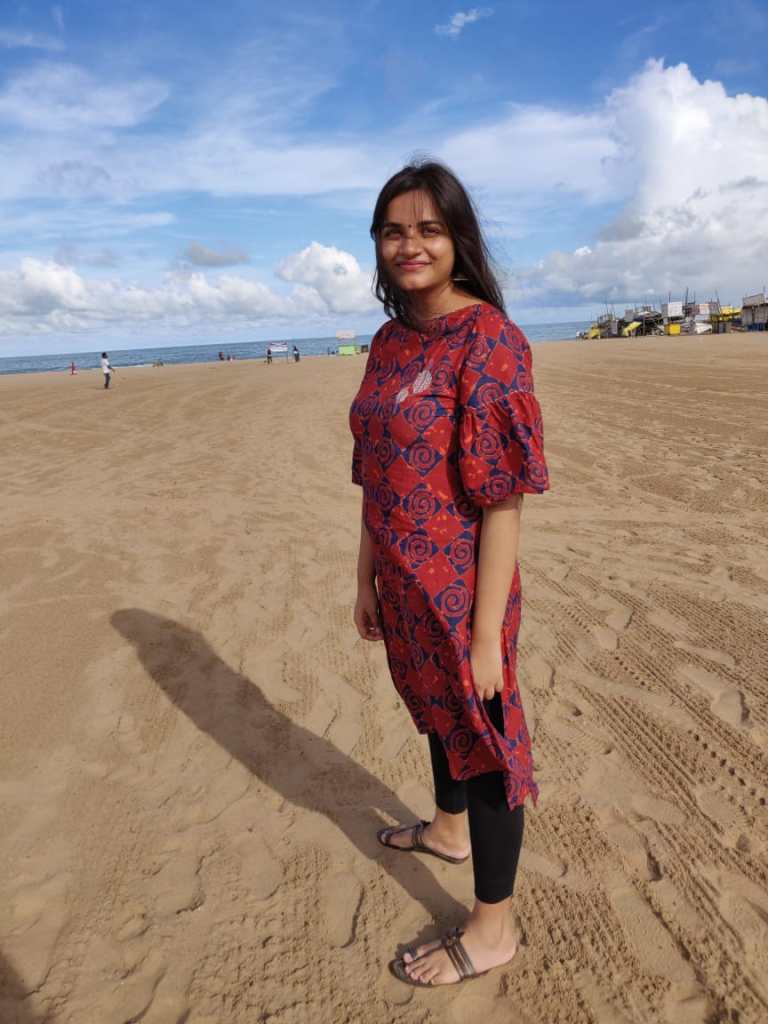
What are you doing now, and what are your future plans?
I’m thinking about the rest of my life, and trying to figure out what to do with it. I don’t have anything set as of yet. I’m looking at a few competitive exams, might apply to grad school.
How did you deal with your graduation not being what you had expected it to be?
Very badly. I was a mess, and I’d complain a lot. I had been looking forward to my farewell since second year. I’d seen how warm it was, and how emotional everyone got. So I was really looking forward to it, and that didn’t happen. But I mean, things were so much worse for so many other people that I felt bad whenever I complained. It’s really weird, because we don’t get closure. It’s such a huge part of your life. Five years. It’s when you grow up, and learn to be who you are, and then you don’t get to conclude that. You’re just sort of left hanging. And for me personally, I’d come home for Holi, not due to the lockdown. And I find myself holding onto the “when will I go back?” It doesn’t feel like it’s over.
What was your MAP topic, and what made you select that?
My topic was “Mental Health in Bollywood”. How did I select it? Well, I was basically clueless, and didn’t know what I wanted to do. (I was probably the most clueless person in my batch from first year to fifth year!) Initially, I thought I wanted to work with Professor Sonika, because I’d been in love with her since second year. So I went to her, but I did not have a topic in mind. She told me that whatever topic I chose, it had to be something I could stand for a year. I was going to have to read about that same thing every day for one year. And so I decided to go with pop culture, and I’d taken a course with Professor Aysha before and she was great. I initially wanted to work on diaspora and films, but Professor Aysha told me that that had been done a lot before. Then I thought about working on how contemporary films are revisiting history. But I didn’t stick with that either, and she suggested a couple of topics and we finally landed on this.
What was the process of actually working on your thesis like?
When you’re at insti, it’s not too bad. But when you’re at home and that’s all you’re doing and other people aren’t working around you, then it’s not that great. But while I was in insti, because I had a topic that I liked and my guide knew what she was doing, it was okay. It does get really frustrating at times though, no matter what you’re working on, no matter how much of an expert you are at research.
What all did you engage in during your time at insti, outside academia?
I was involved in thesp [Drama Club] a lot. And that was my whole life, outside of the department. I did a little bit of everything because I didn’t want to miss out. I did Saarang for a year, was part of the Department Conference another year, I was in the CCASH Charter Committee for a bit. So I did try a couple of things, but about 40% of insti was about Drama for me.
What was it like directing Stagecoach?
Well, we didn’t get to put it up, although we practiced till the very end. And that was very disappointing because, like I’d mentioned, theater was something I’d been involved in from the very outset, and directing Stagecoach in final year was a very fitting and happy conclusion to an important part of my insti life. In my first year, there was this very grand production called ‘Bhopal’, based on the gas tragedy. They had a chorus and that was the first time I’d seen anything like it. A bunch of us first-years were a part of it and had gotten really involved. That’s how I got into theater. And then I kept doing Stagecoach or some other production every year since. And in fifth year we finally got to direct it.
The process of finding a script was really difficult. I have this theory that how the script is defines the dynamics of a play, which I came to realize is not really true. So we kept looking for something that was lighthearted and warm and didn’t involve romance. We finally found Mahesh Dattani’s Final Solutions, which is a brilliant play. We had a great cast and crew, and we even had a chorus in this one. And well, we never got closure on that as well. The process itself was a wonderful mix of challenging and fun and because Sunaina and I were on the same page in terms of our vision and our (extreme) enthu level, it was amazing. Of any ordinary day, I think rehearsals were my favourite part.
What would you have done differently in your last year, if you could?
I wish I had taken acads a bit more seriously, in general. Because very early on I’d realized that as long as I finished my submissions on time I could get decent grades. So I just never bothered with anything else, and I didn’t really read. Like, we’re sort of conditioned by our school system to operate differently. You function on rewards and punishments, so as long as your grades are good you’re fine. I wish I’d put in that extra effort for academics.
Specifically for final year, I wish I’d gone out more. We had a lot of plans of exploring Chennai and the campus that never materialised, unfortunately.
What was your favorite memory from your time at insti?
Definitely all of the play days, because it’s like a festival. The day of the play is like Annual Day and Diwali and Christmas and New Year all rolled into one. It is so festive and so fun. And there is this split second before you go on stage and when you’re on stage, which is just, magical. And just anytime when something was happening in insti, it would be really nice. For instance, last year when we were organising the fifth year’s farewell. Our batch really came together. Honestly I feel like the setting up (of the farewell) is more for the pre-final batch than the final batch. We’d organised games for the seniors, which we didn’t end up playing during the farewell. So afterwards, we played it among ourselves, just our batch. Studying with your wingmates the night before an endsem is really something. It isn’t particularly fun in the moment but it can be very memorable, looking back.
Other than these? We had Shakespeare with Professor Swarna in my third year. And on the final day of that course, she did this little picnic on the rooftop. We read sonnets and we got samosas and Frooti.
If you could, is there anything you would like to tell your freshie self?
I would tell myself to never make eye contact with the monkeys because I did that a few times and it always ended really badly. Oh, and I’d gone on exchange in my fourth year, and I broke my foot. So I’d tell myself to not run for the bus. I’d also ask myself to do more internships/part-time work so I’d have more of an idea of what I don’t want to do, if not anything else.
After these five years, what are your main takeaways from the course and your time in the department?
I definitely learned a lot of things, in terms of academic knowledge, about a lot of subjects. Especially from courses like Professor Santhosh’s CISP, I learned about a lot of injustices that I was shielded from before. And no, I don’t think I’ve become too cynical due to it, but I’d like to think I’ve become more empathetic.
I also learned, interestingly enough, to shut up. Somewhere in the middle of the course you start feeling like you know a lot of things and that you know better than a lot of people. And you feel really empowered by your knowledge, but by fifth year I think you realize how little you actually know. (I don’t know if that can be generalised though, it was true for me.) And in general, I’ve learned a lot of things from insti—like how to take care of myself, how samosas and coffee for every meal isn’t a sustainable diet , how to live by myself, how much water you should drink after a night out. (That’s very important. Always keep that in mind.)
 Article 19