
South African singer and performer Miriam Makeba, fondly remembered as ‘Mama Africa’, has been my source of comfort over what has been a turbulent month. I’ve somehow been pushing through these bleak and rainy days, taking solace in her songs, even as everything else around me seems to be crumbling. I first came across Makeba from a song by French artist Jain – Makeba – but I’d never really bothered to go beyond a cursory Google search on the song’s main reference. It was only a couple of months ago that I once again stumbled upon her, this time through a video of her performance of a very popular South African Xhosa wedding song – ‘Qongqothwane.’
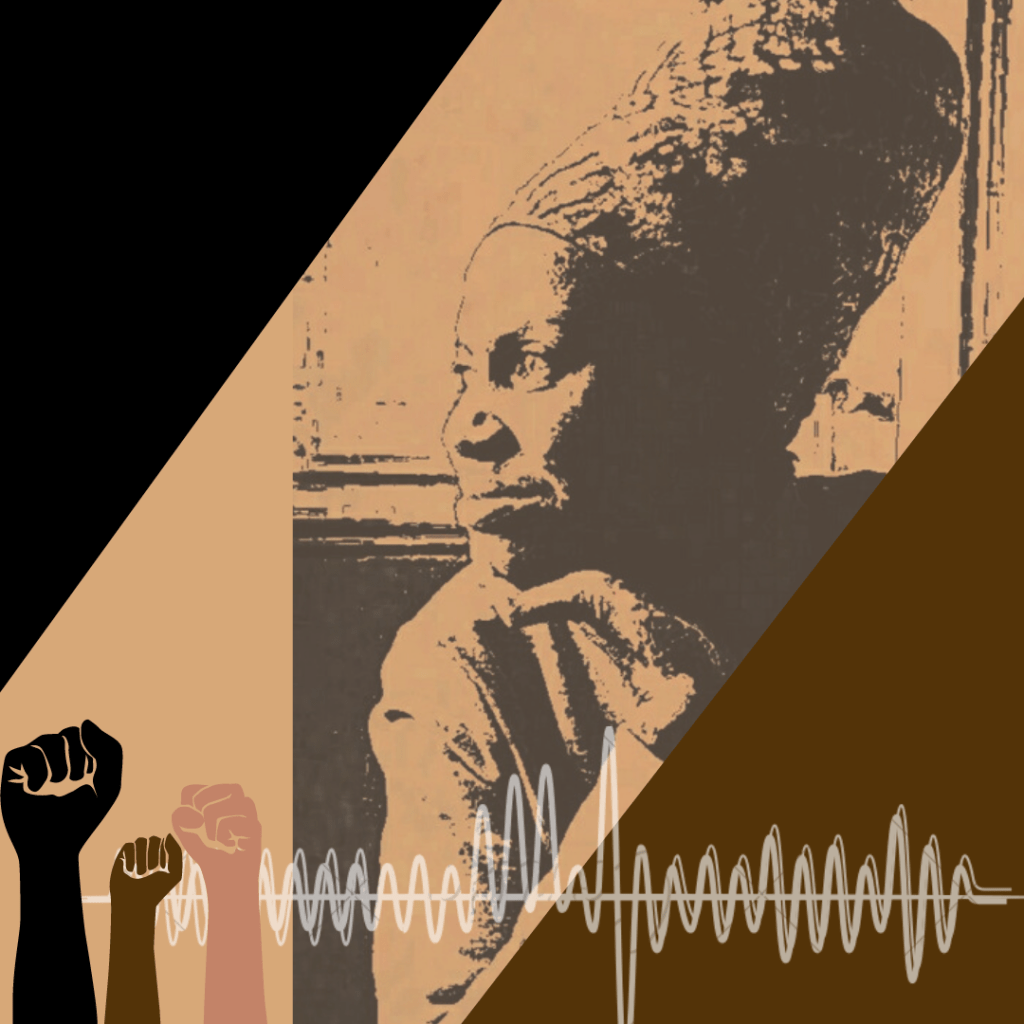
Xhosa happens to be one of the very few existing languages that retains clicks as part of its phonetic repertoire. It has three click sounds represented by the Roman letters x, q and c – and an explanation of these sounds is what Makeba begins her performance with. At the time of this performance, which was sometime in the 1960s, South African blacks were still suffering under the brutally racist apartheid laws. Makeba herself had suffered intensely because of racism and apartheid in her early life, and her activism against apartheid even got her banned from entering South Africa for over 30 years. It’s not surprising to see why Makeba takes this song’s preface as an opportunity to symbolically undermine the hegemony of colonial rule in a playfully subversive way.
‘The colonisers of my country call this song the “click song,”’ Makeba says, breaking into a sly grin, ‘simply because they find it rather difficult saying “nguqongqothwane.”’
Even as the crowd erupts into hearty applause at her quip, she begins the song. The song itself is short and has only four lines which Makeba repeats with new flourishes added each time.
igqira lendlela nguqongqothwane
The witch doctor of the road is the knock-knock beetle
igqira lendlela kuthwa nguqongqothwane
The witch doctor of the road is said to be the knock-knock beetle
seleqabele gqi thapa nguqongqothwane
He has passed by up the steep hill, the knock-knock beetle
selequbule gqi thapa nguqongqothwane
He just passed by up the steep hill, the knock-knock beetle
Makeba enunciates every click proudly, tracing her tongue over her palate and then all the way to the back of her mouth, with a grace and ease that screams, ‘I’m Xhosa, and I’m proud of it!’ The entire audience joins in as Makeba prompts them to clap to the song at regular intervals. She moves around gracefully in little steps, bobbing her shoulders up and down to the beat, and I realise that simply listening to the song won’t quite cut it. Seeing Mama perform, with her warm and gentle smile persisting even as she projects her grand voice, is an indispensable part of the experience of this song.
Underneath the fun and entertaining personality that she projects, it’s not too hard to notice Mama’s pain and anger. But her powerful voice, her playfully subversive smile, and her thinly disguised smugness as she suavely traces the Xhosa clicks, together turn this short and innocent wedding song – a call for the village witch doctor to guide the newlyweds home – into a powerful cultural weapon of anti-colonial resistance.
Watching this is as reassuring as having Mama hug me in person and tell me that it’s okay to derive happiness from the small things when the big things aren’t going too well. It is as comforting as having a fairy godmother whisper “It’s going to be all right,” in my ear. But it is also as inspirational as having the same godmother remind me, time and again, to keep the fight going even in the darkest of times.
Edited by Sadhana Nadathur Jayakumar

