
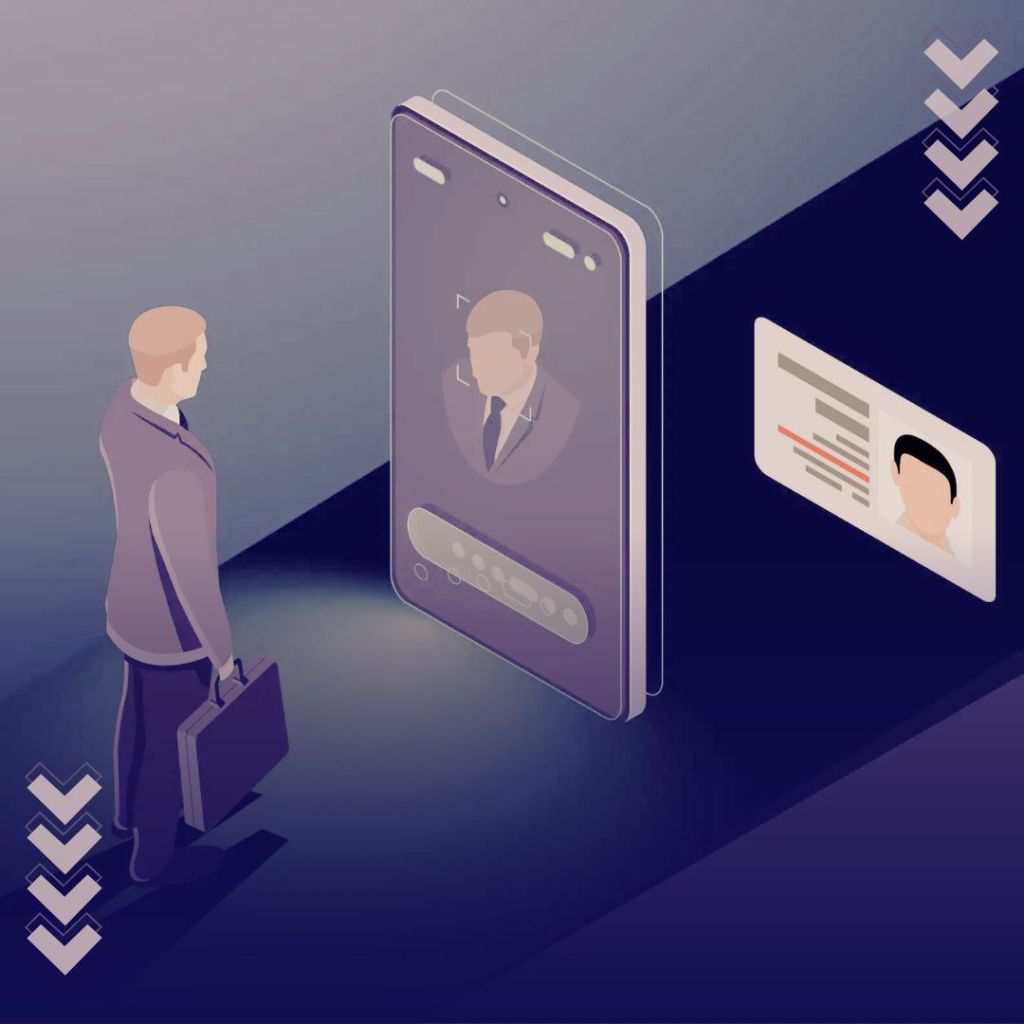
IIT Madras has yet again firmly established its reputation as an Indian Institute of Technology, and of absolutely nothing else. The Institute’s self-inflicted intellectual stunting can really find no parallel in the continual discovery of rigidly-enforced technocratic solutions to “inconvenient” human malfunction, without a single iota of self-reflection on the similarly “inconvenient” human consequences of these same autocratic solutions.
Here is an excerpt from the mail which called for the students of the Fresher Batch (2023) to attend a mandatory session to record their facial recognition data, which would be used for the collection of attendance:
“For the purpose of attendance, your facial recognition data is required in our system, so you are requested to report to Raman Block Classrooms as follows.
Please follow the time and venue given, strictly. Do attend this session, without fail.”
The mail was sent close to midnight a day ago, with students being expected to show up (without fail!), by just Wednesday – with barely any time to react to this rapid change in the method of data collection for attendance required of them as students of the Institute. There is no time to ruminate over this decision and negotiate consent. Even if students wished to react or question this change in policy – what student body exists to do so, which is capable of effectively making their concerns heard? They have all been neutered. Who are the people in the Administration who came up with this change in policy? Was there no discussion of the consequences that this move could involve – in whatever vague decision-making process was employed? Surely not!
There is no way of finding out the answers to any of these questions. Not by a rapidly-approaching Wednesday, anyway.
In the context of this powerless situation, and the language employed in the mail, some of us were reminded of the story of a certain Winston – with his little television, a supposed-to-be secret diary, and the jovial, fraternal relationship he enjoyed with his friendly, loving Big Brother. What was but a few days ago a joke – a horrifically dark, unfunny joke – is now manifesting into reality. Maybe it has been in the making for a long, long time; and is only now being realised just how far it has seeped into the decision-making process here – and even then, not all are as alarmed as they should be!
One could perhaps argue that facial recognition will decrease the Professor’s workload of having to take attendance. It has also been mentioned – unforgivably – on some occasions that such a system would work as a measure against the ongoing crisis of mental health on the campus, by flagging consecutive absences from the classes as a possible mental health concern. But since reality is a hammer to the determinedly addled head, one must ask – is that the entire truth, and does that make sense in any – ANY – reality? Apart from this utter failure of an excuse of reduced workload and “concern for the students’ mental health”, what are the underlying implications of such a move? What does it mean for our privacy? What are the wider implications of this beyond the Institute? For as much as the administration and the students would like to pretend otherwise, IITs do not actually function in a socio-political vacuum.
So, how does this work? The idea here is that attendance in the classes would be fully automated, based on facial recognition. The collection of this attendance, and the holding of this data, will be outsourced to a private company – CollPoll. If students are found to miss a certain number of classes in a row, it will be flagged as a mental health concern which will trigger an email to their parents. Surely one can see the infantilising nature of such an arrangement, as well as the multiple problematic scenarios of such a blind, dehumanising approach. It might serve as a good reminder to the readers (as well as the Administration) that while we might be students, we are also very much adults under Indian law – who are capable in full measure of voting, getting married, being taxed, and having children – and it stands in violation of our privacy to reveal our information to anyone (including parents) without our explicit consent.
Further, viewed in light of the recent Digital Personal Data Protection Act 2023 introduced by the BJP government, mandating facial recognition in a government institute is most concerning indeed. Deepening the reaches of the sharp dystopian turn the Indian state has taken, the Act allows for blanket access of digital personal data to the government for “lawful purposes”, while simultaneously undermining the RTI Act. In effect, the state will now enjoy unhindered access to any private data or data submitted to government agencies. (Let’s not forget to take a moment to think about what this would mean also in context of the recent CoWin app data leak.) This has grave implications on the right to privacy of citizens. It also paves the way towards the forging of a surveillance state – no safeguards exist in the Act to prevent this outcome, as surveillance systems are free to proliferate.
Mandating attendance based on facial recognition, in effect, does the same. It will allow for centralised monitoring where the Administration (and if required, by extension, the Central Government) will have exact data on student movement. One need only look at this in combination with multiple random, unaccountable Administrative and Department-level decisions, hostel vigilance raids, biometric requirements for entering the messes, restrictions on inter-hostel and campus movement, and severe security at the gates to see the game that is afoot. And of course, all this in the name of “security” (against what!?) and worst of all – mental health! This is a gross misunderstanding of the student perspective, and an unconscionable twisting of a very serious concern into what is a push towards a centralised, administrative surveillance ecosystem while violating the privacy of the students.
The Administration (if indeed they are concerned about our mental health) need to understand that such a measure would only result in a further deterioration of the overall mental health of the student community. Anxiety over attendance requirements – a significant factor in the deterioration of student mental health here – is only going to be much harsher, with the human element required in a case-by-case analysis being eliminated. Restrictions and vigilance (randomised forced entry and inspection of the one personal space students get in this Campus) by the Administration does not improve mental health – while the opposite very much can, and will. The students are told to “break out of the box” even as the Administration keeps making the box smaller and more compact with each new suffocating “innovation”.
What lies at the (non-)heart of this matter is a technocratic approach of trying to engineer solutions to essentially human problems. Technology is a double-edged sword which must be handled with caution. We are not arguing that technology is inherently bad or that we should return to our hunter-gatherer antecedents by abandoning all technology – far from it! Technology has continued, and will continue to make human life easier. But technology does not operate in isolation either. The manner in which AI is going to take shape, for instance, very much depends on the ethics of AI Engineers, scientists and law-makers. But such a diverse and critical outlook is finding it difficult to hammer through the thick, determinedly narrow-minded skulls at a premier Institute of Technology where the students and the administration alike blindly value “tech” above all.
Are we still in the 1930s?
The Institute is not listening. While treating mental health as an illness, it remains ignorant (perhaps willfully so) of the essential principle of diagnosis which dictates to dig deeper: one does not merely try to address the apparent symptoms when it is evident that the preliminary treatment is not working, but also asks the “patient” about the nature and history of symptoms. And the doctor must always trust the patient to know their body. As IITM is looking to expand into medical fields, the Administration would do well to remember this medical principle while trying to “cure” the students and the campus of “mental health”.
The system of attendance based on facial recognition is a massive risk to the privacy of the students and betrays the tragically paternalistic attitude taken by the Administration. (Regardless of how you want to look at it, you are not our parent, Mr. Director!) This article merely serves the purpose of historical record – a note in which we would like to make known our dissent and displeasure against such a move. What we need is not an atmosphere of Orwellian surveillance, but rather one of trust, where we would be treated as adults, and where our consent and opinion would be noted and heard in matters which directly affect us – instead of arbitrarily making decisions for us, based purely on the Administration’s assumptions of what would be the best for us, and nothing else.
 Article 19