
The alarm blared at six- thirty as it did every day in Kavitha’s life. She sat up in bed and threw off her blankets, pulling the curtains open to admit the morning sunlight. She basked in the warmth for a moment, then turned to face the day.
Half an hour later, she was sitting at the dining table, her breakfast in front of her, along with a notepad filled with notes for her first lecture of the day.
“Eat, then work, Kavi,” her mother said as she placed a plate of dosas in front of her. “Your notes aren’t going anywhere.”
Kavitha cracked a small smile and closed the notepad. “Thanks for staying over this week, Mom. I missed your cooking.”
“It’s a good thing I came, or you wouldn’t be eating at all.” She slid into the seat opposite her and picked up her own dosa. “When will you be home?”
“It’ll probably be later than usual.” She took up her plate and dropped in the sink before crossing to the coffee maker. She poured herself a cup before turning back. “I’m speaking at a conference today, so I’ll only be able to get away after, but I’m driving myself today.” She finished her coffee and washed the mug and placed it on the mug rack. “I’ll make sure I have everything I need.”
Her mother nodded and stood. Kavitha gathered up her notebooks, her laptop, phone, keys – everything she would need. She kissed her mother on the cheek and opened the front door. For a moment, she stood on the front steps, breathing in the fresh spring air. Loading her bags into the car, she slid into the driver’s seat. Slowly, she eased the vehicle out onto the road. In the rear-view mirror, she saw her mother stand with a hand still raised in farewell.
The road was relatively empty and she was at the college in half an hour. When she stepped out in the college parking lot, she wondered at the number of cars, more than she expected at that early hour. Dismissing the thought, she climbed the stairs to her Astronomy classroom, smiling and greeting the people she crossed on the way. She was surprised to hear the babble of voices behind her door.
“Well, this is a surprise,” she laughed, opening the door. The classroom was half filled already. “I was under the impression class began at eight thirty.”
A boy in the front row grinned at her. “Well, Professor, we wouldn’t miss today’s lecture for anything.”
“Warranting an hour’s early arrival, Rohan?” she asked, setting her bag on her table and pulling out her laptop.
“We were hoping for a story,” he admitted.
She smiled and connected her laptop to the projector. “About what?”
“Anything,” a girl with blue streaked hair called out from the back.
“Well, there is one story. It’s about a girl who despaired of ever reaching her goals. She felt ostracised by her peers because she simply didn’t have a conventional goal.”
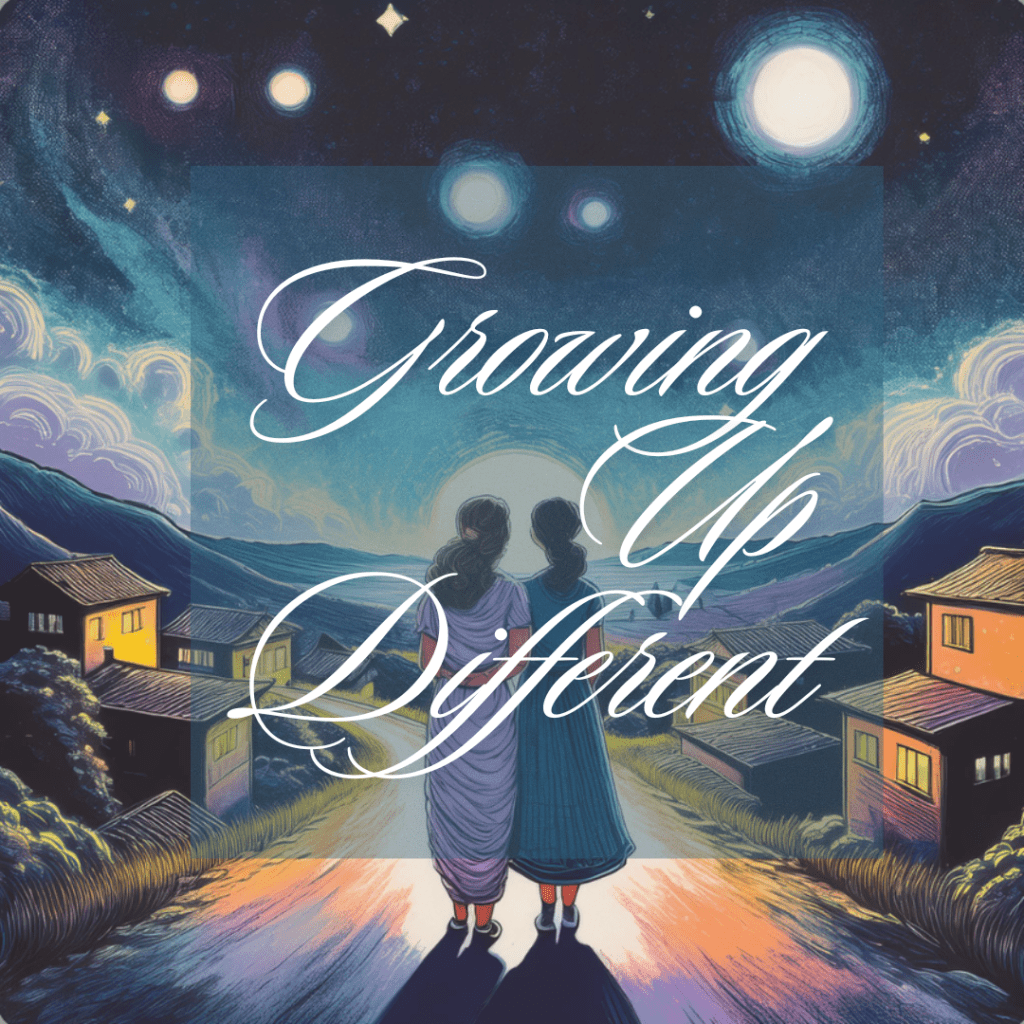
“That’s dumb,” another girl wearing a black hoodie muttered. Kavitha lifted an eyebrow at her. “Ah, but how many of you were told the same when you applied for this, Sanjana?” The girl shrugged. “So, this girl, she had a father who had told her many times that she could bring her problems to him and that there would be no judgement. There would simply be support if she wanted it, or advice if she needed it. She went to him one evening, and sat with him in the garden, under a starry sky, and she poured out her thoughts. You know what he told her?”
The entire class was hanging onto her words. “He pointed to a star in the sky and asked her what direction it was in. Confused, she answered his question. But he simply pointed at others and asked her to identify them. She answered all his questions, then he put his arm around her and told her, ‘My child, when you have the knowledge and the ability to apply that knowledge, how is there anything that can stop you? If people tell you your goals are too unrealistic, it’s because they see it from the other side. You see it from your side. Anyone who tells you that you can’t do this because of who you are does not know who you are. Only you know who you are.’ The girl understood what he was trying to tell her and realised that she was the only one who could decide when she was done.”
“But Professor, wouldn’t people have just gone harder on her because she was a girl daring to defy society?” the blue haired girl asked.
“Of course, they would have, Avantika. But you see, this girl had been taught that there was no girl’s space or boy’s space. There’s only a people’s space. When there’s a conviction that is very hard to shake, it’s not easy to make a person cower.
“Okay! It appears that we have successfully passed the time before class was supposed to start.” She clapped her hands. “Please pay attention. I hope you’ve been doing your research projects. Remember, they are due next Monday. Now, who can tell me the names of the zodiac constellations and their relative positions to the Earth’s hemispheres?”
After class, as the students filed out, Kavitha smiled at each of them and wished them a good day. As the final student left, she turned to gather her books from her table and heard a hesitant voice.
“Professor? Could I talk to you for a minute?” Avantika twisted her hands in front of her nervously.
“Of course, Avantika. What is it?” Kavitha gestured to the front row bench and sat beside her.
“It’s about your story. You see, you said that people went hard on the girl for choosing to do something else. How did she deal with it?” She looked up quickly. “I know it’s you in the story.”
Kavitha leaned back thoughtfully. “You see, I had supportive parents. As a child, they always told me to follow my dreams and dream big. But the problem began when all my school friends began settling down after college. They were getting conventional jobs, starting families and all of that, but I was still in college, going in for higher studies. I had different ideas about what I wanted to do. For my grandparents’ generation, that was a bitter pill to swallow. It’s hard to undo a thought process that’s lasted for ages, so my mother was upset. She yelled at me, telling me I was making the wrong choice.”
“That’s what my parents tell me,” Avantika mumbled. “They think I’m wasting my life.”
“My mother said as much, then froze. She sat down and then apologized to me. She said, ‘I was the one who told you to follow your dreams, but I am the one scolding you for it now. I’m sorry.’ That told me that people try, Avantika, to break prejudices and thoughts. You need to allow them the space to make a mistake and understand.” Kavitha touched her shoulder. “You need to tell them what you feel without any excuses. Don’t accuse them of not understanding you, because believe me, they are trying. Parents always are. They just don’t know how to express that because they never experienced it in their generation. So, tell them why this interests you. Tell them that it’s your choice, but don’t be brash.” She laughed a little. “Being brash will make it worse, believe me.”
Avantika smiled. “Do they still support you?”
Kavitha thought back to the breakfast that morning and nodded. “Everyday.” She stood with Avantika and put an arm around her. “Don’t worry. If you are clear and respectful when you talk to your parents, they will begin to understand. You are extremely talented, Avantika. You can make them learn something about you. Believe me, I’m not here because I think I can teach you something new. One thing I learnt from my parents is that you never disregard the younger generation. Often, they are the ones you can learn more from.”
“Thank you, Professor,” Avantika said, picking up her bag. “I’ll try.”
Kavitha nodded at her before sitting back at her desk and opening up the papers she had to grade. Every single paper she read showed clear signs of having been thoroughly researched, but she felt a little disappointed that not a single person had tried to derive their own opinions. Everyone seemed content to simply parrot well known facts as gospel truth, and that irked her. With a sigh, she set her pen down and leaned back in her chair.
Why is it so hard for people to see the world through a different lens? She wondered. And why do I find that easier?
The bell rang right outside her classroom, making her jump. Her next class filed in and she rose to greet them with a smile.
At the end of the day, she bid farewell to her final class and stretched. Her phone rang and she picked it up.
“Hey Mom,” she answered, holding her phone to her ear with her shoulder as she picked up her bag. “What is it?”
“I just called to tell you the organisers called,” she replied. “From the conference.”
“What was it about?” Kavitha asked, switching the phone to the other ear, placing her bag on her desk and piling her books back in.
“They wanted to let you know that all the arrangements had been made for your presentation. They were wondering if you needed anything else.”
“Why didn’t they call me?”
“They did. I guess you were teaching and didn’t notice the call. That’s why they called home. That’s what I told them. They said they’d call you later. Is that okay?” her mother asked anxiously.
“It’s fine, Mom, don’t worry. I just finished classes and I was just leaving. I’ll call them myself.”
“Are you sure?”
“Mom. You know I can handle myself. Come on! You and Dad let me travel by myself when I was fifteen!”
“I know, Kavi. Just take care.”
“Yes, Mom, I will. Bye,” Kavitha smiled and put her phone down. Packing her stuff back in her bag, she descended to her car and loaded her things back in before calling the organisers to confirm the preparations for her presentation. Satisfied with it, she let them know when she expected to reach the venue.
As she drove, she watched the many family cars pass her, packed with children, on their way to vacation homes. Summer holidays began in a week, but she felt a sense of discontent. She wanted to be doing something that could make a change, not simply sitting at home, waiting three months before being able to meet her students again. Heaving a sigh, she turned into the conference venue. The valet was waiting to take her car, so she left it at the entrance and went into the hall.
The organiser hurried forward to wring her hand gratefully. “Thank you so much for agreeing to be the speaker on such short notice, Ms. Shankar.”
“It was no problem,” she replied. “In fact, I’m always happy to meet young people. I find they can teach us so much about vitality and enthusiasm at a stage where we begin to lose both.”
“That’s a very different way of looking at it, Ma’am,” he said, “because I’ve always found that they need to learn from us how to live without making a mistake in life, or they always end up in trouble.”
“They’re young and resilient. They learn and that’s how they grow through life, Mr. Murthy.” She smiled. “I hope I’m not late.”
He immediately switched his manner. “Right this way, Ma’am. Please follow me. You’re perfectly on time.”
He led the way into the hall and she waited at the stairs as he introduced her to the people in attendance. At the announcement of her name, she climbed onto the stage and smiled at him as he showed her to the podium.
“Good evening. I know you’ve sat through a day full of people talking about lots of things, so I won’t take up too much of your time.” A small chuckle went through the hall. She took in the faces of the young children sitting in the audience, and the adults who accompanied their students. “I’m actually glad that we have an audience of diverse ages here. That makes it easier for me to address the topic I have prepared. I would like to direct your attention to the screen here. If you see, it is a presentation about student attitudes. We are not going to look at it at present.” Another small laugh. “What I would like to begin with, is how important it is for the bond between an adult and a child.
“Being from different generations, it is often difficult for them to understand each other. I have seen so many cases where the child feels neglected because the parent does not try to see things from the perspective of the child and assumes that they are making a fuss for nothing. Communication forms a major part of the solution here, which leads me to my main topic. A student’s attitude is decided by the validation they experience. Rather than treating student attitude as a compulsory thing, it must be a voluntary thing which is inbuilt because of their response to circumstances.”
Kavitha’s presentation and talk lasted an hour, following which she answered questions from the students and teachers. She did not resent the fact that she was delayed by the questions. She was just happy she was able to make a change in the way people saw each other. If she was spreading the way she had been brought up, she was creating a society where people validated morals and characters over only academic performance. Having been brought up to be open to new experiences while forming bonds with people both older and younger, she enjoyed conferences like this where she could meet so many people and learn about their lives.
It was dark when she left the venue en route to her home. The roads were almost empty and she found comfort in the occasional beam of light that crossed her as she passed under a streetlamp. The silence was cumbersome at first, but she welcomed the opportunity to think back to her question in the class.
Why do people find it so hard to look at things from other perspectives? Her hands were light on the steering wheel as she thought it through.
Maybe, the problem lies with people who firstly refuse to accept that another side exists. She had met people like that today, people who told her that her reasoning was flawed.
Or maybe it’s because the people who want to see aren’t allowed to. She saw some merit in this line of reasoning. After all, hadn’t she almost fallen into that category herself when she refused to settle down when her grandparents wanted her to?
She turned the wheel slightly to turn into a side road.
Or perhaps, they lack the right lens. She had seen the other side because she had parents who allowed her to experiment, and sat down to talk with her about things she wanted to know about. A lot of people she knew felt uncomfortable doing that. They feared the judgement that might emerge, or the inevitable “You’re too young.” She wondered how it would be if she hadn’t been allowed to break away from the typical mould.
Would I be on the road now, driving home from a conference by myself, or would I have been a passenger in a taxi, on my way back from a typical 9 – 5 job?
She started and looked ahead of her, frowning slightly. It had been a while since she had seen the last flash of light from a streetlight. She craned her neck and looked around her. I must have taken a wrong turn somewhere, she thought, annoyed. She felt the car listing slightly, no matter how much she tried to keep it in the centre of the lane. And a flat. She pulled to a stop by a ditch and got out. In the distance, she could see the twinkle of lights from small houses by the road.
Popping the trunk, she reached in and removed the spare tyre and tyre jack.
“Professor? Is that you?”
She looked up in surprise at the voice of her student, Sanjana. The girl was walking past with a boy who looked like her, probably her sibling.
“Sanjana? You’re here?” Kavitha couldn’t help sounding incredulous.
“I live over there,” she replied, pointing to the lights Kavitha had seen before.
“We saw the lights of the car and decided to come see. People don’t usually drive down this road.”
“Let me help you, ma’am,” the boy said, hurrying forward.
“It’s fine. I can handle changing a tyre.”
“Let him help, ma’am,” Sanjana chimed in. “He’ll do it properly. Sanjay, do you want help?”
“No, Sanjana. I can handle it,” the boy replied enthusiastically.
“Okay then. I’ll take Professor home for a cup of coffee. Is that alright?”
“Yeah, I’ll be okay.” Sanjay was already reaching for the tyre with a puncture. “I’ll come call you when it’s ready, ma’am.”
Sanjana took Kavitha by the hand and led her towards the nearest house. “Sanjay wants to become a mechanic when he grows up, so we let him do stuff like this a lot,” she said in a confidential tone.
“Sanjana, how do you get to college every day?” Kavitha asked, confused. “You said no one drives down this road, and – “
“I cycle,” she replied simply. “Or I walk to the main road and then take a bus. I work evenings at a restaurant to make up enough for all of us. It’s a hard route, but my parents really wanted me to be able to do it when I told them I wanted to go to college.”
She had led her to the doorstep and led her inside.
“Mom! We have a guest!” she called, leaving her shoes at the door. Kavitha followed her in. The house was basically a single room living space, with blankets folded in a corner. Sanjana’s mother came in from a door that led to the cooking space out back, wiping her hands on a cloth. She bestowed a smile on Kavitha and gestured to a chair.
“Please sit, ma’am.”
“I’m Kavitha. Sanjana’s in my class at college,” she said, holding out her hand. Sanjana’s mother shook her hand and took a seat.
“Sanju, can you get the coffee?” Sanjana nodded and left.
“My car had a flat tyre,” Kavitha said, as an explanation. “Sanjana’s brother offered to fix it, although I said I could. Your children are amazing, ma’am.”
“I’m proud of them. They know we can’t help them do everything they want to, but they try to make themselves self – sufficient,” she replied. “I know you have questions about how Sanjana attends classes. She cycles to college. I’ve always told her that nothing can stop her from doing what she wants to.”
Kavitha felt a little jolt, hearing her father’s words coming from Sanjana’s mother. “That’s what my parents used to tell me too.”
Sanjana walked in with a cup of coffee and handed it to her, before sitting at her mother’s feet. “Professor, I only manage to come to classes because my parents insist. They don’t want me to give up on my dreams.”
“That’s amazing, ma’am,” Kavitha said, addressing Sanjana’s mother.
She smiled softly. “I cannot let the fact that we are disadvantaged affect my child’s growth. It’s her life, and if she wants to do something, as parents, it is our responsibility to make sure she can do it, and she grows up as someone she wants to be.”
Before she could respond, the door opened and Sanjay entered. “I changed the tyre, ma’am,” he said. “The car is ready.”
Kavitha got to her feet. “Thank you so much for your help, Sanjay, and thank you for your hospitality, ma’am, Sanjana.”
“Thank you for coming, ma’am,” her mother replied, standing up too. “Sanju, can you go with her?”
“Yes Mom,” she said. “Come on, Professor. I’ll show you the way.” She led her back to where her car stood and waited till Kavitha managed to turn the car around. “If you go straight, take the third right, then the first left, you come to the highway, then it’s a straight road to the college.”
“I can find my way from the highway,” Kavitha said. “Thank you so much, Sanjana.”
“Bye ma’am! I’ll see you in class tomorrow!” Sanjana waved in farewell as Kavitha drove away. Following her instructions, she found herself back on the highway.
As she drove, her mind was filled with what she had just seen and heard. As a child, her parents had always spoken to her about achieving her goals, but she had had that cushion of safety and security in her financial status. She could afford to study. But to see another student with the same dreams, but in a completely different state of life, made her wonder at Sanjana’s mindset. Here was a girl who did not know where her money would come from. She studied by day and worked at night to support her dream, but she was able to do that only because her parents supported her as much as Kavitha’s had supported her. She had been able to rise above her disadvantages and find her path, without losing sight of her roles and dreams.
Kavitha found the thread connecting her to Sanjana to be an interesting one. Both of them followed their dreams, marching forward confidently. But while Kavitha had been encouraged to experiment with her interests and had done so without fear for her future, Sanjana’s dreams came hand in hand with her concerns for the life of her family. But in both of them gleamed hope and enthusiasm.
Smiling wryly, she pulled into the driveway of her house. I guess today I learnt something from my students. The front windows of the house glowed with a welcoming light behind the curtains, and she could hear faint singing from the open kitchen window as she manoeuvred the car into the garage. She opened the back door that connected the garage door to the house and received a pleasant surprise.
“Dad! Why didn’t you tell me you were coming over too?” She moved forward to hug him and kiss his cheek.
“I missed you, I got a break from my job today, so I thought I’d drive down and surprise you,” he replied, pulling back. Apart from the grey hair, he seemed to Kavitha to be the same as when he had hugged her in the garden and told her she was the only one who could decide when she was done. Standing next to her mother, he recalled in her memories of another house, another night, another dream. With a big smile, she threw her arms around them both.
“Thank you for everything,” she whispered. The day had shown her again how lucky she had been to grow up the way she had. She had learnt more than she had known at that moment and she counted herself blessed that in her parents, she also had her best friends who had given her so much.
“You’re later than usual. You must be tired,” her mother said, kissing her cheek to show her that she had understood what Kavitha had tried to say. “Get changed and come on, I’ve made your favourite. And before you say you’re a fully independent adult, let me tell you that even adults like food their parents make. We can talk over dinner.”
Kavitha laughed and nodded. She climbed the stairs to her room with increasing weariness. In her room, she sat down in front of her mirror. Looking at herself, she did not see the confident, capable woman who had grown to achieve so much and help so many people. She did not see the tired, yet content look on her face at all she had managed to do. What she saw was another young girl, her eyes still shining with the happiness that she was making a change, and the freedom her life had given her. And behind her stood the people who had given her the liberty and freedom to forge her own path, irrespective of the disadvantages she faced. She stood with the indomitable strength of conviction that she would rise above her adversity and face the world. Kavitha wished she would never forget the strength of Sanjana’s character, or the lessons she had been taught since her childhood. All she wanted was to continue making a change in the world.
Edited by Yatin Satish

