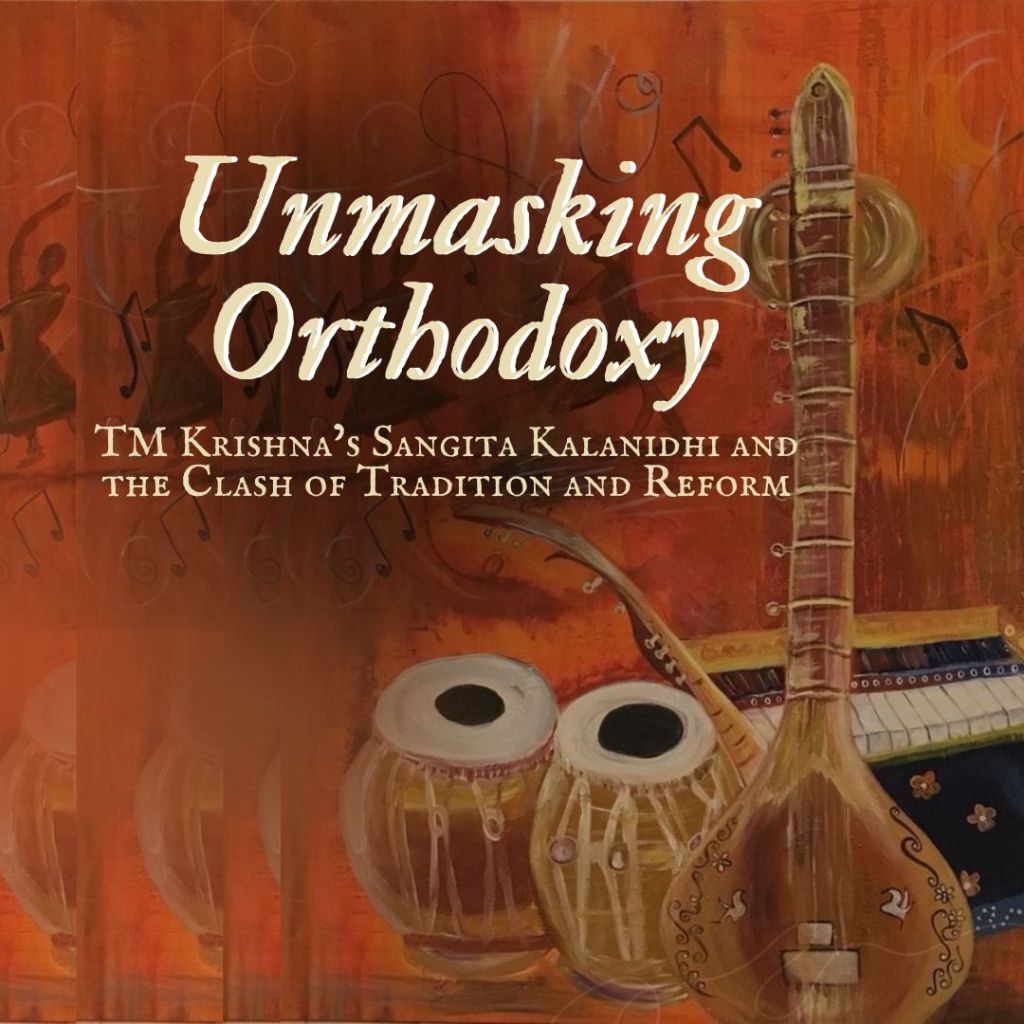
The Madras Music Academy, an institution etched into the cultural tapestry of this art flourishing city has for long been a bastion of tradition. Yet, within our current socio-political landscape- where culture too often serves as a code for rigid artistic orthodoxy and heritage is weaponized- the Academy has taken a surprising turn, or perhaps even a radical step. For the first time in recent memory, they have deviated from the well trodden path of similar sabhas in the city, by bestowing their highest recognition, the Sangita Kalanidhi on T.M.Krishna. While my heart soared with joy at this recognition of T.M. Krishna’s artistry, the hate directed towards him spotlighted the insidious ways in which caste continues to dictate cultural hierarchies especially in Carnatic Music.
T.M.Krishna continues to remain an iconoclast in the Indian Classical Music space, an ethos that is marker of glorified identity for Brahmins. His journey, both as a musician and an activist is an important milestone within the Indian Classical Music arena. He is a disruptive force in unshackling the traditional values of the art’s predominantly Brahminical establishment. To many, the Sangita Kalanidhi serves as an affirmation of artistic boundary- breaking; to others, it symbolizes a dangerous dilution of tradition, particularly within a national environment where right-wing narratives often champion cultural purity and social hierarchies.
Somehow this Carnatic music fraternity’s criticism of the award and the awardee also includes their critique of Periyar, social justice and the supremacy of bhakti laden music. The claim of a ‘call for genocide of Brahmins’ is a misinterpretation, disconnected from the broader context of political discourse, and instead revives disturbing reminders of historical caste-based oppression. One wonders in bewilderment at the lack of both awareness and sensitivity of such acclaimed public figures who seem to neither understand the factual history of the music they practice nor the artistic history of Indian Polity.
The conversations on social media on both sides has invoked a very unique phenomenon, a foreign emotion for the otherwise hushed echoes of gossip across sabha halls- public outcry. People on either side have been taking to social media for interpretations of the arguments by these artists and defending the ‘dharma’ in either context. However, this conversation on caste still stages within the confines of one particular community. This award is still being presented to a Brahmin musician by a predominantly Brahmin occupied institution while Brahmins fight the “unfairneess of this decision”. The voices of the marginalized still remains muted in this supposed discussion on social reform within the Carnatic space. Infact they are so far removed from this discussion that even a contribution from their side will make no impact. In the age of awareness and information, if the Dalit community is still a non-performing player within the Carnatic Music space, to say “this music is for everyone” is an attempt to hide the otherwise obvious casteist attitude. Krishna is not free from the hypocrisy of accepting this award or being glorified for “just his music”.
The partisan nature of the discourse is hardly a surprise. Carnatic Music practitioners have forever been wary of the dissentious voice from both outside and within the space. Hereditary artists from the Isai Vellalar community battle to undo years of brahminic conditioning of the history of this music and dance even today. Carnatic Music continues to glorify those who perform the music while pushing those who make it to the brink of poverty. Despite allegations, #MeToo accused continue to occupy stages and exert dominance within power structures. The unequal playing field of this music is still controlled by a handful of upper class elite personnels who operate in subtle and overt ways through which caste perpetuates exclusion in this artistic realm. To claim that Krishna polarizes the field and causes harm to the sentiments of those who practice this music is to actually believe and propagate that the above is false.
The public discourses by certain Carnatic musicians and their likes transcend a mere critique of artistic merit. They represent an attempt to maintain the status quo within Carnatic music, potentially silencing voices that challenge existing power structures. While their stated intention is for open dialogue and exploration on the issue it continues to remain a pronouncement of purity. T.M. Krishna’s Sangita Kalanidhi represents a watershed moment, not just for him personally, but for the future of Carnatic music. It challenges us to confront uncomfortable truths about caste privilege, the dangers of weaponizing misinformation, and to envision a more inclusive artistic landscape where talent, innovation, and social consciousness are celebrated rather than suppressed.
Edited by Yatin Satish
 Article 19