
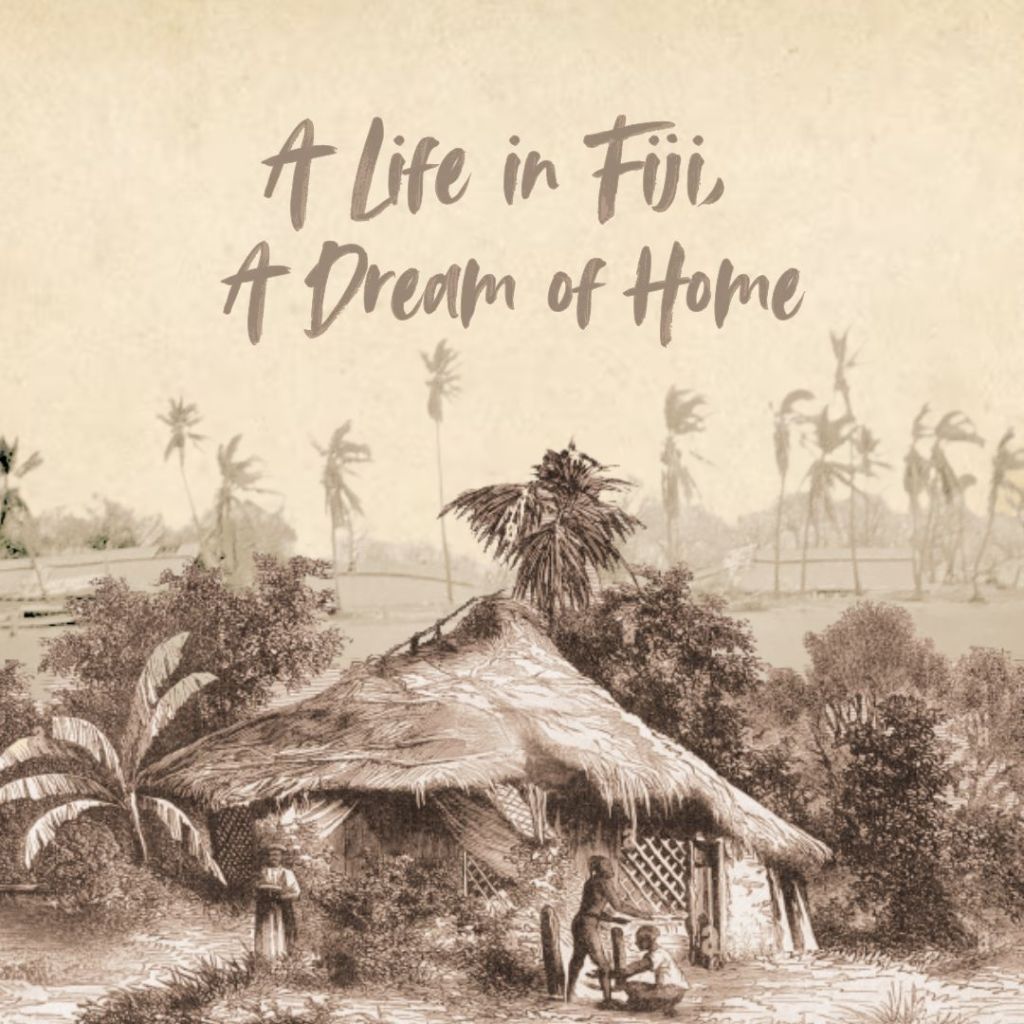
In the year 1830, the growth of sugar plantations alongside a lack of labour in response to the abolition of slavery in British colonies led to the creation of the system of indentured labour.
Judith Brown, in Making a Modern Diaspora, outlines that between the start of the system in 1834 and its conclusion in 1917, over 1.5 million Indians were shipped out to Mauritius, British Guiana, Natal, and Trinidad as indentured labourers. Most people, when they signed their contracts before leaving home, had no idea of the conditions they would be walking into.
If they survived the voyages, where diseases like cholera, smallpox, and dysentry took out a large number of their immigrants, they would face an unfamiliar world teeming with violence at the hands of the plantain overseers. With minimal pay and dangerous working conditions, they would toil to make ends meet, hoping to eke out a living that would allow them to return to their homes. Women were subjected to harassment, and conditions remained dire.
When they managed to return home, they often struggled to re-integrate themselves into Indian society, and the workers were soon swept away on another journey to a new land. But out of these dire circumstances emerged narratives of fashioning new kinship ties, and leading to the creation of a new diaspora of individuals who never forgot the hardships that drove them to such ends.
Here is a story that shows what the life of a worker might look like, a narrative drawn from the facts of history and presented as a life that could have been.
Fiji, 1910
Another day of toiling in the sugarcane fields. Another day of being pushed around by the European men because there is no one to stop them.
“You are the only woman who can cook good food, Reva Ji,” Jay Singh says and barges into the room I share with my husband Abhay.
We have been taking in some of the bachelors who miss their homes. I cook for them after working in the sugarcane fields all day, but I cannot complain because I know that only by quietly cooking can I keep myself safe. I will never forget the way Sharda looked when they accused her of being the reason her husband killed himself. Negligence and desertion, they said.
Later in the night, when Jay Singh has retired to give Abhay and me some privacy, we sit in a corner of the kitchen space. “Reva, it has been four years since we came here,” he says quietly. I nod, thinking back to that month-long voyage we made from Calcutta, aboard that crowded ship.
The journey from our fields in Chhattisgarh to the fields in Fiji was a huge shift in the way we worked. At least back home, we were the owners of the land. The whole family would pitch in and work, fathers and mothers, daughters and sons, brothers and sisters.
The trouble began when we lost a lot during the drought. Abhay’s friend was the one who introduced us to Mr Whitehall. He said we would be able to work abroad and earn enough to send back home, but we would have to leave for five years. He said we would be indentured labourers, and that if we signed the contract, we’d be guaranteed work in Fiji. Back then, I didn’t know how far away that was. I left my daughter behind, and my father-in-law promised that he would take care of her.
I do not know how she is. We have not been allowed to write.
“One more year,” Abhay sighs, leaning back on his hands. “Next Diwali we will be back home.”
I silently pray to Lord Vishnu that his faith is not misplaced. “Abhay Bhaiyya, do you think what we have collected will be enough to restore what we’ve lost?”
“Reva, we can only pray.” He lies down on his back and draws his shawl closer. “Now go to sleep. We have work in the morning.”
I bring the shawls I use as blankets to my corner and lie down. Out of the corner of my eyes, I can see his silhouette. I am grateful that out of all the people my father met, he gave me to Abhay. I was born on the 13th of June, 1880, and I married him when I was fourteen. My daughter would be twelve now. I hope she is safe. Abhay is my only lifeline in this place. I have seen how the men treated women who were not married or who they were married to, and I have been spared that treatment because Abhay is always good to me.
My thoughts turn to my daughter as they so often do. Kamala was eight when we left her, and I still remember her clinging to my leg when we were going to leave. I hope the money we have accumulated by doing extra work over the last four years will be enough to give her a more comfortable life than the one I lived.
Suddenly, I am overwhelmed with a desire to return home and sweep her into my arms and smother her with kisses. Regardless of the length of the voyage, regardless of what we must pay, I want to leave. I want to go back. I hope Abhay will agree with me, that another five years of this would be pure torture at the hands of the Europeans and the selfish Sardars if we chose to wait for the free passage offered at the end of ten years. I have already noticed the glances many of them throw at me.
I do not want to stay till something happens to me. I want to go home and meet my family again. I hope we will have enough to pay for our fare without losing everything we’ve made so far. But I am ready to work till that day, and I will never forget who I chose to do this for.

