
The Annual Academic Conference of the Department of Humanities and Social Sciences was kickstarted by a series of talks on various topics by renowned researchers as well as representatives from the main sponsor of the event, the International Justice Mission. The first talk by a guest speaker was on ‘The Geopolitical Matrix of Violence’, by Dr. Mayilvaganan on 23rd January 2020. His lecture outlined the meaning of violence and its expression in conflict zones, especially in Sri Lanka, Myanmar, Thailand and Nepal, where his area of expertise lies.
Dr. Mayilvaganan began by emphasising the connection between violence at the international level and at the regional level. To break down the several components of this argument, he started off by clarifying what exactly he meant by violence. He used the WHO definition of violence which highlighted three key aspects: the intentional use of physical force, against oneself or others, and resulting in damage. He further established the increasing role of technology and social media in reshaping violence in a geopolitical context. This cemented his main argument.
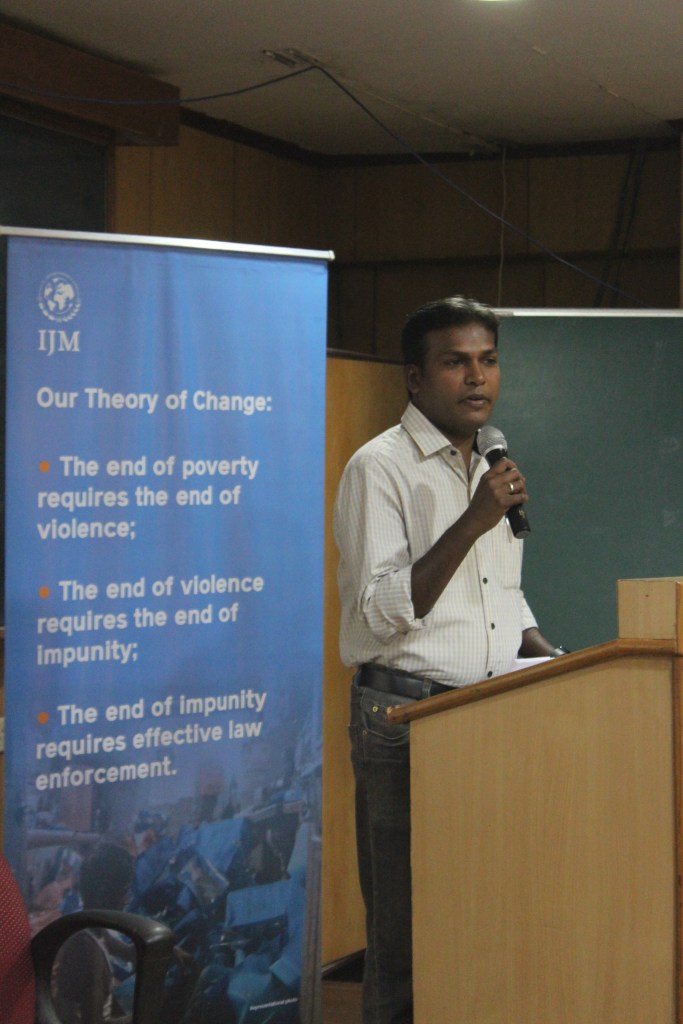
To properly understand the cause of violence, it is important to understand its origin and the social factors that result in this gross manifestation. While addressing this, he mentioned how the insecurity of the majority results in them grabbing the rights of the minorities to maintain their superior and comfortable position and subsequently, other forms of suppression, oppression and discrimination. A significant factor that further strengthens this narrative is when children and youth are exposed to these ideas, and also have access to weapons and drugs from East Europe and South Asia. The roots of several of these conflicts can be traced back to the ‘minority complex’ of the majority on the basis of ethnicity and individual identity, and the resulting fear among the minority. The spread of misinformation makes the equation even more complex. The space of violence extends from the private sphere and gets unleashed in fierce forms in the public sphere as well.
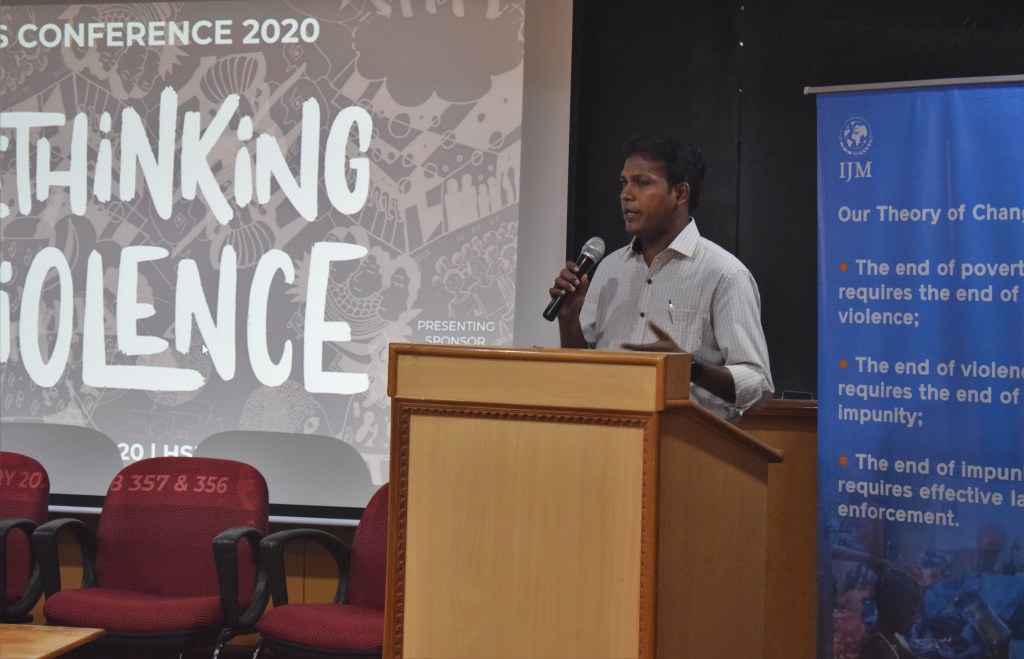
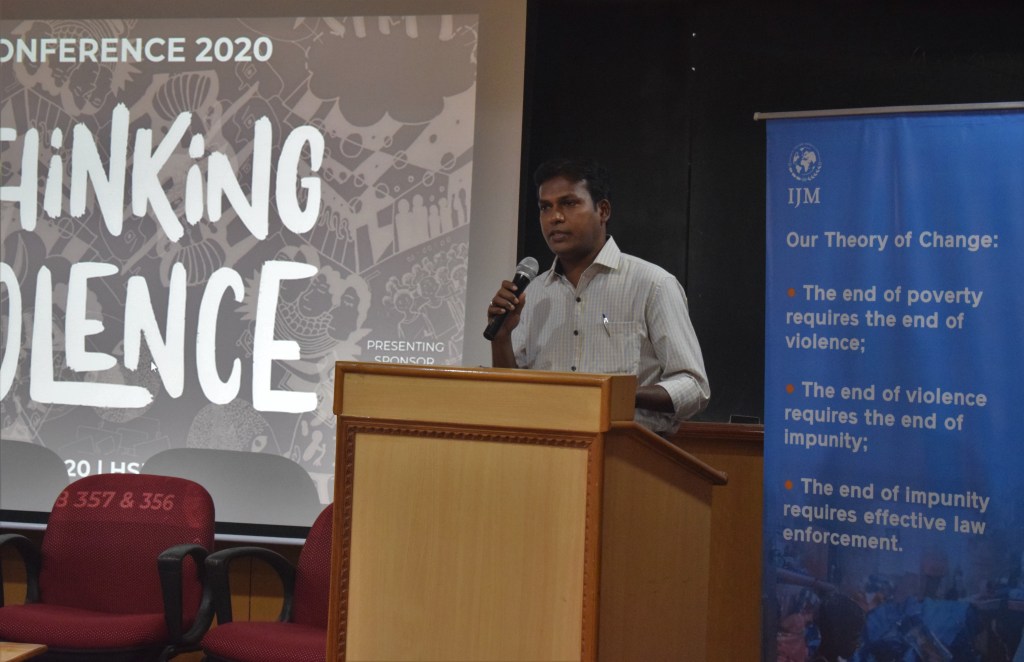
Violence has been a part of human lives since the hunter-gatherer phase and has been taking up different forms with evolution. In the contemporary context, the speaker highlighted two key features. Firstly, the large scale mobilisation and organisation that is happening through social media. To support the former, the best example would be that of the Easter Attack in Sri Lanka wherein the atmosphere of conflict between the Buddhists and Sinhalese created a ground for the ISIS war against the West and Christianity. Secondly, the link between internal violence and foreign relations because of globalisation. The 2017 Rohingya Crisis is a very recent example. Although their rights had been stripped suddenly in 1964, the large scale mass exodus called for global attention to this human rights violation. It was termed “ethnic cleansing” and Aung San Suu Kyi faced severe backlash for letting this happen. He also supported these propositions with several case studies from Sri Lanka, Myanmar, Southern Thailand and Nepal. However, Dr. Mayilvaganan humbly admitted that he would not be able to cover the complexities of these issues in depth and refrained from commenting on the current political scenario as part of his talk (though he answered them during the Q&A).
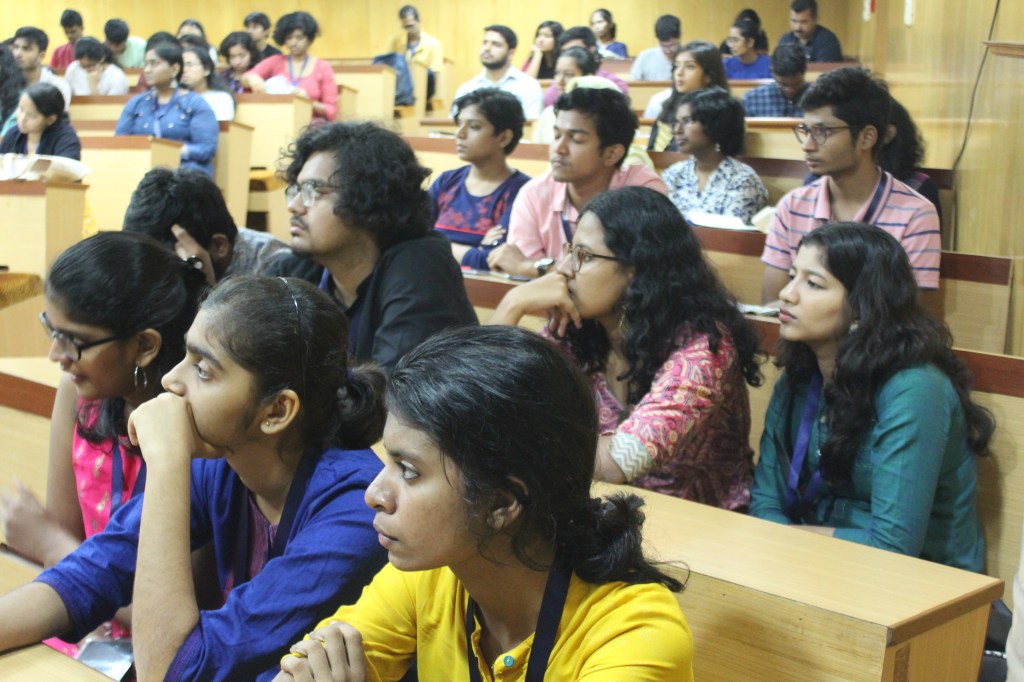
He ended with some questions as food for thought: why do “modern,” tech-savvy, educated people resort to violence as well? How does the regime at the center instigate violence? How does the majority/minority complex play out? Have any goals of violent protests been achieved? These kindled the intellectual curiosity of the audience and were also unsettling, given the highly concerning political situation in the country.
Report by N. J. Sadhana
Photography by Sakshi Malpath and Ganesh Dileep

