
Article 19 correspondent Devika Dinesh speaks to Rohitha Naraharisetty, in the fourth of a series of four interviews with students of the HS15 batch who graduated this year.
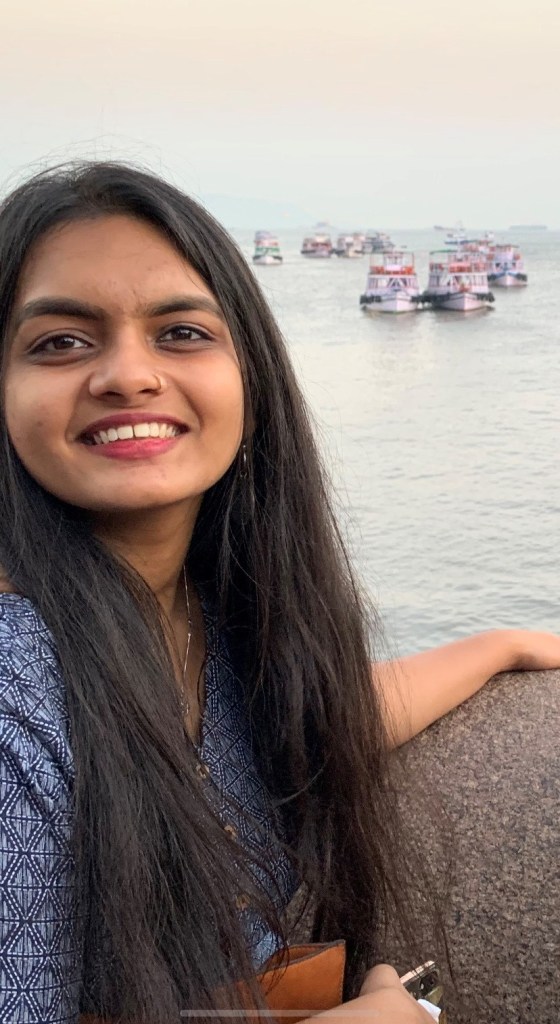
What are you doing now/ future plans?
I’m taking a year off to figure out the future plans bit. And to take care of my mental health while I’m at it. It’s all very confusing and there’s many different things I want to try; I don’t want to feel stuck in any one thing. I think I’ve made progress on all fronts, though not in the way I expected. Things are more uncertain than I accounted for. When I decided to take the year off, Corona was just a weekly ladies’ night thing. Who knew.
How did you deal with your graduation not being what you had expected it to be?
That has changed so rapidly over the last few months. At first it sometimes hit me and I felt pangs of sadness. I would have liked to have the experience of wearing ceremonial robes, having my parents there the same way they were during orientation, my time here would’ve come full circle in a way. I would’ve liked to soak in the feeling of attending my last class, writing my last exam, sitting in those desks and chatting, rushing through the corridors, revisiting the DCF, occupying department space like I belong there, everything. Now I don’t really think about it all that much. The way these feelings have evolved has been directly proportional to how much the pandemic has affected my life. In the beginning I didn’t understand the full implications of the situation and felt like I had been robbed of proper goodbyes. Then I tested positive and this became a distant concern. Then some more members of my family did. Now, at the time of this interview, I’m going through a bereavement due to the pandemic. So I’m really not thinking about the graduation ceremony now, it feels so far away and small in the larger scale of things. I know this is exceedingly cynical but it is the way it is. At least we wouldn’t have to receive our degrees from guests of honour who are directly responsible for all this suffering. You can edit this part out if you’d like, haha.
What was your MAP topic, and what made you select that?
It has to do with the MeToo Movement. I looked at it in two parts, one as a study of the movement as a vast archive, the other as a form of politics. It’s difficult to explain, partly because I myself have had trouble figuring out exactly what I was doing, given that I had to abruptly change track in the middle. I chose to work on this because I wanted to work on something I personally hold in great value; anything else would’ve felt cumbersome and I wouldn’t have had the discipline to complete it through the course of one whole year. This, to me, was something worth studying. I immersed myself in it for a year and got to read and learn so much in the process. The project has significantly shaped my politics as well.
What was the process of actually working on your thesis like?
Well. It involved many cats, hours of interviews and trips and pestering strangers to talk to me which couldn’t be used in the end, lots of cake, lots of binge watching, lots of surreal memes—and my wing, with whom I socially-distantly suffered through the process in the last three months. Overall unstructured and chaotic because of not having an academic environment around me but otherwise surprisingly okay because my guide, Prof. Binitha, was really understanding and accommodative of the situation and helped make the process less daunting than I thought it would be. I also had Shweta staying with me—breaking into song and being a total Disney princess/Mary Poppins character every time things looked difficult. She’s the best.
After these five years, what are your main takeaways from the course and your time in the department?
That the entire curriculum is what each individual makes of it, and that each person’s learning outcome is vastly different from that of their peers. I think over the last five years we went from not knowing what on earth a ‘panopticon’ was and what to do with a ‘jouissance’ when you see it, to actually having specialities in terms of interests? That’s wild. I learnt how to use words as tools—deploying them in term papers to make them juicier, yes, but also getting to understand them as very specific, layered things. The important takeaway is that this is a place which pushes you into nooks outside of the curriculum that you never thought you’d find yourself in, and that’s a really valuable thing. A lot of what I learnt that has stayed with me hasn’t come directly from the assigned readings, but from where those readings led me.
As for the department, we have some of the most approachable profs ever. And when they push us to speak or write during a course, it’s because they care about us engaging with it on a much larger scale than just the classroom, which is a very rare and valuable thing. On the student side of things I came to understand that most people go through similar phases during their time here in terms of fashion, interests, and hobbies, but mental illness is not one of them and I hate it when people talk about it like that. I also know that this is a space to go through changes, and it’s best to allow them to happen instead of believing that there’s a trap you’re falling into. You’re meant to experience a change in worldview and your emotions are supposed to get very much involved. People around you are going through the same things too and you’re never alone in anything, no matter how much it may feel that way at any given point of time. It’ll all be okay. And if it isn’t right now, it will be soon.
What all did you engage in during your time at insti, outside academia?
T5E! Just that. From first year to fourth. Then there was one atrocious WM event we prepared for overnight. And the occasional LitSoc things. I also did dabble in some Drama club things too, from which I have some very fond memories, but ultimately that wasn’t my thing. T5E was my thing. It was fun and exciting and in my not so humble opinion, one of the very few things in insti that teaches you real values, not marketable ones. It taught me how to stand up for my values, how to accept the possibility of failure, to be okay with being disliked, the difference between objectivity and fairness. These are things that change how you engage with the world at large if you’ve immersed yourself in it deep enough. This isn’t a PoR that’s exactly known for its glitz and glamour and shininess on a resume. In recent years it’s been an already underrated institution which got backed into a corner. T5E isn’t a thing which enjoys widespread support and popularity and so has fewer resources in these situations. It can be a thankless job. But I value every bit of my time with it, although I have many, many regrets about my last year in it. I wish I could do that part over again, it would be so different.
What would you have done differently in your last year, if you could?
Not much really, I actually think my last year went about as well as I’d have liked for it to go until it was rudely interrupted by the pandemic. I started taking help for my mental health in my fourth year and got to a significantly better place in fifth year such that I was able to enjoy it and actually live in the present. I chose an MAP topic I was excited about, I didn’t have any more PoR related worries, and the wing went out on spontaneous outings often. I also knew that I didn’t want to seriously sit for placements, which saved me a lot of trouble. I began healing after going through hurt and heartbreak. Things were nice, actually.
What was your favorite memory from your time at insti?
There are obviously so many, it’s hard to narrow down a few. There was this one time I got bangs (yes, and a nose piercing) in second year which got very mixed reactions from everyone, it was hilarious. Prof. Mathangi greeted me with a “Hi Rohitha, nice bangs!”, just seconds after someone else’s eyes widened in shock and pity upon seeing my face. Then there was a LitSoc play my wing put together literally overnight, which was a farce in itself and ended in too many people passed out in scary, potentially ambulance-worthy angles in my tiny little ground floor Sharav room. Then there are the movie nights, the birthday surprises, the Zaitoon ordering, all the little things.
If you could, is there anything you would like to tell your freshie self?
Mostly that it’s okay to inhabit insti however you want to. It may seem like there is a script or a template to follow in terms of how “insti life” is supposed to be, but your experience is no less meaningful if you haven’t done those things. Insti is yours even if you don’t have those nights at Ramu, the chaos before an event you’re a coord for, if you’ve never been a vol or a coord even, if you’ve never visited the overhead tank, never got up to no good behind the OAT garden gate, whatever. If you’ve never felt integrated the way everyone keeps talking about, it’s okay. It’s okay if nobody outside your wing really knows who you are. It’s okay to not be good at or interested in things you’ve heard are looked up to over here. It’s okay to watch this version of insti—whatever it is—happen around you instead of being a part of it. You can have your own insti. And you will, in the end. Your insti is going to be the long walks on Delhi Avenue, SAC Road, the long route to Guru, where each landmark is associated with what you were listening to or feeling while you walked past it. Your insti can be a quiet place which keeps you safe even as it is a lively place for someone else. You can know this place in your own way and allow it to settle around you like your own unique mould. And sometimes being an observer rather than a participant has its benefits, because insti shows itself to you in ways you wouldn’t have known otherwise.
Final thoughts?
I think this is the closest thing to closure that I’m getting, so thank you for doing this for us! I feel like a mega imposter giving this interview since my time here can be seen by many as boring or uneventful, but if there’s anyone reading this who feels less alone or less FOMO because of this, it’s definitely worth it.

